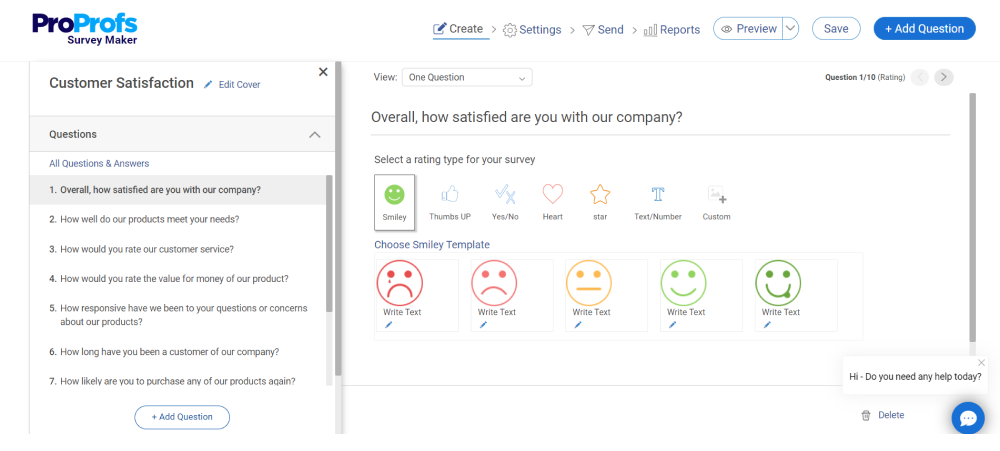

Your email list is the only marketing channel you fully own. No algorithm throttles your reach. No platform update wipes out your audience.
But building one that actually converts takes more than putting a popup on your homepage. So, how to grow your email list?
Most teams focus on tactics before fixing the real problem: visitors do not subscribe because they cannot tell what they get.
Without a clear value proposition, every lead magnet, exit-intent prompt, and referral program you launch will underperform.
This guide gives you 10 proven strategies to grow your email list, plus the foundational fix most growing teams skip.
You will find a ready-to-use form audit checklist and survey prompts you can deploy today.
What Is an Email List?
An email list is a permission-based collection of subscriber contacts who have actively opted in to receive communications from you. Unlike social followers or paid traffic, your email list is an owned channel you control directly. A quality email list is one where subscribers are engaged, accurately segmented, and matched to what you actually send.
The keyword is “owned.” Social platforms change algorithms. Ad costs rise. SEO rankings shift. Your email list is the one channel where no third party controls your reach.
That said, a large list is not automatically a valuable one.
Email lists decay by 20-30% annually through unsubscribes, abandoned inboxes, and role changes (Mailchimp Email Marketing Benchmarks, 2025). Without consistent growth, your deliverable audience shrinks regardless of how good your campaigns are.
What Should You Fix Before Adding Any Opt-In Tactics?
This is where most teams skip ahead and pay for it later.
Before you add another popup on your website or create another lead magnet, answer this question: if a visitor lands on your best-performing page today, do they know exactly what they get by subscribing, and does it match what they came for?
If the answer is “probably not,” you have a messaging problem, not a tactics problem.
The Three Things to Audit Before Scaling Any List-Building Effort:
1. Your Value Proposition: Can you finish this sentence in one line? “Subscribe to get [specific thing] so you can [specific outcome].” If not, tighten it before anything else.
2. Your Friction Points: Count every field on your opt-in forms. Every field you add beyond “email” reduces conversions. Phone number, company name, and dropdown fields are especially costly on mobile.
3. What Visitors Actually Want: This is the one most teams skip. Use a behavioral feedback prompt on your highest-traffic pages to ask visitors directly what they were looking for.
If you want to hear from real visitors without interrupting what they are doing, a Qualaroo Nudge™ is the cleaner way to do it. It fires at the right scroll depth or exit moment, asks one question, and gets out of the way. That answer tells you whether your opt-in offer is even relevant to why they showed up.
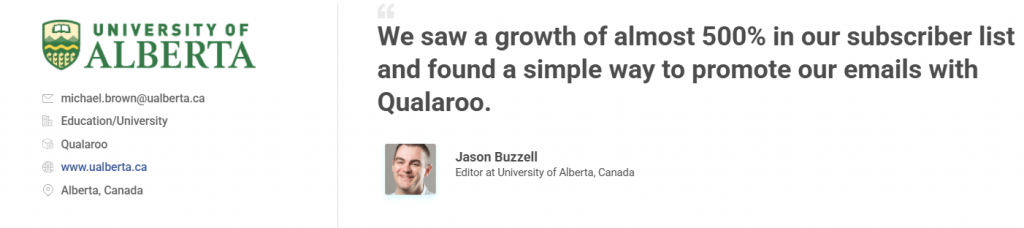
The University of Alberta ran this kind of targeted feedback approach and grew their subscriber list by nearly 500%. The insight came from understanding visitor intent first, then aligning the offer to match it.
How to Grow Your Email List: 10 Strategies That Work
These strategies assume you have already audited your value proposition and tightened your forms. If you have not, start with the pre-tactics section above.
If you have, pick the strategy that matches where your biggest drop-off is happening right now and start there.
Strategy 1: Use Lead Magnets That Solve One Specific Problem
A lead magnet is only as strong as its specificity. Broad offers like “free marketing guide” compete with everything else the visitor has already downloaded.
Narrow offers convert because they feel immediately useful.
The Difference Looks Like This:
| Broad Offer | Specific Offer |
| Free marketing guide | 5-question NPS survey template for SaaS onboarding |
| Email marketing tips | Welcome sequence script for free trial users |
| Growth strategies PDF | Checklist: reduce mobile form drop-offs in 15 minutes |
Pick one problem your ideal subscriber faces. Package the fastest possible solution to that one problem.
The sooner a visitor uses your lead magnet, the sooner they trust you enough to stay subscribed.
Here’s a ready-to-Use Survey Prompt to Find What Lead Magnet to Create:
“What’s the single biggest challenge you’re trying to solve with [topic] right now?”
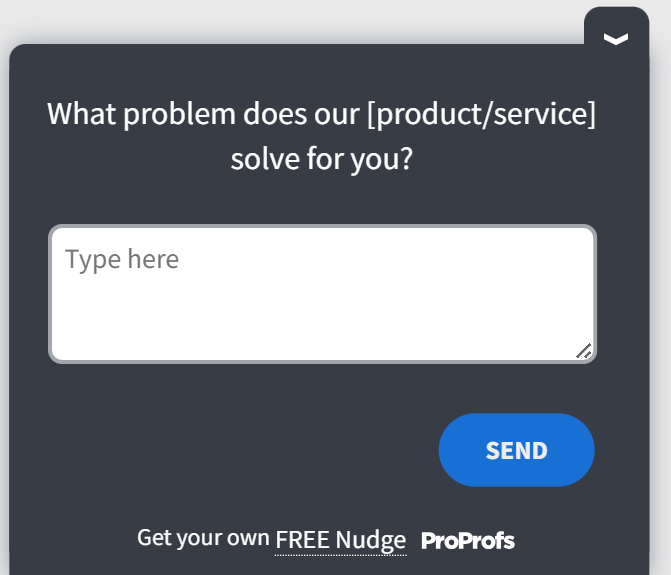
The problem is that most teams guess the answer based on what they think their audience wants. Deploy this as a Nudge™ on your top blog posts or resource pages. The most common answers tell you exactly what to build next.
Strategy 2: Use High-Intent Page Placements to Outperform Homepage Popups
Most opt-in forms live on homepages or blog sidebars, where visitors are still figuring out whether they care about you. High-intent pages attract visitors who already know what they want.
High-Intent Pages to Prioritize:
- Pricing Pages: Visitors are evaluating your product. An opt-in for a comparison guide or ROI calculator is directly relevant.
- Help Docs and Knowledge Base Articles: Visitors are problem-solving. An opt-in for advanced tips or related resources fits naturally.
- Post-Checkout or Thank-You Pages: The visitor just took an action. Momentum is high. An invite to join your email list converts well here.
- 404 Pages and Empty Search Results: Dead ends frustrate visitors. A redirect offer with an opt-in recovers traffic that would otherwise be lost.
Here’s a 404 page template you can use:
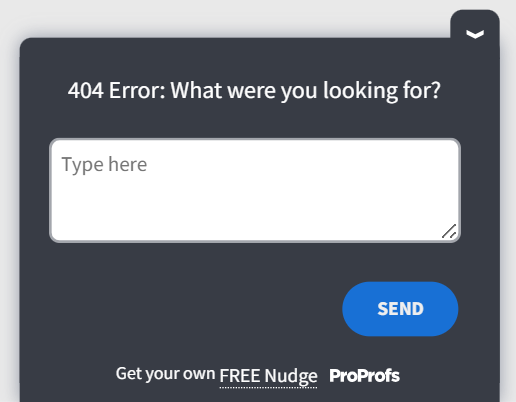
Match the opt-in offer to what the visitor came to that page for. A “get the buyer’s checklist” offer on a pricing page converts far better than a generic “join our newsletter” on the same page.
Strategy 3: Reduce Form Friction & Increase Subscriber Rates
This is the most underrated fix in email list building. Every field you add to a signup form costs you conversions.
Research consistently shows that adding a phone number field cuts form completions substantially. Dropdowns, date pickers, and multi-select questions create the same friction, especially on mobile, where 66% of Millennials and 67% of Gen Z check email on their phones (Capgemini, 2025).
The Practical Rule: Email only is ideal. Name plus email is the maximum for most opt-ins. Add segmentation questions after the subscriber is already in your list, not before. It’s also worth using email validation to catch typos and invalid addresses at signup, helping improve deliverability and keeping your subscriber list clean from day one.
Checklist: Audit Your Opt-in Forms
- Remove all fields except email (and optionally, first name)
- Replace “Submit” with a benefit-led CTA: “Send me the checklist” or “Get the guide.”
- Test the form on a mobile screen. If it requires zooming or scrolling to complete, simplify it.
- Confirm that the confirmation page clearly explains what happens next.
- Check page load time. Slow-loading forms lose conversions before they start.
Strategy 4: Use Exit-Intent Prompts to Recover Subscribers Before They Leave
Exit-intent triggers activate when a visitor’s cursor moves toward closing the tab on a desktop. This is your last moment to make an offer before they are gone.
The reason exit-intent works when done right: the visitor is already disengaging. A well-timed, relevant offer gives them a reason to reconsider, without interrupting the experience they were having.
The reason it fails when done wrong: showing a generic “don’t go, subscribe!” prompt that has nothing to do with the page they were reading.
How to Make Exit-Intent Actually Convert:
- Trigger only on high-traffic, high-exit pages: blog posts, pricing, and landing pages with low conversion rates
- Match the offer to the page topic. If they were reading about email segmentation, offer a segmentation checklist
- Keep the copy short: “Before you go, do you want the full framework? We’ll send it.”
- Combine with a one-question survey: “What were you looking for today?” This gives you both a conversion opportunity and research on why visitors are leaving
Here are a few exit-intent survey templates you can use to grow your email list:
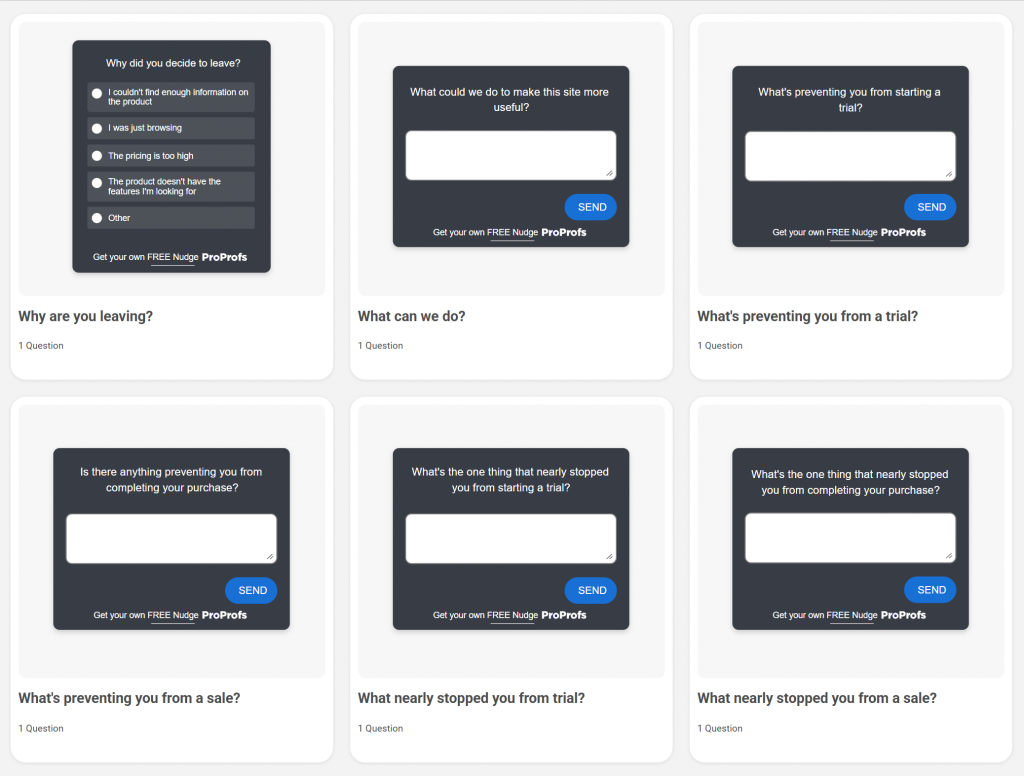
Ready-to-Use Exit-Intent Survey Questions:
“What stopped you from signing up today?” “What were you hoping to find on this page?” “Was there something missing from this content?”
These questions feed directly into improving your next opt-in offer.
Strategy 5: Capture Emails Through Behavioral Feedback Interactions
Feedback moments are some of the highest-trust interactions you can have with a visitor. When someone responds to a survey or shares an opinion, they are already engaged.
That engagement creates a natural opening for a follow-up opt-in.
Here is how this works in practice:
A visitor reads a blog post. A Nudge™ prompts them with “Did this answer your question?”
If they say no, you follow up with “What were you looking for? We’ll send you more on this topic.” That is a contextual, permission-based opt-in that feels like help, not a pitch.
The data Qualaroo collects from these interactions also tells you which content topics drive the most opt-in interest, so you can build more of what actually works.
If you’re running this across multiple high-traffic pages, manually reading every open-text response isn’t realistic.
Qualaroo’s AI Sentiment Analysis groups responses by theme automatically, so you can see in one view that 43% of exit responses mentioned ‘pricing confusion’ without reading 300 individual answers.
Here’s how it really works:
Survey-to-Opt-in Sequence You Can Set up Today:
- Trigger a one-question Nudge™ after 60 seconds on your top blog posts
- Question: “Is this content solving the problem you came here with?”
- If no: follow-up question: “What would help more?”
- Close with: “Want us to send you content on this? Drop your email below.”
Here’s a quick opt-in survey template you can tweak and use:
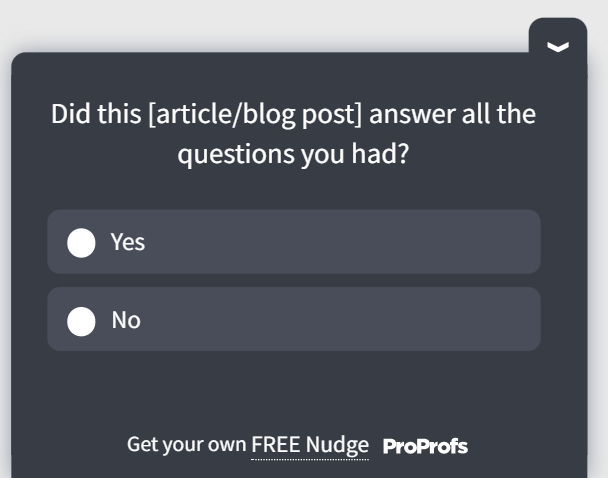
This approach captures subscribers who were going to leave without converting, and gives you research you can use to improve every future opt-in.
Strategy 6: Use Welcome Sequences to Turn New Subscribers Into Engaged Ones
List growth without retention is a leaky bucket. You can add 500 new subscribers a month and still watch your engaged list shrink if your welcome experience does not work.
The first 48 hours after signup are the highest-engagement window you will ever have with a new subscriber.
Open rates on welcome emails average 4x higher than regular campaign emails (Klaviyo Email Benchmarks, 2025). If you waste that window with a generic “thanks for subscribing” message, you lose the momentum.
A Three-Part Welcome Sequence Structure:
| Timing | Purpose | |
| Email 1 | Immediately | Deliver the lead magnet. Confirm what they subscribed to. Set expectations on frequency. |
| Email 2 | Day 2 | Share one high-value insight or resource. Ask one question: “What’s the most important thing you’re trying to do with [topic]?” |
| Email 3 | Day 4 | Point to your most relevant content or product. Invite a reply or a next action. |
Keep all three short. No more than 150 words each. Write them as you would write to one person, not a list.
Strategy 7: Segment Subscribers From Day One to Improve List Quality
Segmentation is not something you do once your list gets big. It is something you build from the first signup.
If you send the same emails to everyone, open rates drop, unsubscribes rise, and your deliverability score quietly declines.
The way to catch that slide early is to check email reputation for your sending domain periodically, inbox placement usually drops before your open-rate charts make the problem obvious.
Segmented campaigns generate 760% more revenue than non-segmented ones, according to Campaign Monitor’s Email Marketing Report.
How to Segment From Day One Without Adding Form Friction:
Use the source of the signup as your first segment tag. Someone who opted in from a pricing page has a different intent than someone who downloaded a beginner checklist from a blog post.
Then use a short survey, delivered two or three days after signup, to refine the segment:
Ready-to-use post-signup survey questions:
“What’s the main thing you’re trying to achieve with [topic]?” “Which of these describes you best?” [Role options] “How urgent is this for you right now?” [Now / In the next 3 months / Just exploring]
Use these answers to route subscribers into different email paths. Someone who says “urgent, I need this now” gets different follow-ups than someone who says “just exploring.”
Strategy 8: Use Referral Incentives to Grow Your Email List Faster
Your existing subscribers are your best acquisition channel, and most SaaS teams leave this entirely unused because they think of referrals as a consumer tactic.
Referral programs work in list building because the trust transfer is already done. When a subscriber recommends your newsletter to a peer, that peer arrives with a pre-existing positive signal. These subscribers tend to engage more and unsubscribe less than cold traffic opt-ins. And in SaaS, where your audience clusters in the same Slack communities, LinkedIn groups, and industry newsletters, one referral from the right person reaches exactly the audience you are trying to build.
How to Build a Referral System That Works for a SaaS Audience:
- Trigger referrals at activation, not at signup. A new subscriber who has just read three emails and found value is far more likely to share than one who signed up yesterday. Add the referral prompt at the moment engagement peaks, such as after they reply to an email or click through to a resource.
- Run partner newsletter swaps. Identify two or three non-competing newsletters your audience also reads. Offer to feature each other in one issue. This is a zero-cost, zero-friction way to reach a pre-qualified audience that is already in reading mode.
- Use Slack community shares strategically. If your ICP is active in specific Slack communities (product ops, growth, CRO circles), share one genuinely useful email excerpt with a link to subscribe. Community-sourced subscribers have the highest engagement rates of any acquisition channel.
- Celebrate milestones with substance, not just acknowledgment. “You’ve referred three people. Here’s the bonus resource” closes the loop. Make the bonus something the referrer actually wants: early access to a report, a private Q&A slot, or a feature they cannot get elsewhere.
The best referral programs feel like sharing something useful, not running a promotion.
Strategy 9: Grow an Email Subscriber List Through High-Traffic Blog Content
Your best blog posts are passive list-building assets you are probably not using.
If you have posts that rank on page one and drive consistent organic traffic, those posts already have the right audience.
Adding a contextual opt-in inside that content converts a fraction of that traffic into subscribers every day without additional ad spend.
How to Turn a Blog Post Into an Opt-in Funnel:
- Use Google Search Console to identify your top three to five posts by organic clicks
- Create one downloadable resource for each post that is directly related to the topic: a checklist, a template, or a printable version of the post’s framework.
- Insert a mid-content CTA at the point where the reader is most engaged, typically 40-60% through the article: “Want the printable version of this? Get it here.”
- The challenge at this stage is knowing which readers are engaged enough to convert versus those still skimming. A scroll-triggered Nudge™ that fires at 70% scroll depth solves this: “Did this answer your question? Want more like this in your inbox?” It only reaches readers who have already demonstrated intent.
- Track opt-in rate per post and use the highest-converting posts as your template for new content
This approach requires no new traffic, no new ads, and no new content. You are just converting more of what you already have.
If you are also evaluating email list building tools to support these strategies, the guide covers the full stack.
Strategy 10: Use Pre-Launch Waiting Lists to Build Momentum Before You Need It
The best time to grow your email list is before you have something to sell. For SaaS teams especially, the pre-launch period is one of the most underused list-building windows available, because you have a clear reason for people to raise their hand without needing to offer a finished product.
The setup is a single page: one sentence, one field, one reason to act now. “Early access” or “first to know” works. A visible subscriber count adds social proof: for example, “2,300 people are already on the waitlist.”
How to Maximize a Pre-Launch List for a SaaS Product:
- Send a drip sequence while you are building, not just after launch. One email per week keeps the list warm and signals that you are real. Share what you are building and why, what decisions you are wrestling with, and what early users are telling you. This content builds authority before you have a product to demo.
- Use waitlist feedback to shape pricing tiers and feature priority. A short survey two weeks into the waitlist, “Which of these would make this a must-have for you?”, gives you direct signal on what the market will pay for and what to ship first. This is faster and cheaper than post-launch discovery.
- Segment the waitlist by role and use case from day one. A founder signing up has different needs than a CRO director or a product manager. Ask one qualifying question at signup: “What’s your primary role?” Route each segment into a different drip path so launch-day messaging is already personalized.
- Move waitlist subscribers into your core nurture sequence on launch day with a specific transition email, not a generic announcement. Reference what they signed up for and what has changed since. Subscribers who feel remembered convert at significantly higher rates than those who receive a mass launch blast.
The waiting list becomes research infrastructure as well as a lead generation tool. By launch day, you should already know your top three objections, your highest-converting use case, and which segment is most ready to buy.
Start With One Page, One Offer, One Prompt
Pick the page on your site with the most traffic and no opt-in form. Add a contextual opt-in with a specific lead magnet.
Add a Nudge™ prompt that fires at 70% scroll depth, asking what the visitor came for. Set up a three-email welcome sequence for every new subscriber.
That alone will outperform most email list growth efforts running right now.
Most teams who run behavioral prompts for one week come back with a clearer picture of their conversion problem than six months of analytics gave them.
That is what behavioral feedback data does that A/B tests do not: it tells you the reason, not just the result.
If you want to understand exactly why visitors are not converting before you add any new tactic, try Qualaroo for free.
The behavioral data you get from one week of targeted prompts will tell you more than a month of A/B testing button colors.
Frequently Asked Questions
What is the fastest way to grow an email list?
Place a contextual opt-in with a specific, relevant lead magnet on your highest-traffic page. Pair it with an exit-intent prompt so you capture visitors who are about to leave, and follow every signup with a three-email welcome sequence. Growth accelerates when the offer matches visitor intent precisely, not when you add more placements.
How do you grow an email list from scratch?
Start with one high-value lead magnet that solves a single, specific problem for your ideal subscriber. Embed a one-field opt-in form on your most relevant content, or build a simple landing page. Then promote it everywhere you already have presence: social bios, email signatures, and live chat follow-ups. Add one channel at a time and measure each before adding the next.
What is email list growth rate, and how do you calculate it?
Email list growth rate measures how fast your list is expanding after accounting for unsubscribes and removals. The formula is: new subscribers minus unsubscribes, divided by total subscribers, multiplied by 100. A negative rate means churn is outpacing new signups, which requires immediate attention to both retention and acquisition.
Why does my email list grow slowly, even with a lead magnet?
Usually, because the lead magnet is too broad, the opt-in does not appear on high-intent pages, or the form has too many fields. Check whether your CTA copy clearly states what the visitor gets and how quickly. Also, audit whether the opt-in is visible on pages where visitors already have purchase or engagement intent, not just on the homepage.
How do I reduce email list churn?
Deliver consistent value, match content to what each subscriber segment actually wants, and set clear expectations in the welcome email about frequency and content type. Send a re-engagement campaign to inactive subscribers before removing them. Offer frequency or topic preferences inside the preference center so people can adjust instead of unsubscribing.
Why should I prioritize growing my email list over other channels?
Email marketing generates an average return of $36 for every $1 spent, according to the Data & Marketing Association's industry benchmarks. Unlike social media or paid ads, your email list is an owned channel: no algorithm controls your reach, and no platform change can wipe out your access to subscribers. It compounds in value the longer you build it.
What should I do after someone subscribes to keep them engaged?
Send the first email immediately with the promised lead magnet and a clear statement of what they will receive and how often. Follow up on day two with a single useful insight and one direct question about their goal. By day four, point them to your most relevant content or next step. Keep every email under 150 words and write it as if you are talking to one person.
How do I keep my email list healthy over time?
Remove subscribers who have not opened any email in 90 days, after sending one re-engagement message first. Maintain a consistent sending cadence and publish it in your welcome email so subscribers know what to expect. Use a short feedback survey every two to three months to ask your most engaged subscribers what they want more of, then adjust content accordingly.
How does Qualaroo help with email list growth?
Qualaroo's Nudge™ lets you trigger a one-question prompt at any scroll depth or exit moment on any page, so you can ask visitors what they came for and follow up with a relevant opt-in offer. Its AI Sentiment Analysis automatically categorizes feedback responses by theme.
Should I buy an email list to grow faster?
No. Purchased lists contain contacts who have not chosen to hear from you. They produce high spam complaint rates, damage your sender reputation, hurt deliverability for your entire domain, and generate near-zero ROI. Every subscriber on your list should have actively opted in. A smaller, self-built list will always outperform a purchased one on every metric that matters.
FREE. All Features. FOREVER!
Try our Forever FREE account with all premium features!

 We'd love your feedback!
What did you like & how can we make it even better?
 Thanks for your feedback!
 Ask Your Question
Have a question? Get expert help to make your decision easier.