
I have spent enough time setting up, breaking, and rebuilding feedback programs to have real opinions about SurveyMonkey alternatives.
Whether you are typing SurveyMonkey alternatives, SurveyMonkey alternatives, or SurveyMonkey competitors into Google right now, you are looking for the same thing: a tool that fits how you actually collect feedback, not just a cheaper logo.
In this guide, I am walking through the 10 SurveyMonkey alternatives I would actually shortlist, across in-app feedback, enterprise research, budget form building, and open-source options.
Plus, my top 3 picks, if you want the short version, and a role-based breakdown, if you want it matched to your actual job.
I lead with Qualaroo because it solves the specific problem I run into most often: catching feedback while someone is still on the page, not after they have already left.
Why Teams Are Looking at Alternatives to SurveyMonkey?
I keep hearing the same handful of reasons whenever someone starts shopping for alternatives to SurveyMonkey, so here are the ones that usually push me to look elsewhere, too.
Limited Trial Access: SurveyMonkey does not offer a free trial of its premium plans. I either get the basic free tier or I commit before I ever see the advanced features in action.
Restricted Customization: Targeting rules, triggers, and template flexibility are limited compared to tools built specifically around in-app or in-context delivery, which is what I usually need most.
Rising Cost of Advanced Features: Entry pricing now starts at around $30 a month, and the features I actually end up needing, like advanced logic or deeper reporting, are locked behind higher tiers.
No Native In-App Delivery: SurveyMonkey is built around email and link distribution. If I want to ask a user a question while they are still on the page or inside the product, I need a tool built for that from the ground up.
10 Best SurveyMonkey Alternatives and Competitors
Here is a quick way to compare the 10 tools I am covering, based on what matters most: pricing, standout strength, and who each one fits best.
| Tool | Best For | Price Starts At | Capterra Rating | Best Fit For |
| Qualaroo | AI survey creation, in-app surveys, NPS, and user feedback | $19.99/month | 4.7/5 | Product, CX, and SaaS teams |
| ProProfs Survey Maker | Surveys, quizzes, and polls in one tool | $19.99/month | 4.8/5 | SMBs, educators, and marketers |
| Google Forms | Free internal forms | Free | 4.7/5 | Internal teams, basic feedback |
| Qualtrics | Enterprise research | Custom, quote-based | 4.6/5 | Enterprises, research teams |
| Typeform | Conversational surveys | $28/month | 4.7/5 | Marketing, lead generation |
| Alchemer (SurveyGizmo) | Custom logic and reporting | Custom | 4.5/5 | Mid to large orgs, researchers |
| QuestionPro | Market research, offline collection | $83/user/month | 4.8/5 | Research teams, field surveys |
| Zoho Survey | Budget surveys inside Zoho | $25/month | 4.6/5 | SMBs, Zoho users |
| LimeSurvey | Open-source, self-hosted surveys | $39/month | 4.4/5 | Academia, privacy-focused orgs |
| Paperform | Branded forms with payments | $29/month | 4.8/5 | Creators, agencies, services |
Here is why each one made my list, in the same order as the table above.
1. Qualaroo: Best for Capturing Real-Time User Insights In-App & on Your Website Using Contextual, AI-Powered Micro-Surveys
I have set up enough feedback programs to know the difference in-context targeting makes, and Qualaroo is the tool I keep coming back to for exactly that reason.
Its Nudge™ surveys are non-intrusive pop-ups that trigger by URL, user behavior, or segment, and I have watched respondents answer in a couple of clicks without ever leaving the page they were on. What sold me on it in the long term is the native AI sentiment analysis.
I skip most of the setup work now with the AI Survey Creator, since describing what I want to learn in plain language gets me a drafted, targeted survey instead of a blank editor. On the response side, AI Customer Feedback Analysis is what sold me on the long term.
It scores sentiment, auto-tags themes, and hands back a short report with key findings and recommended actions, so I am not the one manually reading through hundreds of open-text comments after a launch.
I also lean on the Identify API whenever anonymous feedback is not specific enough, and I need to tie a response back to a real account.
Best For: Product managers and CX leads at SaaS companies who need to catch churn and drop-off signals while a user is still engaged, plus agencies running feedback across multiple client sites from a single master account.
Pros:
- AI Survey Creator drafts a full survey, including targeting and branch logic, from a plain-language prompt
- AI Customer Feedback Analysis auto-tags themes, scores sentiment, and summarizes responses into a report with recommended actions
- Advanced survey targeting by URL, behavior, or segment instead of blasting every visitor
- Question branching and skip logic keep each survey short and relevant to the person answering it
- iOS and Android SDK for native mobile in-app feedback
- The Identify API links responses to a real user by email or customer ID
- Heatmaps and session recordings track user behavior before feedback
Cons:
- There is no dark user interface for long hours or late nights.
- Dedicated onboarding/account manager services are available only in paid plans.
Capterra Rating: 4.7/5
Pricing: Free plan (up to 50 responses, all features included); Essentials at $19.99/month; Business at $49.99/month; Enterprise from $149.99/month
Qualaroo gave Hootsuite a 16 percent lift in conversion at 98 percent statistical significance, using targeted on-site surveys to find and fix friction points.

2. ProProfs Survey Maker: Best for Easily Creating Custom Customer Surveys, CSAT, CX, & NPS forms Using AI
I reach for ProProfs Survey Maker whenever a project needs more than one content format, because it covers surveys, quizzes, polls, and forms in the same editor instead of forcing me into separate tools.
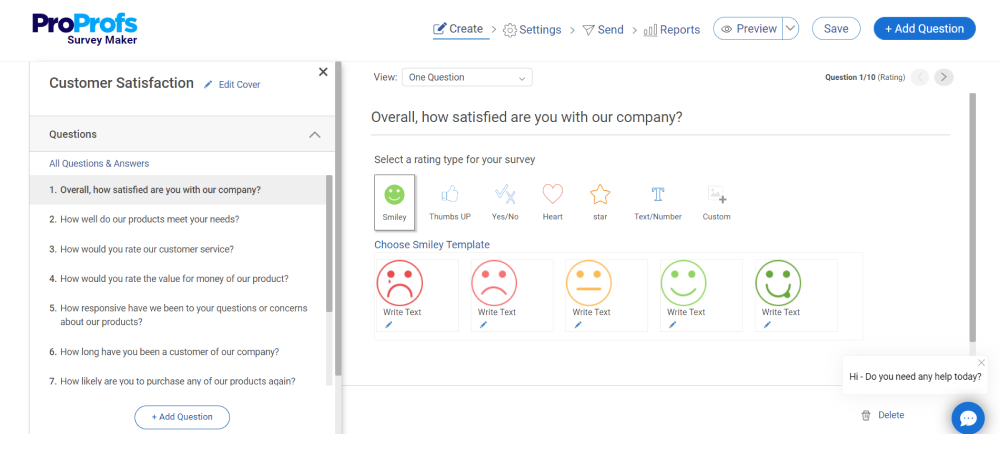
I have used it to get a survey live in under 30 minutes from a blank screen, and the AI-assisted builder suggests question structure and phrasing based on whatever goal I type in, which saves real time on first drafts.
Where it earns its place on this list is its versatility. If my feedback strategy needs training quizzes alongside customer surveys, I do not need a second subscription to cover it.
Best For: HR, training, and marketing teams at SMBs, roughly 1 to 50 employees, that need surveys, quizzes, and polls without buying three separate tools.
Pros:
- AI-assisted question suggestions speed up first drafts based on my stated goal
- Combines surveys, quizzes, and polls in one tool, useful for training, onboarding, and audience research
- Non-intrusive sidebar feedback button that adds to any website without disrupting the layout
Cons:
- There is no on-premise version available.
- Dedicated onboarding/account manager services are available only in paid plans.
Capterra Rating: 4.8/5
Pricing: Essentials at $19.99/month; Business at $49.99/month; Enterprise from $149.99/month
3. Google Forms: Best for Free Online Form Building
Google Forms is the SurveyMonkey alternative I default to whenever someone just needs data collected without committing to a paid tool.

I have built quizzes, feedback forms, and event RSVPs in it, and the process is always the same: drag in a question, set up sections, hit send, and responses start flowing into a spreadsheet I can act on immediately.
I have pushed it further than it was probably designed for, integrating Google Sheets to handle scoring logic, and it held up fine.
The honest tradeoff is that it stays purely link and email-based, so it will never replace an in-app or on-site survey tool.
Best For: Founders and ops leads at bootstrapped teams, and internal teams at any company size, that need feedback collected today at zero cost.
Pros:
- Completely free with no response or question caps
- Real-time collaboration and automatic sync with Google Sheets
- Works across every device without a separate app
Cons:
- No on-site or in-app pop-up delivery
- Branding, targeting, and reporting depth are limited compared to purpose-built survey tools
Capterra Rating: 4.7/5
Pricing: Free
4. Qualtrics: Best for Experience Management and Customer Feedback
I think of Qualtrics as the tool enterprises reach for once a survey program stops being a side project and starts being a research function.
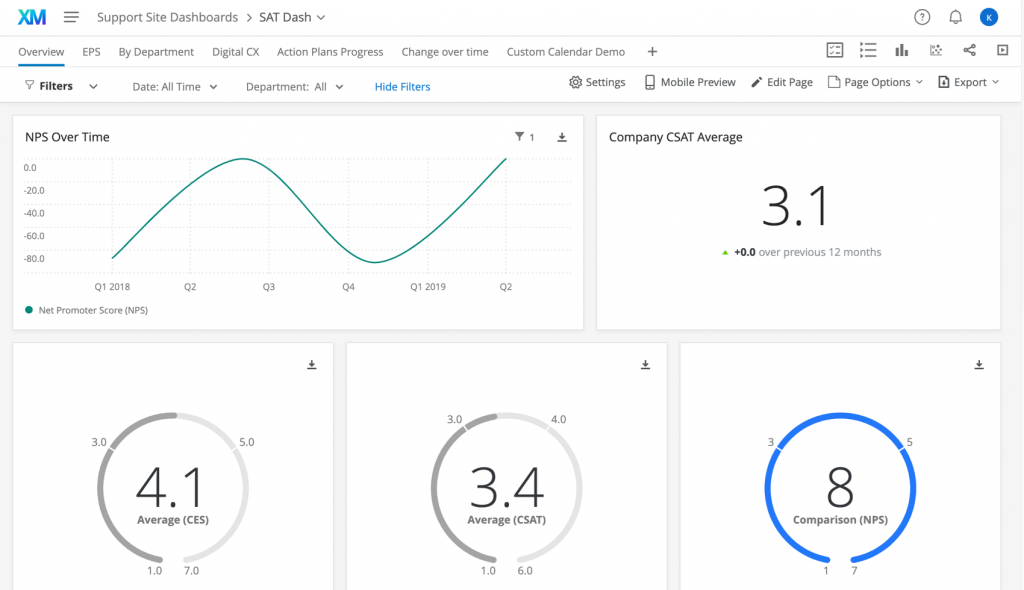
What stands out to me every time I use it is ExpertReview, which reviews your questions in real time and flags design issues before you ever hit launch.
I have relied on its 30-plus chart types more than once to turn a messy dataset into something I could actually put in front of leadership.
The catch is cost. I have never seen Qualtrics pricing published anywhere, and every real quote I have come across lands somewhere in the tens of thousands per year once you factor in modules and response volume.
Best For: Business analysts and research leads at enterprise organizations, 1,000-plus employees, who need predictive, board-ready reporting across many stakeholders.
Pros:
- ExpertReview gives real-time survey design recommendations before launch
- Visualizes data across 30-plus chart types for executive-ready reporting
- Deep integrations with Salesforce, Adobe, and Marketo
Cons:
- Pricing is not published, and real contracts commonly land between $25,000 and $50,000 or more per year for enterprise teams
- Steep learning curve for teams outside a dedicated research function
Capterra Rating: 4.6/5
Pricing: Custom, quote-based
5. Typeform: Best for Conversational Forms and Surveys
Typeform is the SurveyMonkey alternative I recommend whenever completion rate matters more than anything else.
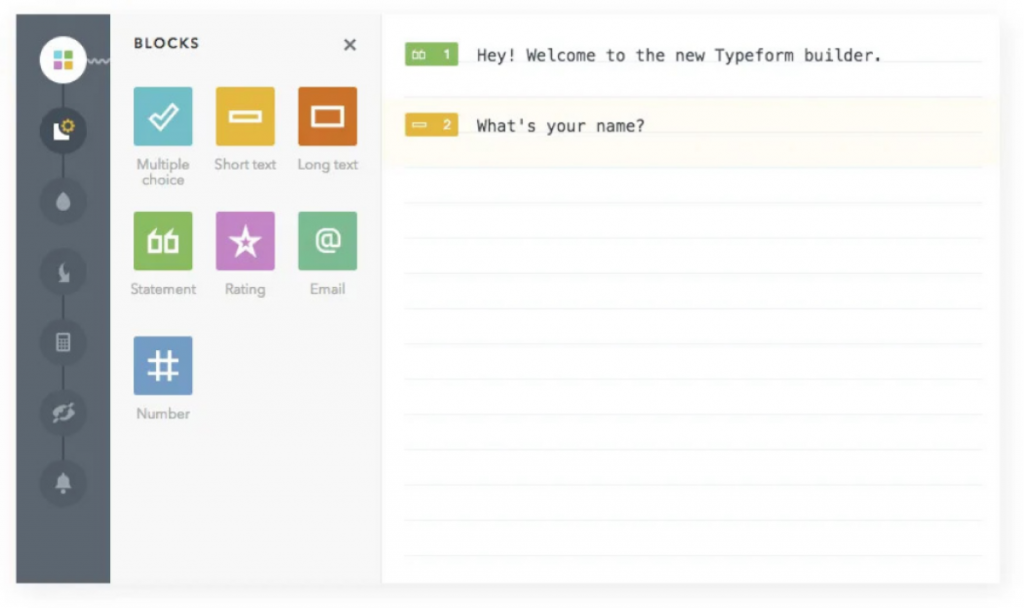
Its one-question-at-a-time flow genuinely feels like a conversation instead of a form, and I have watched that format alone lift how far people get through a survey compared to a traditional grid of questions.
I like that the templates look polished and require almost no customization on my end, which matters when I am short on design time.
What gives me pause is the price. At $39 a month to start, it is one of the pricier form builders I cover here, and some of the more advanced logic still feels rigid once a survey gets genuinely complex.
Best For: Marketing and growth teams running lead-gen or event campaigns that need a form built to lift completion rate inside a paid funnel.
Pros:
- Conversational flow improves completion because it feels less like a form
- Rich media support inside questions
- Clean, modern templates that need little customization to look polished
Cons:
- Starting price has climbed to $39/month, pricier than most form builders at this tier
- Some advanced logic still feels rigid for complex, branching surveys
Capterra Rating: 4.7/5
Pricing: Starts at $28/month
6. Alchemer: Best for Survey Logic and Custom Reporting
I recommend Alchemer, still known to a lot of people by its earlier name SurveyGizmo, whenever a team needs branching logic deep enough for a real research project but does not want to pay enterprise prices to get it.
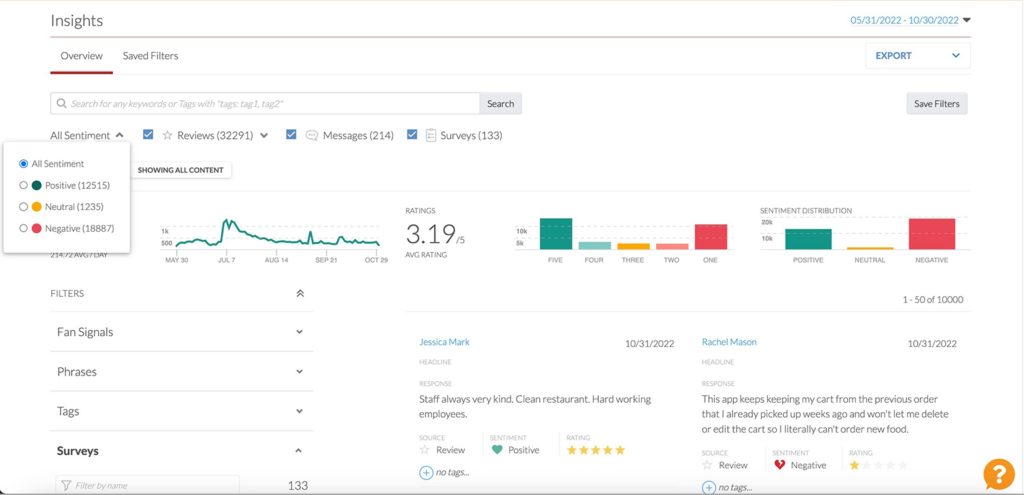
What I appreciate most is the transparent per-seat pricing. There are no response caps buried in the fine print, which is more than I can say for some of the other tools on this list.
I have found the interface takes longer to learn than it should, with more sub-menus than feels necessary, but once I got past that learning curve, building complex, conditional surveys became genuinely straightforward.
Best For: Research and CX teams at mid-market companies, roughly 101 to 1,000 employees, that need branching logic deep enough for a real study without enterprise pricing.
Pros:
- Transparent per-seat pricing with unlimited responses, even on the entry plan
- Strong branching and skip logic for complex survey paths
- Mobile in-app survey support
Cons:
- The interface has a lot of sub-menus that take time to learn
- Some advanced analytics and translation features cost extra
Capterra Rating: 4.5/5
Pricing: Custom, quote-based
7. QuestionPro: Best for Market Research and Offline Data Collection
I bring QuestionPro into the conversation whenever a project needs actual research depth rather than a quick pulse check.
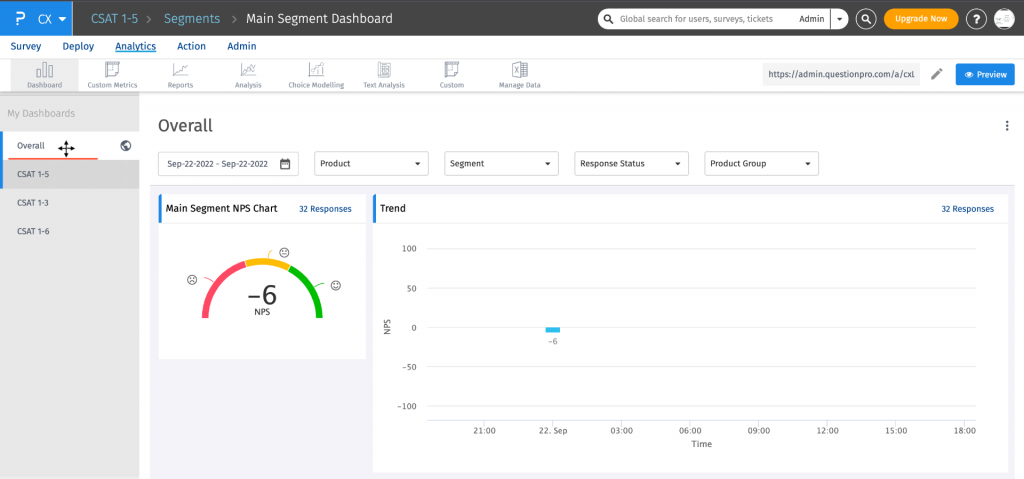
With 40-plus question types available, I have rarely hit a wall when structuring a complex study, and its built-in Data Quality Check has automatically caught unreliable responses more than once, saving me from cleaning a messy dataset by hand.
The offline collection feature is a genuine differentiator if fieldwork is part of your plan.
What I will flag honestly is the price jump. It now starts at $83 per user per month with a five-user minimum, which pushed it out of reach for a few smaller teams I have advised.
Best For: Market research teams and field researchers who need offline collection and structured, 40-plus question type studies.
Pros:
- 40-plus question types support complex, structured research
- Built-in Data Quality Check flags unreliable responses automatically
- Nonprofit discount available for qualifying organizations
Cons:
- Starting price has risen to $83 per user per month, with a five-user minimum on paid plans
- Interface can feel dense for teams that only need simple surveys
Capterra Rating: 4.8/5
Pricing: Starts at $83/user/month, billed annually with a five-user minimum
8. Zoho Survey: Best for Budget Surveys Inside the Zoho Ecosystem
Zoho Survey is the SurveyMonkey alternative I point to most often for teams already living inside other Zoho apps, since the CRM integration alone saves a real step in the feedback-to-action workflow.
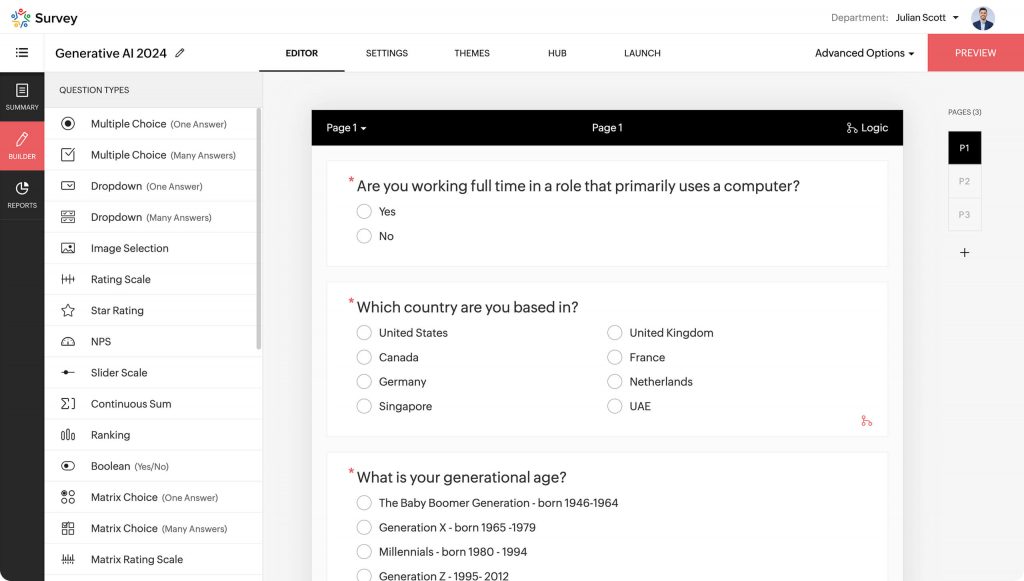
I have used its NPS auto-calculation more than once to skip a manual scoring step I would otherwise have to build myself, and the 30-plus language support has come in handy for a couple of global teams I have worked with.
The one thing I want to flag clearly: pricing has gone up across all paid tiers since 2025, so if you are comparing against an older quote you saw, expect the current numbers to be higher.
Best For: Ops and HR generalists at cost-sensitive SMBs already running Zoho CRM who want CSAT and NPS tied to existing customer records.
Pros:
- Deep integration with Zoho CRM, Zoho Campaigns, and Slack
- Supports 30-plus languages for multilingual feedback
- Automatically calculates NPS from response data
Cons:
- Paid tiers have increased across the board since 2025, now starting at $35/month
- Free-plan responses stop updating once survey edits are made after launch
Capterra Rating: 4.6/5
Pricing: Free plan available; Plus at $25/month; Pro at $49/month; Enterprise at $109/month
9. LimeSurvey: Best for Open-Source, Self-Hosted Surveys
LimeSurvey is the pick I recommend when someone tells me they want to own their survey infrastructure outright rather than rent it from a vendor.
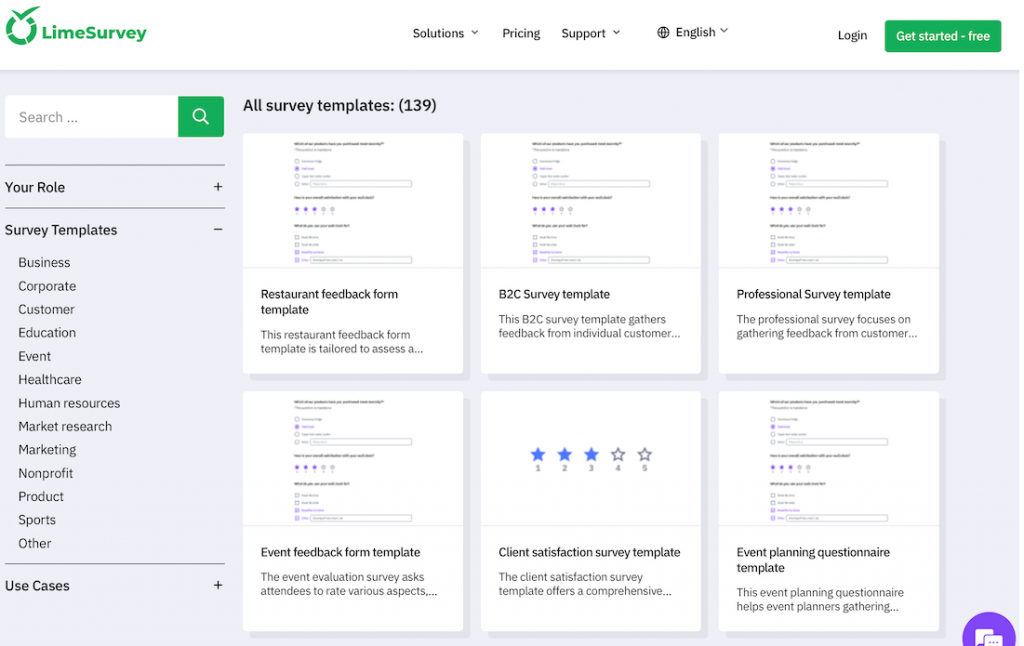
Because it is open-source, I can self-host it and maintain full control over exactly where response data is stored, which matters a lot to the academic and privacy-focused teams I usually recommend it to.
The library of over 1,000 ready-made templates has saved me real setup time on more than one project.
I will be honest: the interface feels dated compared to newer, more visual tools, and I have found that live edits get restrictive once responses have already started coming in.
Best For: Research leads in academia and government, and privacy-focused organizations, that need full control over where response data lives.
Pros:
- Self-hosting option gives complete control over where data lives
- Supports 80-plus languages out of the box
- Library of 1,000-plus ready-made templates
Cons:
- Interface feels dated next to newer, more visual tools
- Live edits are restrictive once responses have already started coming in
Capterra Rating: 4.4/5
Pricing: Free self-hosted version available; cloud plans start around $39/month
10. Paperform: Best for Branded Forms and Payment Collection
Paperform blurs the line between a form and a landing page in a way I genuinely like.
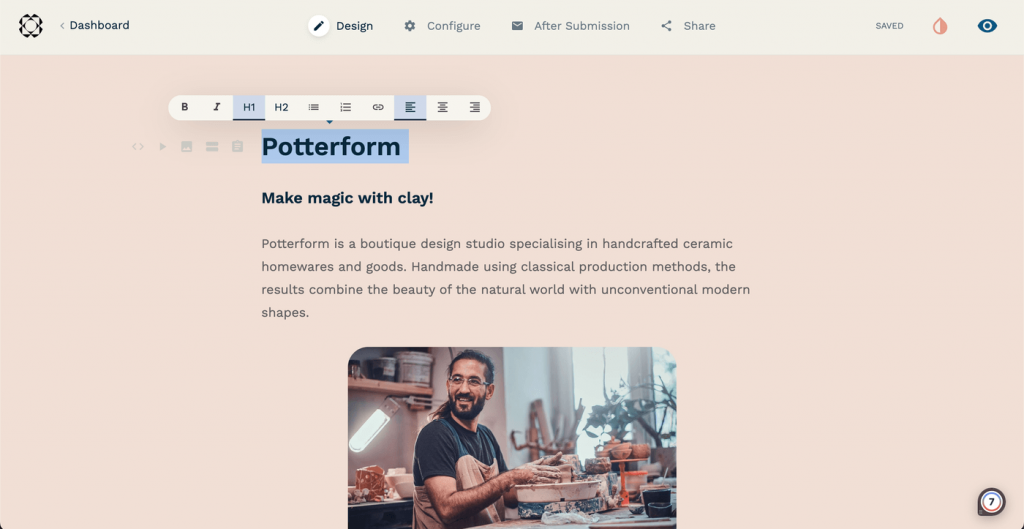
Surveys, order forms, and booking pages all get built in the same editor, styled to match my brand instead of looking like a generic template someone filled in.
I have used the native e-signature and payment collection to run intake forms that would have otherwise needed a second tool, and the AI form generator has gotten close enough from a text prompt that I only needed to tweak a couple of fields afterward.
The real limitation is that there is no free plan, just a seven-day trial, and team collaboration features sit behind a higher tier.
Best For: Creators, agencies, and service businesses, roughly 1 to 20 people, that need forms doubling as branded, payment-collecting landing pages.
Pros:
- Forms double as branded, checkout-style pages instead of looking like generic forms
- Native e-signature and payment collection built in
- AI can generate a full form from a text prompt
Cons:
- No free plan, only a seven-day free trial
- Team collaboration features require a higher-tier plan
Capterra Rating: 4.8/5
Pricing: Starts at $29/month
My Top 3 SurveyMonkey Alternatives
If you do not have time to read through all 10, here is where I would start.
1. Best Overall: Qualaroo
I put Qualaroo at the top because it solves a problem SurveyMonkey was never built for: catching feedback while someone is still on your page, not after they have clicked away.
I have watched teams struggle with post-visit email surveys that get ignored for days, and Qualaroo’s Nudge™ format fixes that with one contextual question at the right moment.
The AI Survey Creator drafts and targets the survey for me, and AI Customer Feedback Analysis reads the responses, which is why I recommend this one first.
2. Best Free: Google Forms
When budget is the only real constraint, I point people to Google Forms first.
There is no response cap, no premium tier hiding features I need, and it syncs straight into Google Sheets, covering most internal survey needs without extra setup.
I have used it for everything from employee check-ins to event feedback, and it has never felt like it was holding features back to upsell me later. The tradeoff: no in-app delivery, and branding stays basic.
3. Best for Enterprise Research: Qualtrics
When a survey program grows into a real research function, not just a feedback loop, I point people toward Qualtrics.
Its ExpertReview tool reviews questions before launch and flags design issues, which I have not seen matched well elsewhere on this list, and the reporting depth genuinely supports serious research. I will not pretend the pricing is approachable.
Budget for a real sales conversation and a contract running into the tens of thousands annually, but for enterprise teams, the depth earns its cost.
How Did I Evaluate These SurveyMonkey Alternatives?
I scored each tool against seven factors that most directly affect whether a survey program actually works, rather than just listing features.
Survey Distribution and Reach: Can the tool reach your audience through email, embed, link, or SMS, wherever they already are? Google Forms, Zoho Survey, and ProProfs Survey Maker score well here.
On-Site and In-App Feedback Capture: Does the tool let you ask a question while someone is actively browsing or using your product? Qualaroo and Typeform lead on this criterion.
Survey Logic and Personalization: How strong is the branching, skip logic, and piping? Qualaroo, Alchemer, Qualtrics, and QuestionPro all score highly here.
Reporting and Actionable Insights: Does the platform help you interpret data, not just collect it? Qualaroo, Qualtrics, and QuestionPro stand out for dashboards and AI-assisted analysis.
Ease of Use and Setup Speed: Can a non-technical team launch a survey without training? Google Forms, ProProfs Survey Maker, and Zoho Survey are the fastest to get running.
User Reviews and Ratings: I used Capterra as the single source for every rating in this article, since a consistent source matters more than chasing the highest number across multiple review sites.
Value for Money: I weighed entry-level pricing against what you actually get in return, including response caps, integrations, and reporting depth, not just the sticker price.
If your priority is feedback that is timely, targeted, and easy to act on, tools built around in-context surveys and strong targeting tend to deliver better results, which is why I keep landing back on Qualaroo for product and CX teams specifically.
FREE. All Features. FOREVER!
Try our Forever FREE account with all premium features!
Which SurveyMonkey Alternative Fits Your Role?
I get asked this more than any other question, so here is the shortcut version. Find your role or company type, and match it to the pain point and outcome I would actually expect.
| If You Are… | Your SurveyMonkey Pain Point | Pick This | Outcome to Expect |
| Product manager at a SaaS company watching for churn | Feedback arrives by email after the user has already left, too late to intervene | Qualaroo | Catch drop-off signals in the moment and route them into your churn workflow |
| Agency managing feedback across multiple e-commerce clients | Ad hoc tools scattered across client accounts, no shared dashboard | Qualaroo (master account) | One login, multiple client Nudges, consolidated reporting |
| Head of Customer Success tracking NPS | Email-based NPS gets low, slow response rates | Qualaroo, or Zoho Survey if already on Zoho | Higher completion by asking inside the product instead of over email |
| Founder or ops lead at a 1 to 10 person startup | Cost creeps up the moment you need more than the free tier | Google Forms | Zero cost, unlimited responses, live the same day |
| UX or design researcher validating a redesign | Needs a contextual, in-the-moment signal, not a link blasted to everyone | Qualaroo, or Typeform for a lighter setup | Higher-quality qualitative feedback tied to the exact page or flow |
| Business analyst at an enterprise, 1,000-plus employees | Needs predictive analytics and brand tracking across many stakeholders | Qualtrics | Research-grade reporting that survives a board-level review |
| Marketing lead running lead-gen or event forms | Static, grid-style forms convert poorly inside a paid funnel | Typeform, or Paperform, for branded, payment-collecting pages | A conversational or branded flow that lifts completion |
| Ops or HR generalist at an SMB, cost-sensitive | Needs CSAT or NPS without enterprise pricing | Zoho Survey, especially if already on Zoho CRM | CRM-connected surveys without a new subscription for one-off feedback |
| Research lead in academia or government | Data residency and self-hosting requirements | LimeSurvey | Full control over exactly where response data lives |
If your team spans more than one of these rows, which is common once a company passes about 50 employees, I would still start with whichever pain point costs you the most time right now, not the one that sounds the most impressive to fix first.
Here’s What I’d Actually Pick
All 10 tools are built for different jobs, which is the whole point of matching your pick to your role rather than chasing the highest star rating.
If your team is small and the budget is zero, Google Forms or LimeSurvey’s self-hosted tier will carry you further than you would expect.
If you are running research with many stakeholders, Qualtrics is worth the sales call and the wait.
But if your real problem is feedback arriving too late, after someone has already left your page or churned quietly without saying why, that is the gap I keep coming back to Qualaroo to close.
The AI Survey Creator gets a targeted survey live from a plain-language prompt, and AI Customer Feedback Analysis reads the responses, so you are not the one doing it at midnight.
Frequently Asked Questions
What is the best free alternative to SurveyMonkey?
Google Forms is the strongest fully free option, with no response caps and solid Google Workspace integration. Qualaroo's free plan covers up to 50 responses on the core Nudge surveys, though AI Survey Creator and AI Customer Feedback Analysis require the Essentials plan.
Which SurveyMonkey alternative is best for in-app feedback?
Qualaroo is built specifically for this. Its Nudge™ surveys trigger inside a website or mobile app based on behavior or URL, so you capture feedback while someone is still using your product instead of hoping they respond to an email later.
Is there a SurveyMonkey alternative for enterprise research?
Qualtrics is the closest match for enterprise-grade research, with predictive analytics, ExpertReview design guidance, and deep third-party integrations across Salesforce, Adobe, and Marketo. Budget for a custom quote rather than a published tier, since real contracts commonly run from the mid five figures to six figures annually depending on modules and response volume.
Which SurveyMonkey alternatives support offline data collection?
QuestionPro and Alchemer both support offline response collection for field research, useful when respondents will not have reliable internet access at the time they answer. Responses are stored locally on the device and sync automatically once a connection is available, which matters most for door-to-door research, event surveys, and remote fieldwork.
How long does it take to switch from SurveyMonkey to an alternative?
It depends on the tool. Qualaroo and Google Forms can be live within a day. Zoho Survey and Alchemer typically take a few days to configure. Qualtrics rollouts can take weeks due to data infrastructure, integrations, and internal approval steps.
Are any SurveyMonkey alternatives free forever?
Google Forms is free with no time limit or response cap. Qualaroo and Zoho Survey both offer permanently free plans with feature or response limits rather than a time-boxed trial. LimeSurvey is free indefinitely if you self-host it, though you take on your own server and maintenance costs in exchange.
Which SurveyMonkey alternative is best for a small team on a tight budget?
I would put Google Forms first if the budget is zero, and Zoho Survey next if you need a bit more structure and reporting than Forms offers. Both keep costs low without forcing you into an annual contract to get started.
Is LimeSurvey a good fit if I want to self-host my survey data?
Yes. LimeSurvey's open-source core is built for exactly that, letting you run the software on your own server so response data never touches a third-party cloud. It is a common pick for universities, government teams, and privacy-focused organizations that need to keep data in-house for compliance reasons.
FREE. All Features. FOREVER!
Try our Forever FREE account with all premium features!

 We'd love your feedback!
What did you like & how can we make it even better?
 Thanks for your feedback!
 Ask Your Question
Have a question? Get expert help to make your decision easier.