
Typeform alternatives started to matter to me once Typeform stopped being the obvious favorite. It was the tool I loved for online surveys, because a form that feels like a conversation gets answered. Then I found options that gave me more of what I needed for less.
The caps are what changed my mind. Basic costs $28 a month, billed annually, and covers 100 responses; those 100 are shared across every form in the account, and removing Typeform’s branding or tracking drop-off means moving up a tier. A busy month can end a campaign mid-flight.
That sent me through ten tools, which I weighed on survey experience, analysis, and cost. Free, simple, or powerful, each type has a candidate here. Qualaroo is one of them, and I am blunt about where it comes up short. One question narrows the field fast: do you want a friendlier form builder, or a tool that explains why people answer the way they do?
Why Are Teams Looking for Typeform Alternatives?
Typeform does its core job beautifully, and I am not arguing otherwise. The points below are where its pricing page, plus my own use, suggested that certain teams would be happier elsewhere. All of them concern fit: response volume, what each tier unlocks, and room to customize.
Response Caps Bite Fast
Typeform’s free plan allows 10 responses a month, Basic 100, Plus 1,000, and Business 10,000, and those allowances are shared across every form in the account, not given per form. They also stop hard, so a good campaign can hit the ceiling mid-flight. A busy month on Basic means paying for the next tier, whether or not you wanted to. The caps shaped how I planned surveys more than my questions did.
Pricing Jumps With Volume
Basic costs $28 a month, billed annually, or $39 a month, billed monthly. Plus runs $56 or $79, and Business runs $91 or $129. A campaign that expects 1,500 responses does not fit Plus’s 1,000, so it needs Business, a rise of about 62 percent driven purely by volume. On Basic, the cost comes to about $0.28 per response. Capterra’s listing also shows Talent at $169 and Growth Pro at $379 on a monthly billing.
Useful Features Sit on Higher Tiers
Plus is where Typeform branding can be removed, and Business is where drop-off and conversion tracking arrive. Seats climb the same way: one on Basic, three on Plus, and five on Business. A team that wants a clean, branded survey and a few collaborators ends up on the middle tier almost by default. That is a lot of climbing for what feels like basic polish.
Customization and Support Left Me Wanting More
In my experience, customization was less flexible than that of competitors’, the payment structure felt rigid, and the support team was not always quick to respond. Those are small gripes next to the design quality, but they add up once a program grows. A 4.7 across 973 Capterra reviews says the product is loved, so I read these as fit issues, not flaws.
The Top 10 Typeform Alternatives
Entry prices and Capterra ratings for all 10 tools come first, followed by my notes. Focus on the tools nearest to how you use Typeform today, since some are form builders and others are full feedback platforms.
| Tool | Best For | Starting Price | Capterra Rating |
| Qualaroo | Capturing Real-Time User Insights In-App & on Your Website Using Contextual, AI-Powered Micro-Surveys | Free plan; from $19.99/mo | 4.7/5 |
| Jotform | Highly customizable forms with a free plan | Free plan; from $34/mo | 4.7/5 |
| SurveyMonkey | Robust survey data analysis | $30/mo | 4.6/5 |
| SurveySparrow | Conversational, multi-channel surveys | Quote-only | 4.4/5 |
| Google Forms | Quick, free form creation | Free | 4.7/5 |
| Survicate | Multichannel surveys with a centralized research hub | Free plan; from $114/mo | 4.6/5 |
| Zonka Feedback | Omnichannel CX with native AI feedback intelligence | Quote-only | 4.8/5 |
| Alchemer | Flexible enterprise feedback management | Quote-only | 4.5/5 |
| Qualtrics (XM for CX) | Customer experience management | Quote-only | 4.6/5 |
| Formstack | Industry-specific templates and form workflows | $83/mo | 4.0/5 |
1. Qualaroo: Best for Capturing Real-Time User Insights In-App & on Your Website Using Contextual, AI-Powered Micro-Surveys
Typeform alternatives that ask the question at the right moment, and not only prettily, are what I wanted, and Qualaroo delivers that. A Nudge™ appears with a relevant question exactly when it matters, and conditional logic lets me build flows that collect both numbers and reasons. NPS, CSAT, and CES all run from one account for me.
With it, I improved my website and app, increased conversions, gathered product feedback, and reduced churn. Pairing surveys with Heatmaps and Session Recordings showed me where users hesitated before leaving, which a score alone never would have.
Written answers are handled by Customer Feedback Analysis AI, with AI Sentiment Analysis gauging mood, Automated Tagging grouping themes, and the AI Response Summarizer distilling the remainder. I can target a named individual via the Identify API, and the surveys themselves are hosted on websites, products, prototypes, and mobile apps.
Pros
- AI Survey Creator drafts a full Nudge from a prompt, no manual setup required
- Question branching and skip logic so respondents only see relevant follow-ups
- Native AI Customer Feedback Analysis, including AI Sentiment Analysis and word cloud generation for open-text responses
- Heatmaps and Session Recordings show what a user was doing right before they responded
- Advanced targeting by behavior, URL, exit intent, and custom user properties
- Identify API ties responses back to a real user by email or customer ID
- Nudge for Prototype works on Figma, Adobe XD, and InVision before a product ships
- Multilingual surveys in 100+ languages
- iOS and Android SDK for native in-app surveys
- Salesforce, HubSpot, and Slack integrations for CRM-connected feedback workflows
Cons
- Free accounts do not come with a dedicated onboarding or account manager, which is a paid-plan service
- There is no installable or self-hosted Qualaroo, so every user depends on a working internet connection
How Qualaroo Compares to Typeform: Typeform is built to make forms people enjoy filling in. Qualaroo is built to ask in context and explain the answer, from a free plan, with paid plans that include unlimited Nudges and responses on one domain. It is less playful than Typeform and has no payments, file uploads, or e-signatures.
Pricing: Free plan available, up to 50 responses with all premium features. Essentials at $19.99/month, Business at $49.99/month, and Enterprise from $149.99/month.
User Rating: 4.7/5 (Capterra)
KingsPoint used Qualaroo to uncover a problem worth about $60,000, the kind of finding that comes from asking people why, not only collecting what they ticked.
2. Jotform: Best for Highly Customizable Forms With a Free Plan
Jotform let me align surveys with my brand identity and slot them into my interface without fuss. The drag-and-drop builder, a wide range of question types, and logic conditions gave my surveys a personal touch, and more than 800 survey templates meant I could start right away.
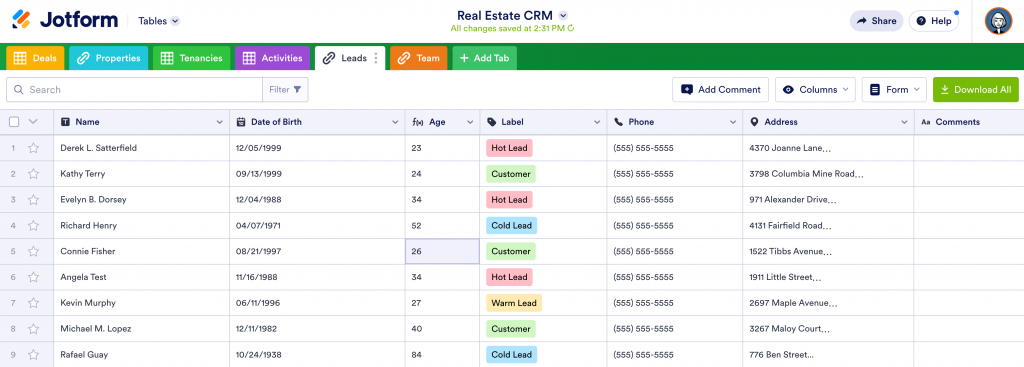
More than 100 app connections, including Google Analytics, PayPal, Adobe, Zoom, and HubSpot, keep my workflow running smoothly, while Forms Analytics turns trends into visual reports. Changes autosave, and colleagues can work alongside me in real time.
The free version caps out at 5 forms and 100 responses, with paid plans from $34 a month, so it works well for a pilot and gets pricier as volume grows. Beginners face a steep learning curve, and the odd bug can crash a session, so I save my work often. For a team with someone comfortable in form builders, the effort pays back quickly, but a first-time survey owner should expect a rough first week.
Pros
- Drag-and-drop builder with many question types
- More than 800 survey templates
- Integrations with 100+ apps
- Real-time collaboration and autosave
Cons
- A steep learning curve for beginners
- Occasional bugs and crashes
How Jotform Compares to Typeform: Jotform offers far more customization and a free plan with a larger template library, but with a busier interface than Typeform’s one-question-at-a-time flow.
Pricing: Free plan available, limited to 5 forms and 100 responses. Paid plans start at $34/month.
User Rating: 4.7/5 (Capterra)
3. SurveyMonkey: Best for Robust Survey Data Analysis
I have extensive experience with SurveyMonkey, and I can vouch for it as a Typeform alternative when analysis is the priority. Results appear in real time on the dashboard and are exported as PDFs, Excel files, or CSV files.
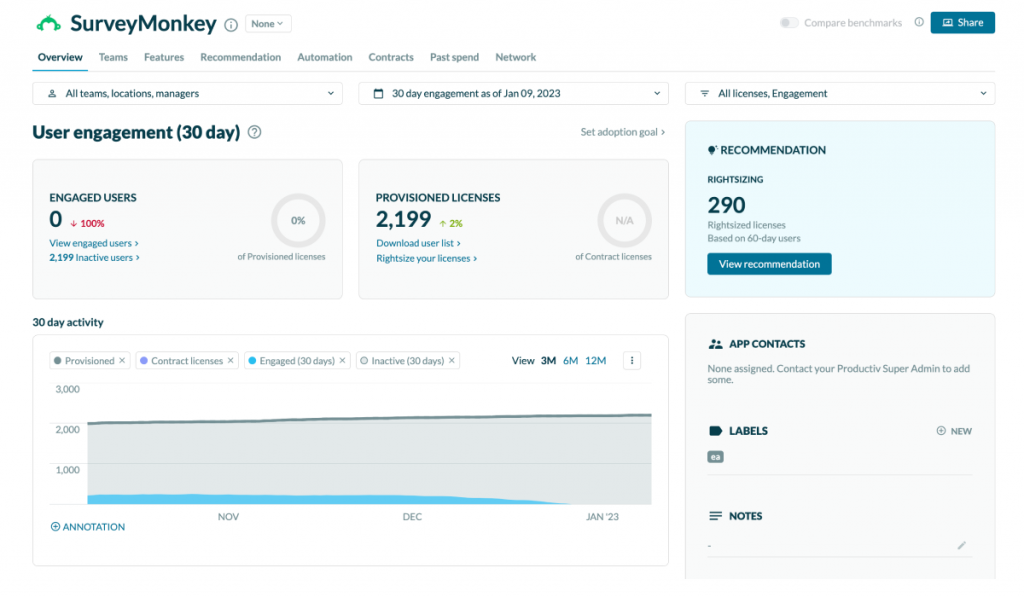
Charts, graphs, word clouds, sentiment analysis, and data filtering help me understand the data, and I can build custom reports and dashboards and connect to Tableau and Power BI for custom visuals. Question types range from multiple-choice and rating scales to open-ended, and advanced logic, skip patterns, and piping make surveys dynamic.
Plans start at $30 per user per month, and Capterra’s review count of over 10,000 is the largest among paid tools here. Beginners can struggle with logic, and some people have hit crashes and login problems on the mobile app, so I would test the mobile experience before rolling it out to a field team.
Pros
- Real-time analytics with PDF, Excel, and CSV export
- Charts, word clouds, and sentiment analysis
- Skip patterns and piping for dynamic surveys
- Tableau and Power BI integrations
Cons
- Logic can be hard for beginners to set up
- The mobile app has crashed and has login issues
How SurveyMonkey Compares to Typeform: SurveyMonkey goes much deeper into analysis and reporting, with far more reviews, but it lacks Typeform’s conversational polish and charges per user.
Pricing: Paid plans start at $30/user/month.
User Rating: 4.6/5 (Capterra)
4. SurveySparrow: Best for Conversational, Multi-Channel Surveys
SurveySparrow is my go-to when I want feedback to feel like a conversation rather than a static form. Its chat-style surveys and clean interface make it easy for people to engage, and I consistently see higher completion than with traditional form tools.
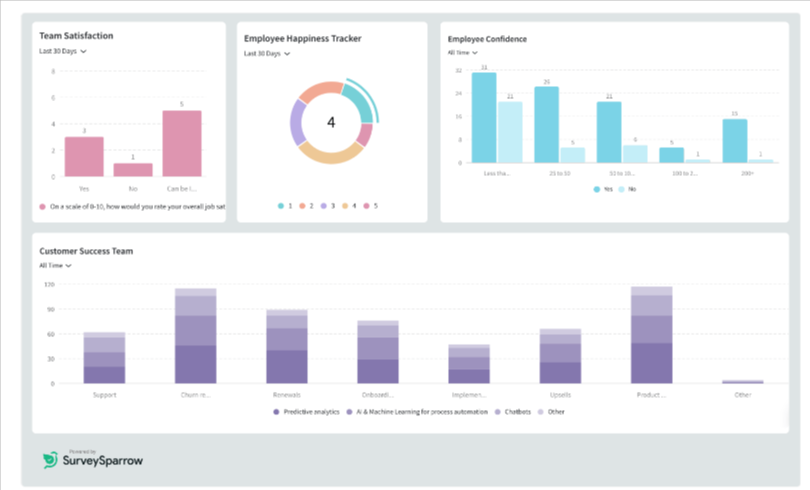
What stands out is how fast I can go from idea to live survey. The template gallery covers many uses, and dashboards and filters help me spot patterns by audience, channel, or score. I can schedule recurring surveys, trigger NPS or CSAT after key actions, and send reminders automatically.
Distribution covers email, web links, in-app widgets, and QR codes, with white-labeling and integrations to CRMs and help desks. Advanced automation sits on higher tiers; it can feel like more than you need for simple forms, and pricing requires contacting the vendor.
Pros
- A chat-style experience that helps with completion
- Multi-channel distribution, including QR codes
- Recurring surveys and automated reminders
- White-labeling and CRM integrations
Cons
- Advanced automation sits on higher tiers
- More robust than very simple forms need
How SurveySparrow Compares to Typeform: SurveySparrow maintains a conversational feel and adds automation and multi-channel delivery, with quote-based pricing rather than posted tiers.
Pricing: Free trial available. Pricing requires contacting the vendor.
User Rating: 4.4/5 (Capterra)
5. Google Forms: Best for Quick, Free Form Creation
Google Forms is my top recommendation for straightforward survey needs. Crafting a survey with multiple-choice and short-answer questions takes just a few clicks, and the integration with Google Sheets automatically organizes responses and turns them into charts.
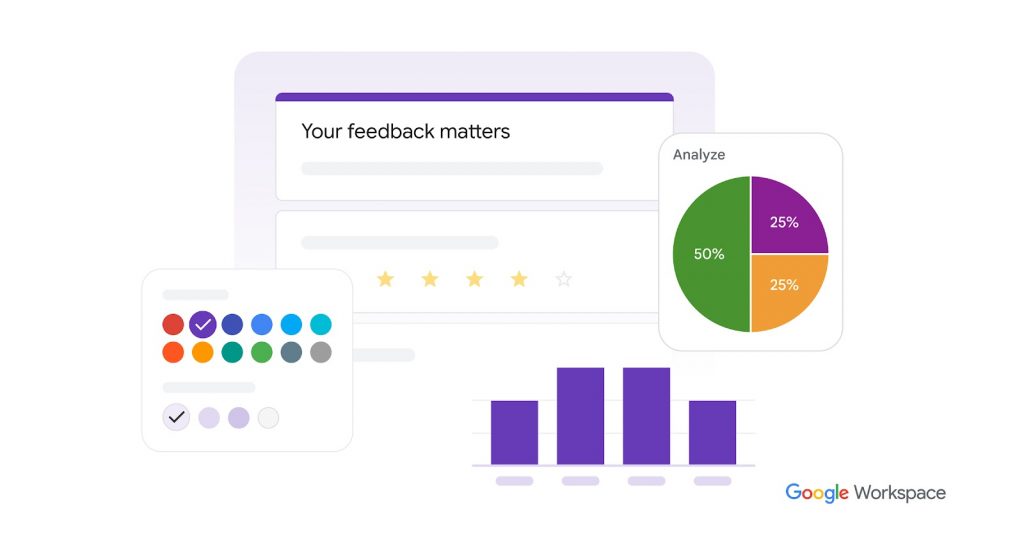
Prebuilt designs cover feedback, registration, quizzes, and orders. Question formats include checkboxes, linear scales, dates, and times, and conditional logic determines whether questions are shown or hidden. Themes accept images, videos, logos, colors, and fonts.
It is free for anyone with a Google account, and Capterra’s 4.7 rating is based on more than 11,000 reviews, the largest on this list. Design options are limited, sharing is link-only, and it cannot gather contextual insights like the feedback tools here, so I treat it as the right answer for simple, one-off questions and the wrong one for a feedback program.
Pros
- Free for anyone with a Google account
- Google Sheets integration with automatic charts
- Conditional logic and many question formats
- A very large Capterra review base
Cons
- Limited design and customization
- Link-only sharing and no contextual insights
How Google Forms Compares to Typeform: Google Forms costs nothing and has no response cap, but it is far plainer than Typeform and offers no contextual targeting.
Pricing: Free for anyone with a Google account.
User Rating: 4.7/5 (Capterra)
6. Survicate: Best for Feedback Across the Product and the Website
Survicate is where I would go if you want surveys to reach beyond a form link. A survey can run on the website, within the product, via email, or through a shared link, and the replies are collected in a single Research Hub rather than as separate exports.
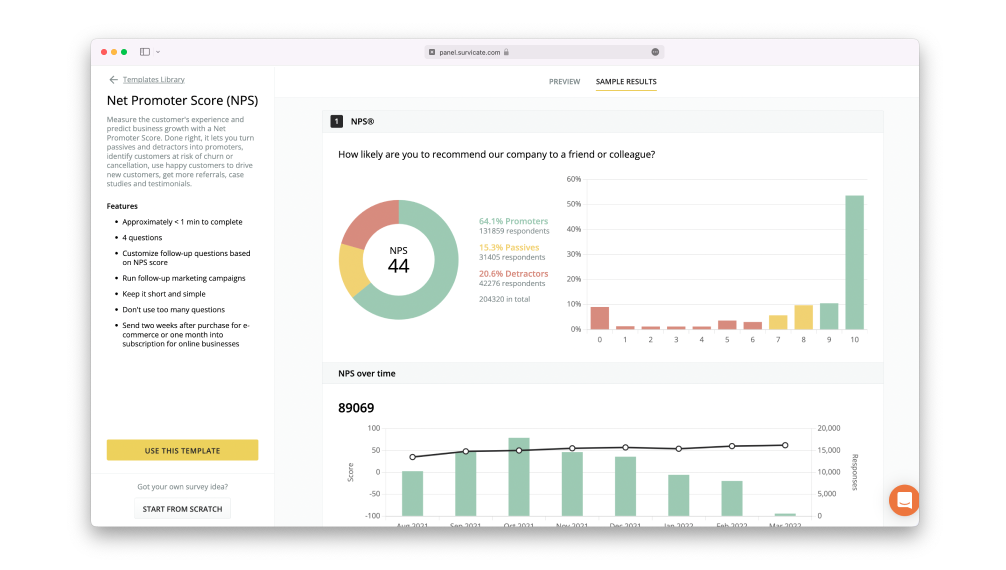
Rules based on attributes and events decide who sees a question, a partly finished survey still saves its answers, and AI-assisted analysis files comments under themes. NPS, CSAT, and CES formats are ready to use.
You can start on a permanent free plan with 25 responses a month, and paid plans begin at $114 a month, with the response volume you pick driving most of the price. The jump between tiers is noticeable, so I would test the free plan on one live survey before committing. It also feels less design-led than Typeform and offers no payment or file upload options.
Pros
- One Research Hub for replies from every channel
- AI-assisted theme grouping of comments
- Ready-made NPS, CSAT, and CES formats
- A permanent free plan
Cons
- A noticeable jump between free and paid tiers
- Less design-led than Typeform
How Survicate Compares to Typeform: Survicate reaches more channels and analyzes comments, offers a free plan, but lacks Typeform’s polished conversational design.
Pricing: Free plan available, up to 25 responses a month. Paid plans start at $114/month.
User Rating: 4.6/5 (Capterra)
7. Zonka Feedback: Best for Omnichannel CX With Native AI Feedback Intelligence
Zonka Feedback is for teams whose surveys have grown into a customer experience program. Delivery spans email, SMS, tablets, kiosks, websites, and offline devices, and real-time alerts point an unhappy customer out to the team as it happens.
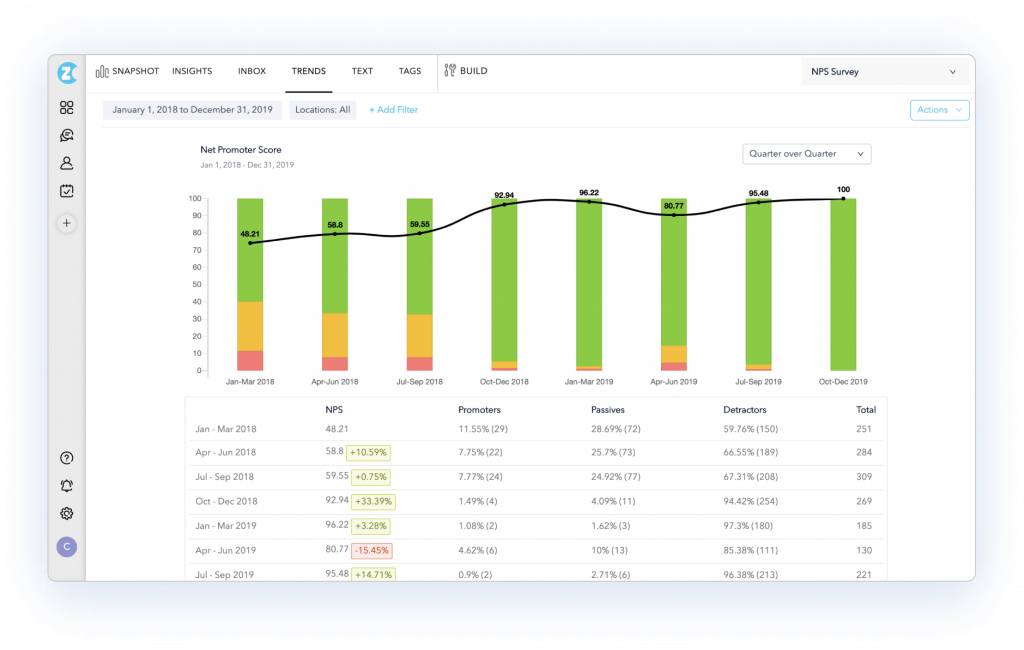
AI Feedback Intelligence studies comments for recurring themes, mood, and trends, and closed-loop workflows route negative feedback to the appropriate person for response. Regional hosting helps when data residency rules apply, and role-based access suits larger teams.
Prices are not listed, so you start with a quote, and Capterra’s 4.8 rests on 68 reviews, a modest base for such a high score. It is more of a platform than a team that only wants an attractive form, so I would look at it only if your surveys already feed a wider customer experience program, with owners ready for follow-up and alerts.
Pros
- Delivery from email and SMS to kiosks and offline devices
- Instant alerts for unhappy customers
- AI that reads comments for themes, mood, and trends
- Closed-loop handoff to an owner
Cons
- Pricing is not published
- More platform than a simple form needs
How Zonka Feedback Compares to Typeform: Zonka swaps Typeform’s design focus for automation, multiple channels, and AI analysis, but requires a quote.
Pricing: Quote-only, contact vendor for pricing.
User Rating: 4.8/5 (Capterra)
8. Alchemer: Best for Flexible Enterprise Feedback Management
Capterra lists Alchemer among Typeform’s alternatives, and I would point to it for teams that have outgrown simple forms. It supports a wide range of question types, installs without a developer, and does not charge extra per response, removing the volume-related worry that Typeform’s caps create.
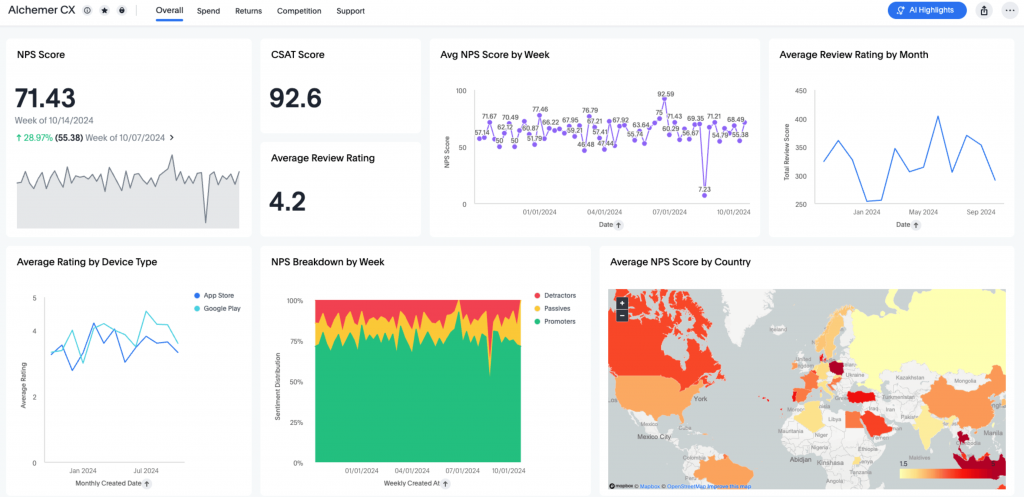
Templates speed up the start, surveys can be multilingual and multimedia, and branching, skip logic, and mobile in-app surveys are all available. Reports download in several formats, and BI tools and Webhooks plug in without fuss.
A maze of sub-menus can confuse new users, so give a first-time builder a little time to find their way around. Customization is limited compared with some rivals, and pricing is quote-only, which turns budgeting into a conversation instead of a lookup. Capterra rates it 4.5 on 319 reviews, a healthy base for an enterprise tool.
Pros
- Many question types and no developer needed
- No extra charge per response
- Reports in several download formats
- BI and Webhook connections
Cons
- A maze of sub-menus can confuse
- Limited customization
How Alchemer Compares to Typeform: Alchemer offers more flexibility and no per-response charges, though it looks plainer and does not publish prices.
Pricing: Quote-only, contact vendor for pricing.
User Rating: 4.5/5 (Capterra)
9. Qualtrics (XM for CX): Best for Customer Experience Management
Qualtrics caught my attention as a Typeform alternative because it goes beyond feedback to encompass the whole experience. The XM suite brings predictive intelligence, automatic statistical testing, cluster analysis, sentiment tracking, proactive alerts, and data model creation.
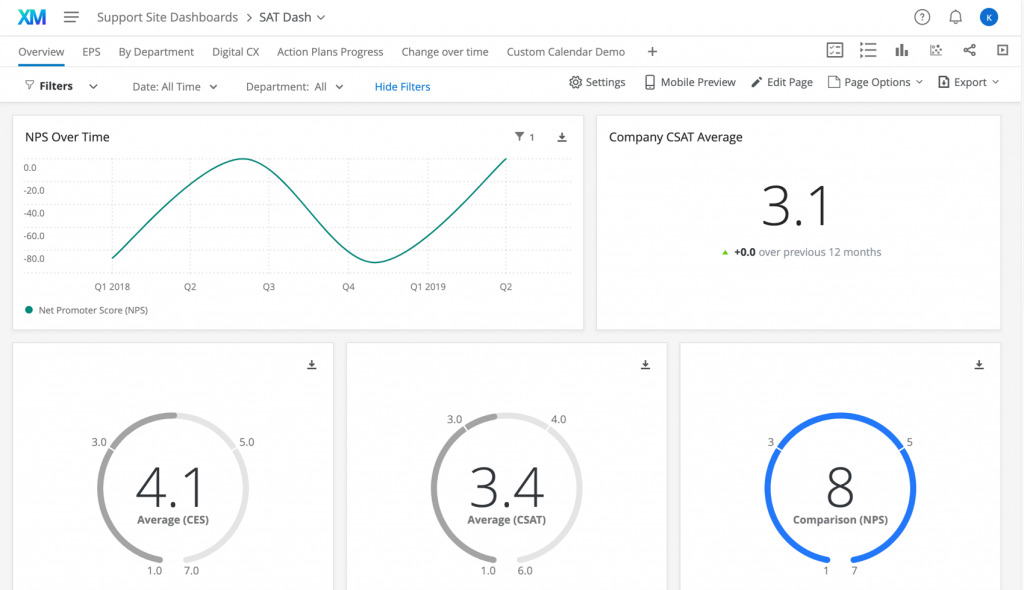
About 30 graph types visualize results, interactive multimedia keeps surveys engaging, and integrations with Canva, Thematic, and Segment broaden insights. Surveys can be customized to closely match a brand, and feedback can be shared across departments for a fuller view.
Setup takes time, pricing is quote-based, and tilts toward larger teams, and the sheer range of features can overwhelm beginners, so I would budget for onboarding before the first survey goes live. Teams ready for that investment get a genuinely complete picture, with feedback shared across departments rather than sitting in a single inbox.
Pros
- Predictive intelligence and cluster analysis
- About 30 graph types
- Surveys customized to match a brand
- Canvs, Thematic, and Segment integrations
Cons
- Setup takes a lot of time
- Quote-based pricing that favors larger teams
How Qualtrics Compares to Typeform: Qualtrics goes far beyond Typeform into analysis and research, with a much heavier setup and no public price.
Pricing: Quote-only, contact vendor for pricing.
User Rating: 4.6/5 (Capterra)
10. Formstack: Best for Industry-Specific Templates and Form Workflows
In my exploration of Formstack, I found a powerful tool for quickly building and sharing surveys. Industry-specific templates for healthcare, education, and marketing let you start straight away, and the Form Importer makes it easy to migrate existing forms.
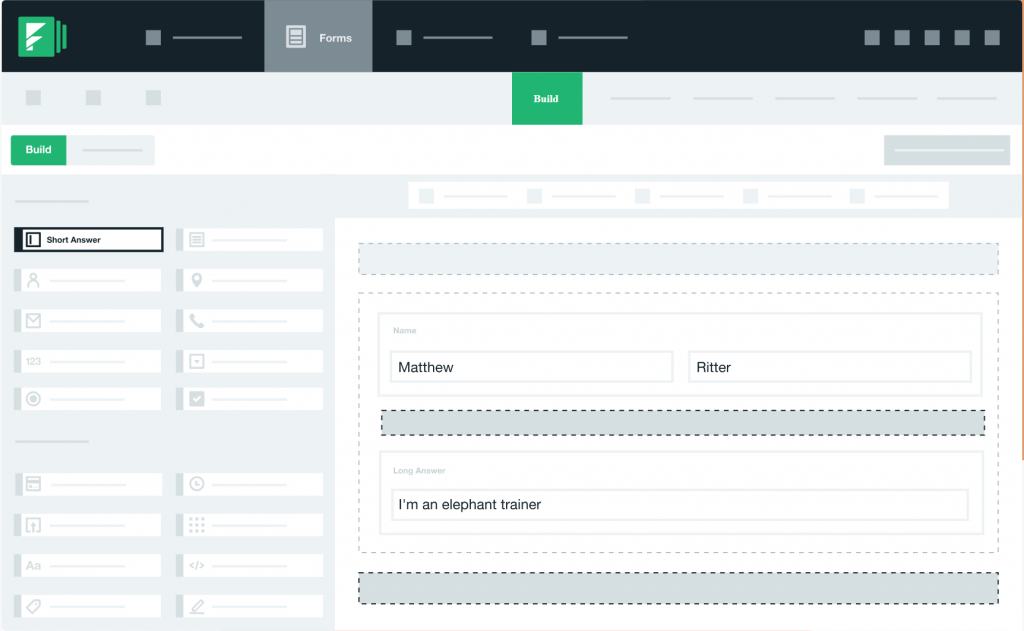
A One Question at a Time option gives a smoother mobile experience, and Save and Resume lets respondents pick up where they left off. Conditional logic, file uploads, calculations, and electronic signatures extend its capabilities beyond surveys, and it integrates with Salesforce, Mailchimp, Google Analytics, and Stripe.
Capterra rates it 4.0 on about 124 reviews, the lowest on this list, so weigh it against stronger-rated tools before shortlisting. It could be more mobile-friendly, branding and styling options are limited, and plans start at $83 a month, a high entry price for a form builder. It earns its place only if file uploads, calculations, or e-signatures are on your must-have list.
Pros
- Industry-specific templates and a Form Importer
- One Question at a Time and Save and Resume
- File uploads, calculations, and e-signatures
- Salesforce, Mailchimp, Google Analytics, and Stripe integrations
Cons
- It could be more mobile-friendly
- Limited branding and styling options
How Formstack Compares to Typeform: Formstack offers more workflow features, such as e-signatures and file uploads, but with a lower rating and less design polish.
Pricing: Paid plans start at $83/month.
User Rating: 4.0/5 (Capterra)
Which Typeform Alternative Should Be Your Top Pick?
Short on time? Three picks, each matched to a different reason for leaving Typeform.
1. Qualaroo: Best for Measuring Customer Experience in Context
Qualaroo is where I would begin if you want to understand customers, not only collect their answers. A Nudge asks a relevant question at the right moment without annoying anyone, and conditional logic lets me build flows that capture both reasons and ratings.
NPS, CSAT, and CES share one account, and sentiment scoring, tagging, and a response summarizer handle the written answers, free plan included. Heatmaps and Session Recordings show where users hesitated; the Identify API identifies a named user; and surveys run on websites, products, prototypes, and mobile apps.
Exit surveys explain lost conversions, and Salesforce, HubSpot, and Slack connections carry results onward. All premium features are available on the free plan, so I can try the whole tool before paying. Nudge for Prototype even lets me test a survey before launch, and paid plans leave responses uncapped on one domain.
2. Jotform: Best if You Want Personalized Surveys
Jotform is my second pick for anyone who values personalization. The drag-and-drop builder, many question types, and logic conditions made my surveys feel like part of my brand, and more than 800 templates mean a blank page is rare. Connections to over 100 apps keep the workflow smooth, and Forms Analytics, with visual reports, make the data readable.
A free plan with five forms and 100 responses is enough to test the waters. The compromises are real: the learning curve is steep for beginners, bugs can occasionally crash a session, and it does not analyze comments the way a feedback platform does.
For teams that want customization and a low entry cost, it remains a strong, flexible choice, and the template library alone saves hours. A quick pilot on one real form shows whether the interface feels friendly or busy to your team.
3. SurveyMonkey: Best if Analysis Is the Priority
SurveyMonkey is the one I would try when analysis matters most. Results arrive in real time, and can be exported as PDF, Excel, or CSV; charts, word clouds, sentiment analysis, and filtering make the data easy to read, and custom reports and dashboards can feed Tableau and Power BI.
Advanced logic, skip patterns, and piping keep surveys responsive, and a huge template collection speeds up creation. Over 10,000 Capterra reviews give it the strongest evidence base here. Know the costs, though: pricing is per user, the logic can be hard for beginners, and the mobile app has experienced crashes and login issues.
For teams that need depth in reporting more than a polished conversational look, those trade-offs are usually worth accepting. Piloting on one survey tells you quickly whether the reporting justifies the per-user cost, and charts and word clouds are easy to paste into a slide when someone asks for a summary.
How Did I Evaluate These Typeform Alternatives?
I evaluated the Typeform alternatives in this list based on what a survey team needs when a good-looking form alone isn’t enough: room for responses to grow, analysis that explains the answers, and predictable pricing. Each of the ten faced one shared set of six factors, with thin samples and quoted prices marked. Response caps were my main grievance, so volume and cost carry extra weight.
Six factors carried the weight:
User Reviews and Ratings
Scores come from Capterra, each shown with its review count. Typeform’s 4.7 across 973 reviews is a high bar, while Zonka’s 68 reviews and Formstack’s 4.0 earned a closer look. Thousands of reviews, as on Google Forms and SurveyMonkey, outweigh a handful of perfect ratings.
Essential Features and Functionality
Survey experience, logic, analysis, and integrations came first, because they decide what a team can learn. Everyday usefulness mattered more than feature count. Going beyond collection into analysis earned a strong plus, since that was my own gap.
Ease of Use
Typeform makes a first survey come together quickly, so I measured how fast each tool gets a team from signup to a live survey with no training. Matching that speed, they scored well, and heavier setups needed depth to justify themselves.
Customer Support
A survey that fails mid-campaign needs a fast answer, so I looked at whether real help comes with entry plans or only bigger contracts, and whether quote-based vendors include support or sell it as an extra. Slow replies, which I felt with Typeform, cost points.
Value for Money
With caps as my main complaint, I priced each tool at realistic volumes rather than at its headline rate. Free plans and posted prices beat costs that appear after a sales call, and tools with no hard response ceiling earned extra credit.
Personal Experience and Experts’ Opinions
Entries for tools I have used are marked as such and include details that a pricing page never shows. For the rest, I leaned on research and on findings that recur across independent sources. I screened every vendor for shutdowns and acquisitions first, since a platform that vanishes costs more than any license.
FREE. All Features. FOREVER!
Try our Forever FREE account with all premium features!
How Do You Choose the Right Typeform Alternative for Your Team?
Find the row that matches your biggest Typeform frustration. Rows with several names list tools that solve it in different ways, so read my notes first.
| If My Main Typeform Frustration Is… | Consider This Alternative |
| Response caps run out mid-campaign | Qualaroo, Google Forms, or Jotform |
| I need analysis beyond collecting answers | Qualaroo, SurveyMonkey, or Qualtrics |
| I want a friendly, conversational look | SurveySparrow |
| I want a free tool to start | Google Forms, Jotform, or Survicate |
| My surveys grew into a CX program | Zonka Feedback, Alchemer, or Qualtrics |
| I need file uploads or e-signatures | Formstack or Jotform |
A Good-Looking Form Is Not the Same as a Good Answer
Typeform proves that a survey people enjoy filling in gets answered, and I still admire it. My search had nothing to do with a flaw in that craft.
It came from caps that share a single account allowance, price jumps tied to volume, and features such as tracking that sit on higher tiers.
Where you land depends on what you need next. If you want to understand customers in context, Qualaroo is built for that. If you want low-cost customization, Jotform and Google Forms are strong options.
If analysis is the priority, SurveyMonkey and Qualtrics go deeper, SurveySparrow keeps the conversational feel, and Zonka Feedback and Alchemer suit programs that have outgrown forms.
If you want the reasons behind the answers, I would start with Qualaroo. Start on the free plan, put one Nudge in front of real visitors, and let the first answers show what the AI analysis can do.
Frequently Asked Questions
Does Typeform have a free plan?
Yes, though it is small: 10 responses a month, shared across every form in the account. For a roomier free start, Qualaroo's plan gives 50 responses and every premium feature, Survicate offers 25 a month, and Google Forms is free with any Google account. Check each cap against your real volume.
How many responses do Typeform's plans include?
Basic includes 100 responses a month, Plus includes 1,000, and Business includes 10,000; these allowances are shared across every form in the account. Basic costs $28 a month, billed annually, or $39 a month, billed monthly. Going from 1,000 to 1,500 responses means moving from Plus to Business, a rise of about 62 percent.
What is the cheapest Typeform alternative?
Google Forms is free, and Qualaroo offers a free plan with paid tiers starting at $19.99 per month. SurveyMonkey runs $30 per user; Jotform offers a free plan with paid tiers starting at $34; Formstack is $83; and Survicate is $114. SurveySparrow, Zonka Feedback, Alchemer, and Qualtrics are quote-based, so check what each entry plan counts, responses, or users.
Which alternative is closest to Typeform?
SurveySparrow is the closest in feel, with chat-style surveys, templates, and automation, though its pricing needs a quote. Jotform offers a similar drag-and-drop builder with far more customization and a free plan. Both can match Typeform's friendly look, but neither is as minimal, so pilot one real survey.
Can Qualaroo replace Typeform?
For feedback and surveys, yes. Qualaroo asks in context across websites and products, with native AI analysis from the free plan. It does not offer Typeform's payments, file uploads, or e-signatures, and it is less playful, so a team that mainly builds lead forms or registrations may prefer Jotform or Formstack.
Which alternatives analyze open-text answers?
Qualaroo scores sentiment, tags themes, builds Word Clouds, and summarizes answers from the free plan up. SurveyMonkey adds sentiment analysis and word clouds; Zonka Feedback uses AI Feedback Intelligence; and Qualtrics offers predictive analytics. Google Forms and Jotform collect answers but offer little text analysis, so test each on a real batch.
What should I check before leaving Typeform?
Export your existing responses first, then list every form, logic rule, and integration you rely on. Ask each vendor how responses are counted, because caps and tiers differ, and note who owns each form. Run your top two through one real survey, since logic, branding, and tracking behave differently from tool to tool.
Do response caps matter that much?
They can. Typeform's allowances are shared across all forms and stop hard, so one busy campaign can use up the month's allowance. Tools such as Google Forms and Qualaroo's paid plans avoid hard response ceilings on typical use, which makes planning simpler. Always ask any vendor how responses are counted before you commit.
FREE. All Features. FOREVER!
Try our Forever FREE account with all premium features!

 We'd love your feedback!
What did you like & how can we make it even better?
 Thanks for your feedback!
 Ask Your Question
Have a question? Get expert help to make your decision easier.