

Google Forms alternatives become interesting the first time a form needs to do something the tool never promised it could. Somebody asks for a payment field, a branded look, an offline version for an event, or a way to keep a form private behind a password, and the simplest tool in the toolbox suddenly looks very simple indeed.
I have used Google Forms for years, and I still reach for it when a quick poll will do. It is free, connects to a spreadsheet, and requires no training. But capable teams hit the same walls: no payment processing, a limited design, branching that only jumps between sections, and no way to protect an individual form with a password.
So I compared ten tools against exactly those walls, Qualaroo among them. For each one, I looked at what it adds, what it costs to add it, and what it takes away from the simplicity that made Google Forms attractive. A shortcut worth taking: name the single thing you cannot do today, because the right tool for a payment form is rarely the right tool for a feedback program.
Why Are Teams Looking for Google Forms Alternatives?
Google Forms deserves its popularity, and none of this is criticism of what it was built to do. The points below are where it stops, and where teams I know start to feel the edge. Each one describes a capability that matters more as forms move from quick polls to something customers, patients, or buyers actually use.
No Payment Processing or Customer Data Management
Google Forms cannot accept payments, and it has no real customer data management behind the responses. If you sell tickets, accept deposits, or take orders, you end up pairing it with another tool and stitching the data together by hand. That workaround is fine for a one-off event and painful for anything recurring. A form that cannot collect money limits what a small business can do with it.
Limited Design Options and Question Formats
Themes are modest, and the question formats are restricted, so matching a form to your brand takes more effort than it should. A branded landing page, a one-question-at-a-time layout, or a product catalog is simply out of reach. People notice when a form looks like a generic template, and completion rates can suffer. I have seen good surveys undersold by their wrapper.
Basic Branching and Limited Security
Branching is limited to jumping between sections, which is workable for short forms and awkward for anything with real logic. There is no password protection on individual forms, and the tool is not built for sensitive material such as payment details or personal health information. For those uses, you need encryption options and compliance features that Google Forms does not advertise. That gap is a bigger deal for regulated teams than for anyone else.
It Needs an Internet Connection
Google Forms does not collect responses offline in the field, which rules it out for events, inspections, and areas with poor coverage. Several alternatives let you build, edit, and even collect answers without a connection and sync later. If you work in venues with unreliable Wi-Fi, that single feature can decide the whole choice. It is easy to overlook until the day the network drops.
The Top 10 Google Forms Alternatives
Each contender appears with its entry price and Capterra rating, followed by my notes. Begin with the tool that supplies the capability you are missing, since some are form builders and the others are survey and feedback platforms.
| Tool | Best For | Starting Price | Capterra Rating |
| Qualaroo | Capturing Real-Time User Insights In-App & on Your Website Using Contextual, AI-Powered Micro-Surveys | Free plan; from $19.99/mo | 4.7/5 |
| Jotform | Drag-and-drop forms with payments, e-signatures, and offline use | Free plan; from $34/mo | 4.7/5 |
| Typeform | Engaging, conversational surveys | $28/mo | 4.7/5 |
| Microsoft Forms | Simple forms inside Microsoft 365 | $99.99/yr (Microsoft 365) | 4.6/5 |
| Zoho Forms | Workflow automation inside the Zoho ecosystem | Free plan; from $10/mo | 4.5/5 |
| Cognito Forms | Forms with calculations, workflows, and payments | Free plan; from $19/mo | 4.7/5 |
| Wufoo | Contact forms, payments, and registrations | From $14/mo | 4.4/5 |
| Paperform | Landing-page-style forms and product sales | Free plan; from $24/mo | 4.8/5 |
| Formstack | Secure, HIPAA-ready forms and workflows | From $83/mo | 4.0/5 |
| SurveyMonkey | Logic-driven surveys and feedback collection | $30/mo per user | 4.6/5 |
1. Qualaroo: Best for Capturing Real-Time User Insights In-App & on Your Website Using Contextual, AI-Powered Micro-Surveys
Google Forms alternatives that begin with the visitor instead of the form were my search, and Qualaroo changed how I work. It felt like a casual conversation with my website visitors: a well-timed pop-up asked a short question, and the replies told me where people got stuck, what they loved, and what they wanted more of.
Targeting does the heavy lifting: pop-ups, slide-outs, and in-app surveys find the right audience, even a single named person via the Identify API, and replies flow into Slack, HubSpot, and Google Analytics. Nothing needs a developer or a spreadsheet to get started.
A form never gave me the analysis. Customer Feedback Analysis AI pairs AI Sentiment Analysis with Automated Tagging and the AI Response Summarizer, so I can gauge satisfaction and spot weak points without reading every answer, and trends feed straight into decisions instead of sitting in a spreadsheet.
Pros
- AI Survey Creator drafts a full Nudge from a prompt, no manual setup required
- Question branching and skip logic so respondents only see relevant follow-ups
- Native AI Customer Feedback Analysis, including AI Sentiment Analysis and word cloud generation for open-text responses
- Heatmaps and Session Recordings show what a user was doing right before they responded
- Advanced targeting by behavior, URL, exit intent, and custom user properties
- Identify API ties responses back to a real user by email or customer ID
- Nudge for Prototype works on Figma, Adobe XD, and InVision before a product ships
- Multilingual surveys in 100+ languages
- iOS and Android SDK for native in-app surveys
- Salesforce, HubSpot, and Slack integrations for CRM-connected feedback workflows
Cons
- The free plan does not come with a dedicated account manager or guided onboarding, which belong to the paid plans
- It is a hosted product only, so no downloadable or on-premises edition exists, and an internet connection is required
How Qualaroo Compares to Google Forms: Google Forms is a free, general-purpose builder that outputs to a spreadsheet. Qualaroo is designed to understand website and app visitors in context, with built-in AI analysis and a free plan, but it cannot accept payments or build standalone forms with file uploads.
Pricing: Free plan available, up to 50 responses with all premium features. Essentials at $19.99/month, Business at $49.99/month, and Enterprise from $149.99/month.
User Rating: 4.7/5 (Capterra)
Hootsuite used Qualaroo on a key landing page and discovered that visitors were unclear about its core value proposition. A page rebuilt around those answers lifted conversions by 16 percent, at 98 percent statistical significance.

2. Jotform: Best for Drag-and-Drop Forms With Payments and Offline Use
When someone asks me for the closest thing to Google Forms with the walls removed, I point them to Jotform. I like that I can pick a theme for each template and edit it, and I like even more that forms can be built on a phone and filled in offline, since that was the gap that would have stopped me first.
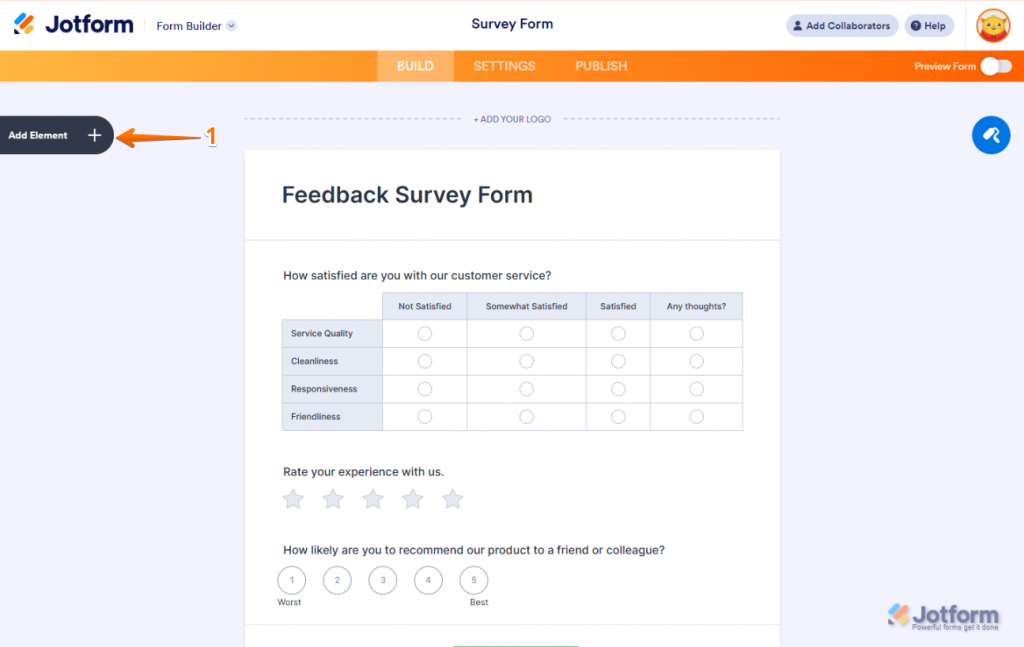
The part that impressed me in my research is how much is built into a single form: appointments, file collection, e-signatures, and online payments, plus customizable notification emails and unlimited form duplication. Healthcare is where it shines, with a telemedicine toolkit that clinics use to manage patients in real time.
Capterra gives it 4.7 based on nearly 3,000 reviews, and a free plan lets me test before paying, with paid plans starting at $34 a month. My caution is that all those features can overwhelm someone who just wants simplicity, and complex forms or large data sets can load slowly, so I keep my first build small.
Pros
- Payments, e-signatures, and file collection in one form
- Offline data collection
- Themes you can edit for every template
- Unlimited duplication of forms
Cons
- The feature range can overwhelm new users
- Complex forms and large data sets can load slowly
How Jotform Compares to Google Forms: Jotform adds payments, offline use, and design control for a modest monthly fee, with a busier interface than Google Forms’ calm simplicity.
Pricing: Free plan available. Paid plans start at $34/month.
User Rating: 4.7/5 (Capterra)
3. Typeform: Best for Engaging, Conversational Surveys
Typeform is what I reach for when a form has to feel like a conversation. It shows one question at a time, which keeps surveys short and human, and a large library of templates, photos, and video helps me make something that looks designed instead of defaulted.
Conditional jumps let me build personalized flows and filter out questions people should not see, and the call-to-action button stays visible on mobile. Setup is quick, which I appreciate when a deadline is near.
My honest gripes are about the ceiling: the built-in analysis feels basic, and features such as integrations, logic jumps, and branding removal need a paid plan. Capterra gives it 4.7 across nearly a thousand reviews and plans begin at $28 a month, so I recommend it when looks and completion rates matter most.
Pros
- One question at a time keeps surveys conversational
- A large library of templates, photos, and video
- Personalized flows with conditional jumps
- A call-to-action button that works on mobile
Cons
- Built-in analysis is basic
- Integrations, logic jumps, and branding removal need a paid plan
How Typeform Compares to Google Forms: Typeform delivers a far more polished respondent experience, at a price and with a ceiling on analysis that Google Forms does not have.
Pricing: Paid plans start at $28/month.
User Rating: 4.7/5 (Capterra)
4. Microsoft Forms: Best for Simple Forms Inside Microsoft 365
If my team already lives in Microsoft 365, I try Microsoft Forms before I look anywhere else. It is Microsoft’s answer to Google Forms, and responses flow straight into an Excel spreadsheet, where I can run the number-crunching I prefer.
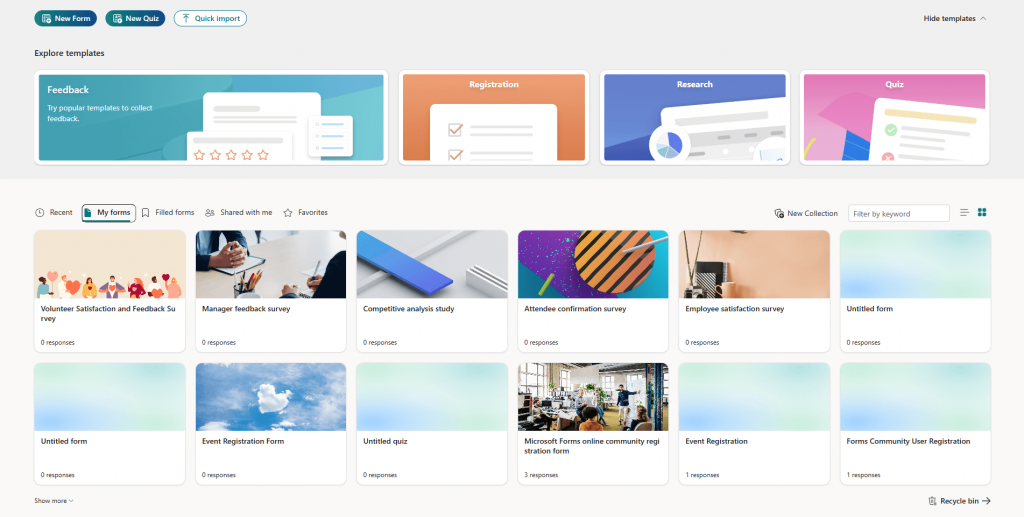
A drag-and-drop editor and ready-made templates for quizzes, customer feedback, and event registration get me started fast, I can import data from Excel, and long forms break into sections so they stay readable.
I would not pick it for new capabilities. It lacks add-ons, third-party integrations, and the data validation Google Forms offers, and design control is limited. Capterra rates it 4.6 on about 326 reviews, and the $99.99-a-year Microsoft 365 subscription is the only cost, so I treat it as a like-for-like swap more than an upgrade.
Pros
- Responses flow into Excel
- Ready-made templates for quizzes, feedback, and registrations
- Import data from Excel
- Sections for organizing long forms
Cons
- No add-ons or third-party integrations
- Limited design control
How Microsoft Forms Compares to Google Forms: Microsoft Forms mirrors Google Forms for Microsoft shops, with Excel instead of Sheets, and offers fewer integrations and similar design limits.
Pricing: Included with a Microsoft 365 subscription, $99.99/year.
User Rating: 4.6/5 (Capterra)
5. Zoho Forms: Best for Workflow Automation Inside the Zoho Ecosystem
I point teams that already run Zoho CRM toward Zoho Forms, because it connects so naturally. Forms route data between Zoho applications, trigger automated email replies, and update CRM records, which saves the copy-and-paste work I dislike most.
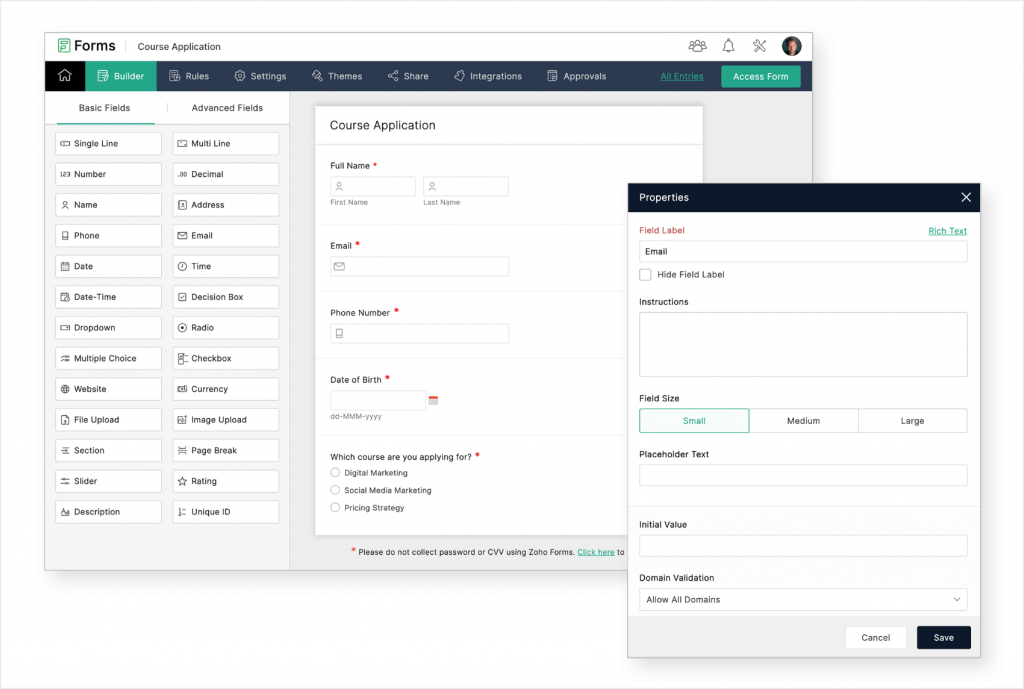
What I like best is the mobile app: I can create, manage, and submit forms offline, which covers the connection gap in Google Forms. It also takes payments, lets me assign and track tasks, and has a built-in collaboration tool, with more than 40 field types in a drag-and-drop editor.
The downside I would flag is that connections to outside platforms can be limited or need workarounds, and the mobile version can feel less capable than the desktop one. Capterra rates it 4.5 on 147 reviews, a smaller base than most tools here, and there is a free plan with paid tiers from about $12 a month, so testing it costs nothing.
Pros
- Routes data between Zoho applications
- Offline form creation and submission on mobile
- Payments, task assignment, and collaboration
- More than 40 field types
Cons
- External integrations can be limited
- Some gaps compared with the desktop version
How Zoho Forms Compares to Google Forms: Zoho Forms adds automation, offline use, and payments, with the best results for teams already inside the Zoho suite.
Pricing: Free plan available. Paid plans start at about $10/month.
User Rating: 4.5/5 (Capterra)
6. Cognito Forms: Best for Forms With Calculations, Workflows, and Payments
Cognito Forms is my answer when someone needs a form that does math. It can calculate costs, generate quotes, and run calculations on responses, and if payments matter, Square and PayPal are supported, which is the pairing I see small shops ask for most.
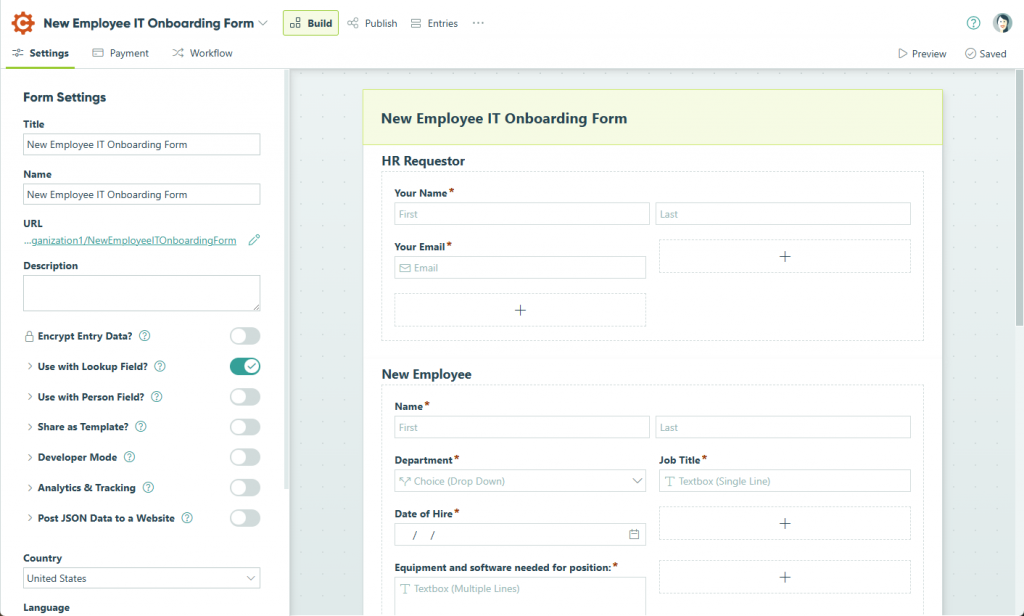
A visual drag-and-drop editor and plenty of pre-built templates let me start from something real, conditional logic keeps questions relevant, and the built-in data management system keeps entries organized.
Capterra rates it 4.7 on about 182 reviews, a sturdy base, and paid plans start at $19 a month with a free version to try. I would warn that design flexibility is narrower than some builders and setup can feel complex, so I build one real form before moving everything over.
Pros
- Built-in calculations for costs and quotes
- Square and PayPal payment integrations
- Conditional logic and a visual editor
- An in-built data management system
Cons
- Design flexibility is limited
- Setup and management can feel complex
How Cognito Forms Compares to Google Forms: Cognito Forms adds calculations, payments, and workflows at a low price, with less design freedom than the best-looking builders.
Pricing: Free plan available. Paid plans start at $19/month.
User Rating: 4.7/5 (Capterra)
7. Wufoo: Best for Contact Forms, Payments, and Registrations
Wufoo made form creation ridiculously easy for me. Forget clunky interfaces and limited options: with its drag-and-drop builder, I put together professional-looking forms in minutes, matched my branding, and added payment integration so transactions ran smoothly.
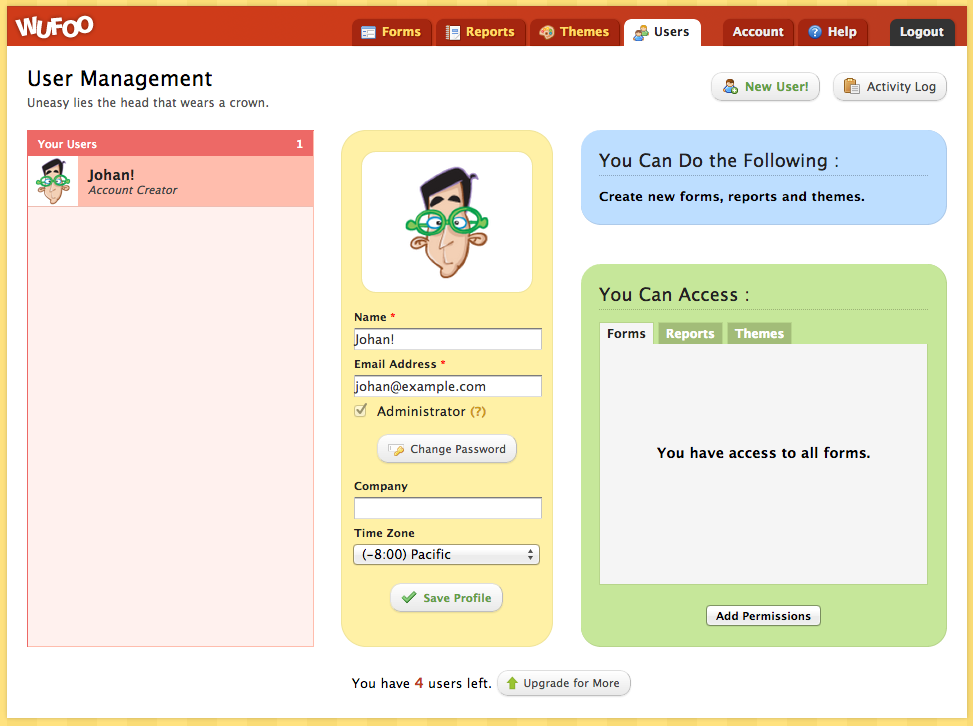
I can upload files in any format, I trust the 256-bit SSL encryption for moving data, and I get a real-time update whenever a response arrives. Custom reports built from the collected data and transfers to CRM systems take care of the workflow side.
The free plan is limited in forms, entries, and features, and occasional glitches can show up, so I treat it as a place to start. Capterra rates it 4.4 on about 222 reviews, a smaller and older base than most tools here, and paid plans start at roughly $14 a month.
Pros
- A fast drag-and-drop form builder
- Payments through several providers
- 256-bit SSL encryption and file uploads
- Real-time response updates and custom reports
Cons
- The free plan is limited in forms, entries, and features
- Occasional glitches reported
How Wufoo Compares to Google Forms: Wufoo adds payments, branding, and security to a Google Forms-style workflow, with a limited free plan and a smaller, older review base.
Pricing: Paid plans start at about $14/month, with a limited free plan.
User Rating: 4.4/5 (Capterra)
8. Paperform: Best for Landing-Page-Style Forms and Product Sales
Paperform is the one I recommend to anyone who sells something. Its forms look like landing pages, so I can add photos, videos, headings, and long text to tell the story behind a product before the order field even appears, which makes it a sensible home for a small shop that does not want a full store platform.
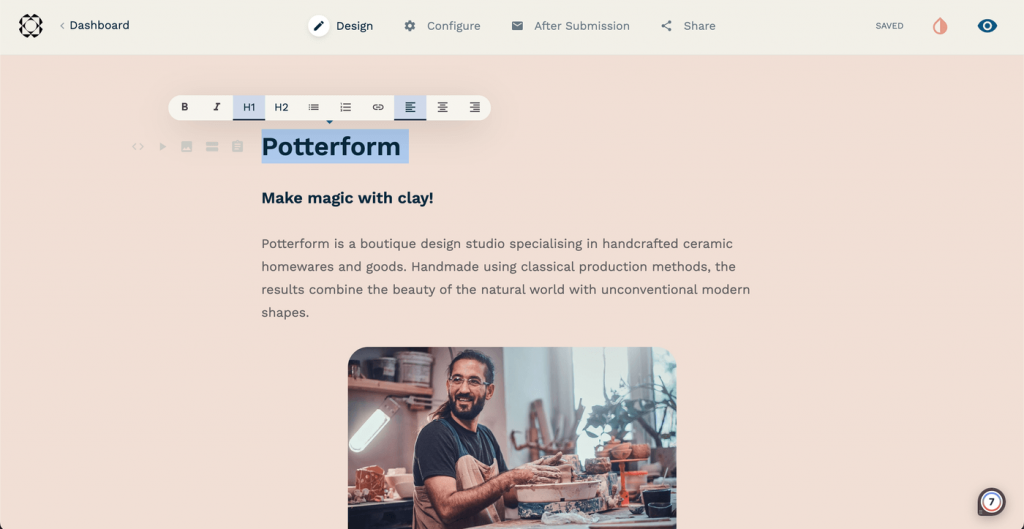
A product catalog with ordering and payment options, inventory management, restaurant reservation pages with location maps, and custom landing pages for PPC campaigns are all built in, and the templates help me start quickly.
Capterra rates it 4.8 on about 106 reviews, a good score on a modest base, and paid plans start around $24 a month, with a limited free version. Pricing sits on the higher end and mastering the advanced customization takes time, so I use it mainly when a form doubles as a sales page.
Pros
- Forms that look like landing pages
- Product catalogs with ordering and payments
- Inventory management and reservation pages
- A strong Capterra rating
Cons
- Pricing is on the higher end
- Advanced customization takes time to master
How Paperform Compares to Google Forms: Paperform turns forms into storefronts and landing pages, which Google Forms cannot do, at a clearly higher price.
Pricing: Free version available. Paid plans start at about $24/month.
User Rating: 4.8/5 (Capterra)
9. Formstack: Best for Secure, HIPAA-Ready Forms and Workflows
When security and compliance are my reasons for leaving Google Forms, I look at Formstack first. It builds HIPAA-compliant forms to help meet regulatory requirements, and workflows route data, trigger emails, and connect to the apps I already use.
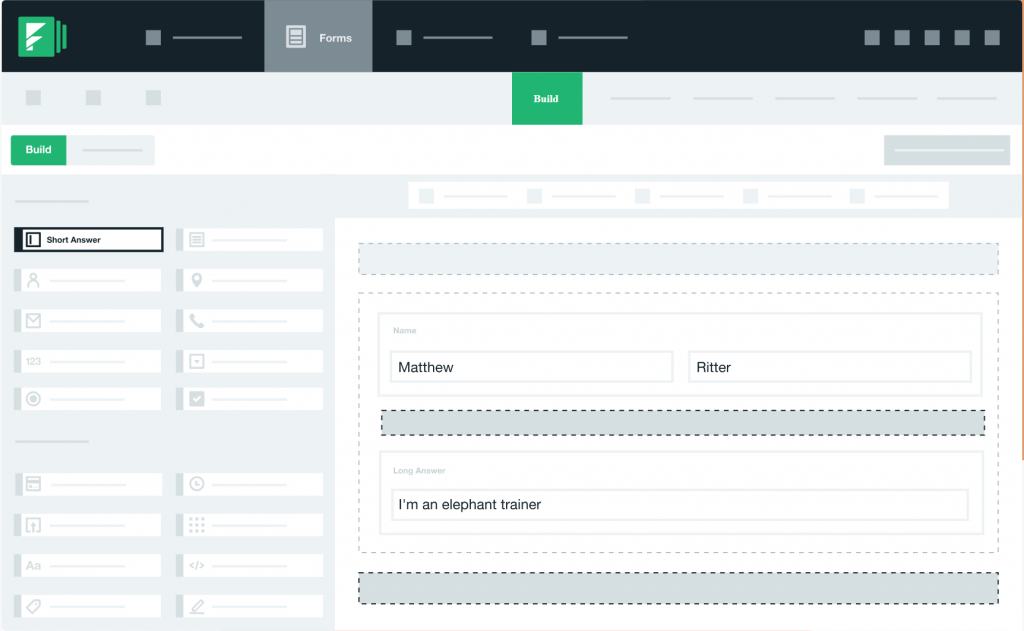
Conditional logic builds forms that adapt to answers, and it handles everything from simple contact forms to complex surveys and payment forms, with advanced analytics to help me decide. It is designed for businesses from small startups to large enterprises.
New users need time to find their way around, and pricing is higher than some competitors, starting at $83 a month. Its 4.0 on about 124 Capterra reviews is the lowest on this list, so I would consider it only when compliance or workflow automation is a genuine requirement.
Pros
- HIPAA-compliant forms
- Workflows that route data and trigger emails
- Conditional logic for adaptive forms
- Payment forms and analytics
Cons
- A learning curve for new users
- Pricing is higher than some competitors
How Formstack Compares to Google Forms: Formstack adds compliance and workflow automation that Google Forms lacks, at a much higher price and with a lower rating.
Pricing: Paid plans start at $83/month.
User Rating: 4.0/5 (Capterra)
10. SurveyMonkey: Best for Logic-Driven Surveys and Feedback Collection
When what I collect is opinions, not registrations, SurveyMonkey is where I go. More than 1,600 expert-written questions help me ask the right things, and over 15 question types, including ranking, open-ended, and image-based, collect richer data than a basic form.
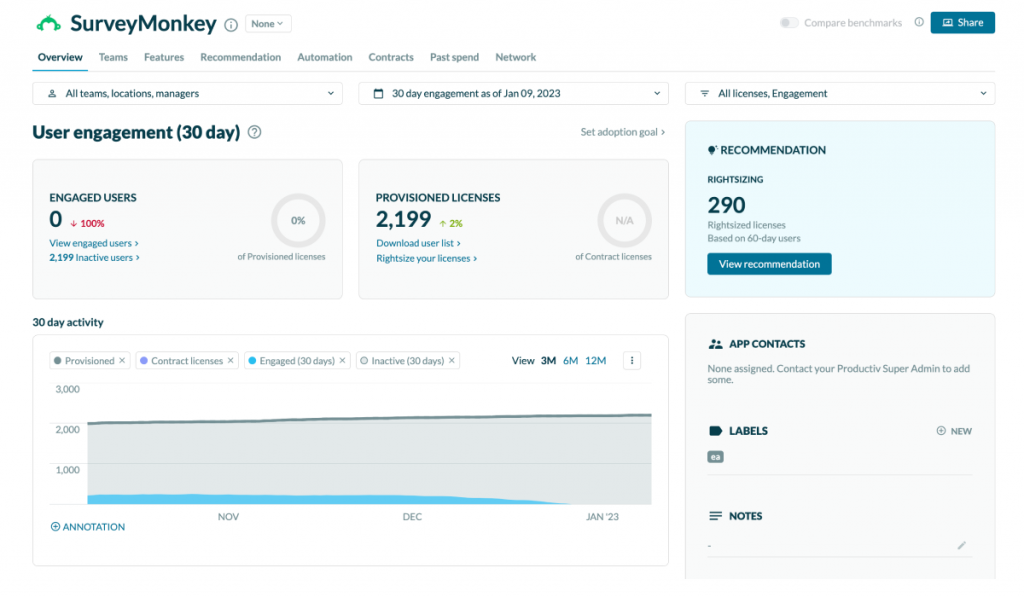
Conditional branching and skip logic speed things up, I can embed surveys in emails for a better response rate, and word clouds and sentiment analysis help me understand the audience. Results export as CSV, XLS, PDF, PPT, and SPSS.
Advanced features can get expensive, with plans starting at $30 a month per user, and surveys loaded with multimedia or complex logic can lag. Capterra scores it 4.6 across more than ten thousand reviews, the strongest evidence behind any tool here, and a free version lets me try the editor first.
Pros
- Over 1,600 expert-written questions
- Branching and skip logic
- Word cloud and sentiment analysis
- Exports to CSV, XLS, PDF, PPT, and SPSS
Cons
- Advanced features can get expensive
- Complex surveys can lag
How SurveyMonkey Compares to Google Forms: SurveyMonkey is built for surveys, with better logic, analysis, and exports, at a per-user price that Google Forms never charges.
Pricing: Paid plans start at $30/month per user.
User Rating: 4.6/5 (Capterra)
Which Google Forms Alternative Should Be Your Top Pick?
Short on time? Start with whichever of these three matches why you are leaving Google Forms.
1. Qualaroo: Best for Understanding Website Visitors in the Moment
I was blown away by how well Qualaroo helped me understand my website visitors. It felt like talking to them casually, because well-timed pop-up surveys collected real-time feedback while they were still on the page. The insights were invaluable: I could see exactly where users got stuck, what they loved, and what they wanted more of.
Targeting finds the right people, even one named individual through the Identify API, and pop-ups, slide-outs, and in-app surveys give you formats for every moment. Exit-intent surveys also explain why visitors leave.
Native AI analysis scores sentiment, tags themes, and summarizes replies without reading every one. Every premium feature is available on the free plan, so I tested it all before paying, and Hootsuite’s 16 percent conversion lift shows what that listening can do. It transformed the way I connect with my audience, and it did so without any developer help.
2. Wufoo: Best for Quick, Branded Forms With Payments
Wufoo is the pick when you want a professional-looking form in minutes. With its drag-and-drop builder, I put together forms quickly, matched my branding, and added payment integration for smooth transactions, so there was no clunky interface and no limited set of options.
Files can be uploaded in all formats, data moves with 256-bit SSL encryption, and real-time updates arrive as responses come in. Customized reports and CRM transfers add workflow value. Know the limits: the free plan is restricted in forms, entries, and features, and some people report occasional glitches.
For small teams that mainly need registrations, contact forms, and payments, those trade-offs are acceptable, and the setup time is short enough that a pilot costs almost nothing, even for a first-time builder. It also suits people who dislike configuring anything, because most fields are ready after a drag-and-drop.
3. Jotform: Best for Healthcare Forms and Offline Collection
Jotform is the pick for teams that need healthcare-friendly forms, offline collection, or a wide feature set in one place. It supports payments, e-signatures, appointments, and file collection; data can be gathered with no connection at all, and themes can be edited for every template.
Notification emails can be customized, and forms can be duplicated without any restriction. The telemedicine toolkit makes it familiar to clinics that manage patients in real time. The compromises are plain: the sheer number of features can overwhelm new users, and complex forms or large data sets can load slowly.
For teams that value flexibility and a free starting plan, those costs are worth accepting, and the template library saves a lot of building time. A free plan makes the first test painless, and the library saves hours when a form is needed quickly, which suits busy clinics and small teams alike.
How Did I Evaluate These Google Forms Alternatives?
I evaluated the Google Forms alternatives in this list based on what a team needs once a free, simple tool stops being enough: the capabilities it lacks, a price that is fair next to free, and an interface that does not make the simple jobs harder.
All ten faced one shared set of six checks, with small samples flagged. Because I still use Google Forms for quick polls, I held every alternative to the standard of not being worse at the easy things.
Six factors carried the weight:
User Reviews and Ratings
Google Forms sits at 4.7 on roughly 11,500 reviews, which is a hard number to beat on evidence alone. On Capterra, I check review counts before scores, and smaller samples such as Paperform’s 106 or Formstack’s 124 get a more skeptical read from me. A great rating from a handful of people barely moves me.
Essential Features and Functionality
I start with the gaps that push people out of Google Forms: payments, design control, real branching, security, and offline use. Can a tool add the one you are missing without taking away something you rely on? A feature that sounds impressive but does not close one of those gaps earned very little credit.
Ease of Use
Google Forms is the simplest tool I use, so it sets my bar for how quickly a first form comes together. I asked whether a colleague with no training could build a working form in an afternoon, and tools that matched that speed made my shortlist. Powerful but slow to learn counted against a tool unless the power was clearly needed.
Customer Support
A free tool teaches you to expect little help, so I looked at what paid plans add when something breaks. I checked whether entry plans include real support or only higher tiers do, and whether a vendor offers guidance for compliance-heavy forms. A form that fails during a registration window needs an answer fast.
Value for Money
Free is a hard price to compete with, so I compared what each tool charges for the specific capability it adds. A fair monthly price for payments or offline use scored well, and a tool that charged a lot for features I did not need scored poorly. Clear pricing and a free plan beat numbers that appear only after a sales call.
Personal Experience and Experts’ Opinions
The tools I have used myself are marked as such, with details a pricing page never shows. For the others, I relied on published customer stories and findings that recur across independent sources, once I had confirmed that each vendor is still operating, because a form tool that disappears takes your data with it.
FREE. All Features. FOREVER!
Try our Forever FREE account with all premium features!
How Do You Choose the Right Google Forms Alternative for Your Team?
Pick the row that describes what Google Forms cannot do for you. A row with several tools lists different fixes, so skim my notes first.
| If My Main Google Forms Frustration Is… | Consider This Alternative |
| I need to accept payments | Jotform, Cognito Forms, Wufoo, or Paperform |
| The design looks too generic | Typeform, Paperform, or Jotform |
| I need security or HIPAA compliance | Formstack or Jotform |
| I need offline collection | Jotform or Zoho Forms |
| I want workflows and CRM links | Zoho Forms, Formstack, or Wufoo |
| I need real feedback and survey analysis | Qualaroo or SurveyMonkey |
Choosing the Next Step Beyond a Simple Form
There is a quiet moment in every team’s life with Google Forms. A form that took ten minutes to build gets asked to do something bigger: take a deposit, look like the brand, hold a patient’s details, or work in a hall with no signal. That is not the tool failing. It is the job growing past what a free, simple builder was ever meant to carry.
The way through is to be picky about the one gap, not the whole category. Decide whether you need to get paid, look polished, stay secure, or work offline, then test only the tools that close that gap, using a real form from your own work. If a candidate makes the easy jobs harder than they were in Google Forms, it has not earned the switch, however long its feature list runs.
The same thinking changed how I gather opinions. Once I stopped sending people to a form and started asking a single question while they were still on the page, the answers got shorter, sharper, and far more honest. That is the habit Qualaroo is built to support, and its free plan lets you test it on one page before you decide anything else.
Frequently Asked Questions
Is Google Forms really free?
Yes. Anyone with a Google account can create unlimited forms and collect unlimited responses, with answers saved to a spreadsheet and charted in real time. Paid options come through Google Workspace business plans. The cost of a free tool shows up elsewhere: no payment processing, limited design, basic branching, and no password protection on individual forms.
What are the limitations of Google Forms?
It cannot process payments, its design and question formats are limited, branching only jumps between sections, and individual forms have no password protection. It is also not built for sensitive data such as payment details or health information, and it needs an internet connection. Teams usually leave when one of these becomes a daily problem.
Is Google Forms secure enough for sensitive data?
Google Forms offers basic protections, but it is not built for payment details or personal health information. For those cases, look at tools with encryption options and compliance features. Formstack offers HIPAA-compliant forms, Jotform has a healthcare toolkit, and Wufoo uses 256-bit SSL encryption. Always confirm compliance on the plan you would actually buy.
What is the best free alternative to Google Forms?
Qualaroo's free plan unlocks every premium feature up to 50 responses, while Jotform, Zoho Forms, Cognito Forms, and Paperform give limited free versions, and Microsoft Forms rides along with Microsoft 365. The best fit depends on whether you need payments, design, offline use, or feedback analysis, so try each free tier on a real form.
Which alternative can collect payments?
Jotform, Cognito Forms, Wufoo, Paperform, and Formstack all handle payments, with options such as Stripe, PayPal, and Square depending on the tool. Paperform adds product catalogs and ordering, and Cognito Forms adds calculations for costs and quotes. Check which payment providers each supports before you commit, since coverage differs, and confirm the fees too.
Can Qualaroo replace Google Forms?
For feedback from website and app visitors, yes, with much better analysis: Qualaroo asks in context and applies built-in AI to the answers from the free plan. It cannot take payments or build standalone forms with file uploads, so teams that mainly take orders or registrations should choose a form builder such as Jotform or Wufoo.
Which alternatives work offline?
Jotform lets you collect data without any connection, and Zoho Forms has a mobile app that creates, manages, and submits forms offline. Google Forms needs an internet connection for full use. If your forms run at events or in the field, test the offline workflow and confirm how and when data syncs back.
What should I check before moving off Google Forms?
List the forms you actually use and the capability each one lacks, then export your existing responses. Ask each vendor to show that capability on a real form and confirm pricing in writing. Run your top two on one live use before committing, and check how data flows to your sheets or CRM.
FREE. All Features. FOREVER!
Try our Forever FREE account with all premium features!

 We'd love your feedback!
What did you like & how can we make it even better?
 Thanks for your feedback!
 Ask Your Question
Have a question? Get expert help to make your decision easier.