
Not every team needs the same survey capabilities.
Some teams want a simple way to collect NPS and CSAT. Others need to understand why users abandon a page, which feature is causing friction, or what prevents free users from converting.
Refiner is built specifically around SaaS and digital products, with behavior-triggered microsurveys, mobile support, user targeting, recurring surveys, and integrations designed around product data.
Still, it may not be the right fit for every feedback strategy. Refiner alternatives usually come down to one of three things: pricing that scales with Monthly Active Users rather than responses, a quote-only structure beyond the entry tier, and a scope built specifically around SaaS products.
That’s why we have compiled some of the best Refiner alternatives and compared them based on their features, strengths, limitations, pricing, and practical use cases.
Using this information, you can see how these tools are similar to Refiner and where they take a different approach to collecting and acting on customer feedback.
Why Are Teams Looking for Refiner Alternatives?
None of this comes from a single frustrated account. It is a pattern that holds up once you get past Refiner’s solid rating and into the actual work of running the platform at scale.
Pricing Scales With Users, Not Responses
Refiner bills based on tracked Monthly Active Users, not on the number of responses collected. A product with a large user base but a modest survey program ends up paying for reach it never actually uses, which is the opposite of how most teams think about feedback costs.
Pricing Past the Entry Tier Is Not Published
Paid plans scale with MAU volume, and the real number for anything beyond the smallest tier requires a sales conversation. That makes it hard to shortlist Refiner against anything else on this list without first booking a call.
The Scope Is Tightly SaaS-Focused
Refiner is built specifically for SaaS and digital products, which is a genuine strength for that use case. A team that also needs broader market research, offline feedback, or omnichannel CX measurement will find that focus limiting rather than helpful.
The Review Base Is Genuinely Thin
Refiner’s Capterra listing rests on a small number of reviews compared to most tools on this list. That is not a knock on the product itself, but it does mean there is less independent evidence to weigh than there is for a platform with hundreds of reviews.
The Top 10 Refiner Alternatives
Here is how all ten alternatives stack up on price and rating before the individual breakdowns.
| Tool | Best For | Starting Price | User Rating |
| Qualaroo | Capturing Real-Time User Insights In-App & on Your Website Using Contextual, AI-Powered Micro-Surveys | Free plan; from $19.99/mo | 4.7/5 |
| Survicate | Multichannel surveys with a centralized research hub | Free plan; from $114/mo | 4.6/5 |
| Hotjar | Heatmaps and session recordings alongside feedback widgets | Free plan; from $39/mo | 4.6/5 |
| Zonka Feedback | Omnichannel CX with native AI feedback intelligence | Quote-only | 4.8/5 |
| SatisMeter | Response-based pricing for NPS, CSAT, and CES | Free plan; from $199/mo | 4.7/5 (G2) |
| Wootric (InMoment) | Enterprise voice-of-customer across multiple touchpoints | Quote-only | 4.6/5 |
| AskNicely | Frontline coaching workflows tied to NPS | Quote-only | 4.6/5 |
| Retently | Pure NPS/CSAT/CES specialist with e-commerce integrations | $99/mo | 4.9/5 |
| Pendo | Product analytics, in-app guides, and surveys in one platform | Quote-only | 4.5/5 |
| Gainsight PX | Product adoption and in-app engagement at scale | Quote-only | 4.4/5 |
1. Qualaroo: Best for Capturing Real-Time User Insights In-App & on Your Website Using Contextual, AI-Powered Micro-Surveys
Refiner alternatives worth considering usually solve one specific gap, and Qualaroo‘s is turning contextual responses into something a team can act on without manual review. I reach for it when behavior-triggered surveys alone are not enough.
The Nudge™ fires right when it matters: at exit intent, a rage click, or a stall at a specific step, and asks a contextual question instead of a generic one.
The AI Survey Creator drafts a full Nudge from a plain-language prompt in under a minute. Native Customer Feedback Analysis AI then takes over, with AI Sentiment Analysis automatically reading open-text answers and word cloud generation surfacing the themes that come up most.
Teams running frequent releases tend to lean most heavily on the exit-intent trigger, since that is the moment when a user’s frustration is freshest and easiest to act on.
Pros:
- AI Survey Creator drafts a full Nudge from a prompt, no manual setup required
- Question branching and skip logic so respondents only see relevant follow-ups
- Native AI Customer Feedback Analysis, including AI Sentiment Analysis and word cloud generation for open-text responses
- Heatmaps and Session Recordings show what a user was doing right before they responded
- Advanced targeting by behavior, URL, exit intent, and custom user properties
- Identify API ties responses back to a real user by email or customer ID
- Nudge for Prototype works on Figma, Adobe XD, and InVision before a product ships
- Multilingual surveys in 100+ languages
- iOS and Android SDK for native in-app surveys
- Salesforce, HubSpot, and Slack integrations for CRM-connected feedback workflows
Cons:
- Fully cloud-based, so an internet connection is required
- There is no dark user interface for long hours or late nights.
How Qualaroo Compares to Refiner: Qualaroo covers the same contextual, behavior-triggered job Refiner does, then adds native AI Sentiment Analysis, heatmaps, and session recordings on top. The pricing difference is the bigger practical gap, flat-rate plans with unlimited responses against Refiner’s MAU-based model, which means a large user base does not inflate the bill on its own.
Pricing: Free plan available, up to 50 responses with all premium features. Essentials at $19.99/month, Business at $49.99/month, and Enterprise from $149.99/month.
User Rating: 4.7/5 (Capterra)
Hootsuite is a good name to bring up here. The company used a Qualaroo on-site survey to understand why landing page visitors were not converting, and the feedback showed that many did not clearly understand what the product did. Redesigning the page around that insight produced a 16 percent lift in conversion at 98 percent statistical significance.

2. Survicate: Best for Multichannel Surveys With a Centralized Research Hub
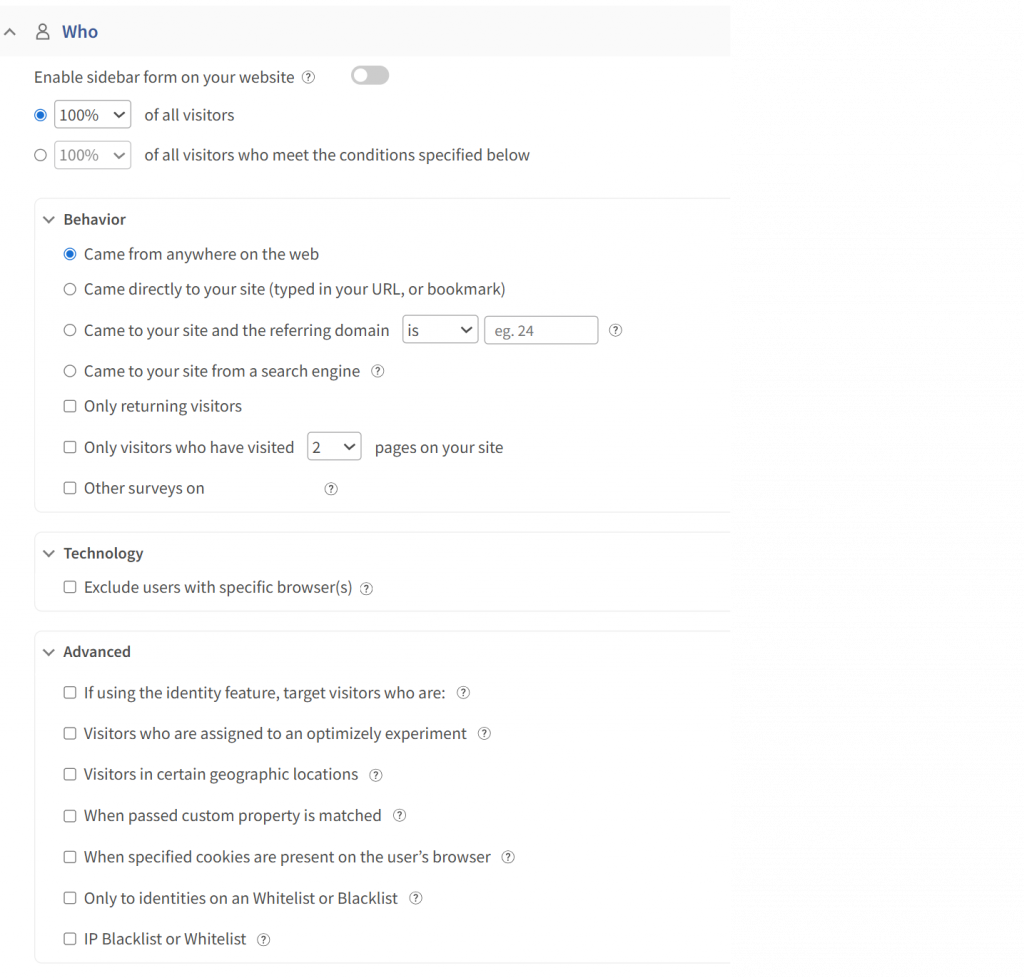
Survicate is the pick for a team that needs feedback from more channels than Refiner reaches, web, in-app, email, link, and mobile, all feeding one shared response pool.
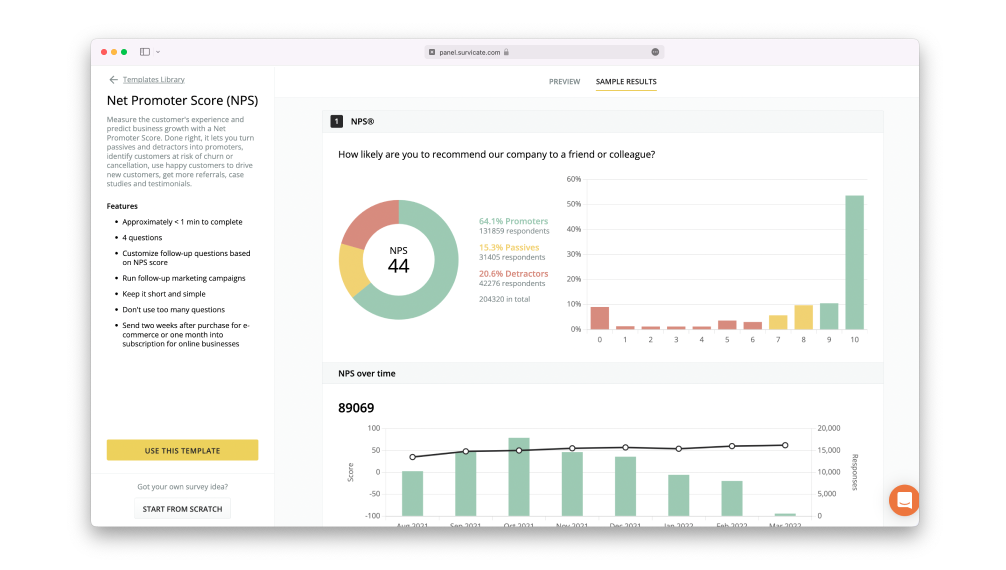
The Research Hub centralizes everything in one place rather than leaving insights scattered across separate campaigns. AI-powered analysis automatically identifies themes across responses, closing part of the same gap that Refiner’s own tagging addresses.
Audience targeting using attributes and events covers much of what Refiner does on the behavioral side. The free-to-paid jump is steep, though, a real consideration for a smaller team.
Teams migrating off a single-purpose in-app tool tend to appreciate how fast a first survey goes live here, often the same day, without an onboarding call standing in the way. Filtering feedback by CRM attributes is another real strength once responses start arriving at volume.
Pros:
- Multichannel surveys across web, in-app, email, link, and mobile from one response pool
- Research Hub centralizes feedback and analysis in one place
- AI-powered theme identification across responses
- Strong integration library with CRM and product data filtering
Cons:
- The free-to-paid jump is steep, with no smaller paid tier in between
- The broader research feature set is more than a smaller SaaS team may need
How Survicate Compares to Refiner: Survicate reaches well beyond Refiner’s in-app focus into email, link, and mobile surveys from one platform, a real advantage for a team whose feedback program is not confined to the product itself.
Pricing: Free plan available. Paid plans start at $114/month.
User Rating: 4.6/5 (Capterra)
3. Hotjar: Best for Heatmaps and Session Recordings Alongside Feedback Widgets
Hotjar takes a genuinely different angle than Refiner, pairing survey responses with behavioral evidence of what users actually did.
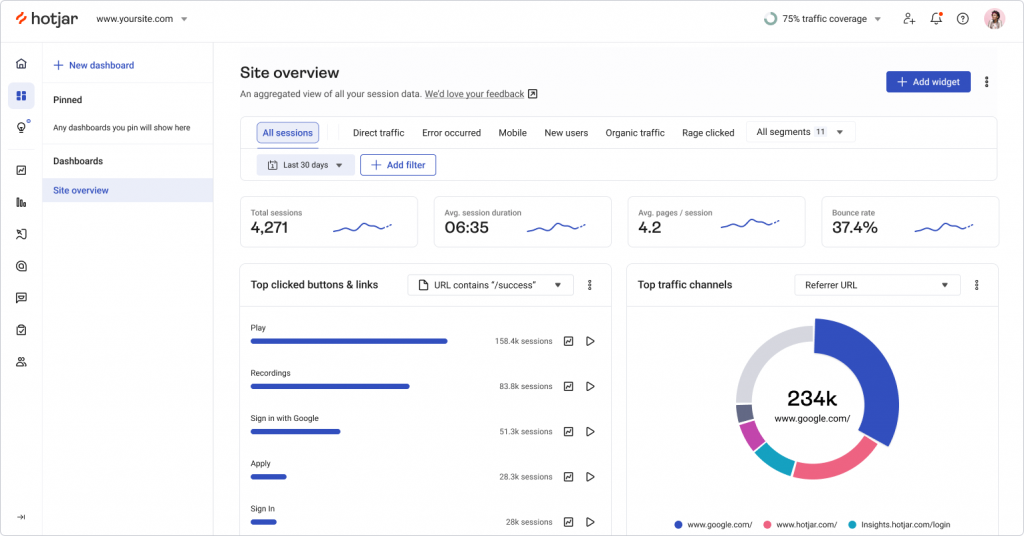
Heatmaps and session recordings sit next to on-site surveys and feedback widgets in the same dashboard, so a team can check whether what someone said matches what they did. A single tracking script gets a first heatmap live the same day, a faster path than configuring behavioral triggers from scratch.
Published per-user pricing is a real contrast to Refiner’s quote-only structure past the entry tier. Its review base, well past 500 on Capterra, is among the largest on this list.
Teams that have never run a dedicated feedback tool before tend to start here, since there is genuinely nothing new to learn beyond reading a heatmap.
Pros:
- Heatmaps and session recordings alongside on-site surveys and feedback widgets
- Simple, published per-user pricing
- Fast setup with a single tracking script
- Large integration library, including Slack, Zapier, and Google Analytics
Cons:
- More website-focused than a dedicated SaaS in-app survey platform
- Survey targeting logic is lighter than Refiner’s event-based triggers
How Hotjar Compares to Refiner: Hotjar trades Refiner’s deep behavioral targeting for visual evidence of what users actually do, a complement to survey data rather than a like-for-like replacement for it.
Pricing: Free plan available. Paid plans start at $39/month.
User Rating: 4.6/5 (Capterra)
4. Zonka Feedback: Best for Omnichannel CX With Native AI Feedback Intelligence
Zonka Feedback is where I would send a team that needs genuinely omnichannel reach, website, in-app, email, SMS, WhatsApp, and offline surveys, all running from one platform.
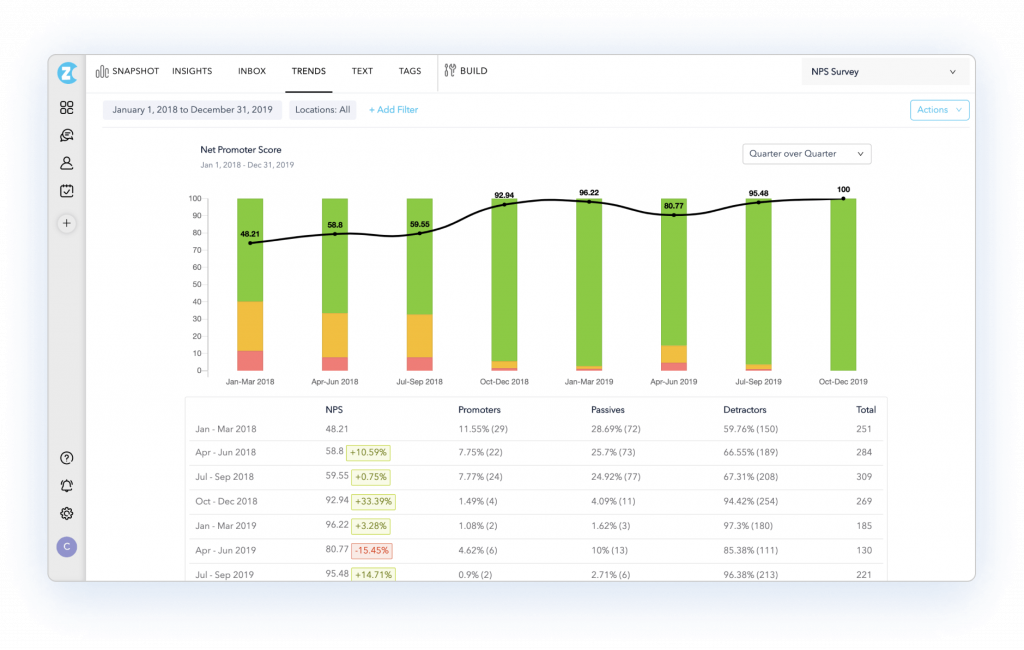
AI Feedback Intelligence analyzes themes, sentiment, and trends automatically, going further than Refiner’s own response tagging.
Closed-loop workflows turn a detractor response into an assigned, tracked issue rather than a data point someone has to notice.
Regional data hosting is a real differentiator for teams with specific compliance requirements. Businesses collecting feedback across both physical and digital touchpoints get the most out of the offline and kiosk options specifically, since most competitors on this list stop at digital channels entirely.
Pros:
- Omnichannel coverage including website, in-app, email, SMS, WhatsApp, and offline surveys
- AI Feedback Intelligence analyzes themes, sentiment, and trends automatically
- Closed-loop workflows assign feedback and track resolution
- Regional data hosting for compliance-sensitive teams
Cons:
- Pricing is customized and requires a sales conversation
- The broader CX scope is more than a focused SaaS team may need
How Zonka Feedback Compares to Refiner: Zonka Feedback goes well past Refiner’s in-app, SaaS-specific scope into omnichannel CX, with native AI analysis that does more of the interpretation work automatically.
Pricing: Quote-only, contact vendor for pricing.
User Rating: 4.8/5 (Capterra)
5. SatisMeter: Best for Response-Based Pricing for NPS, CSAT, and CES
SatisMeter is the most direct answer to Refiner’s pricing model, specifically, billing on responses collected rather than Monthly Active Users tracked. For a product with a large user base and a modest survey program, that difference alone can change the math considerably.
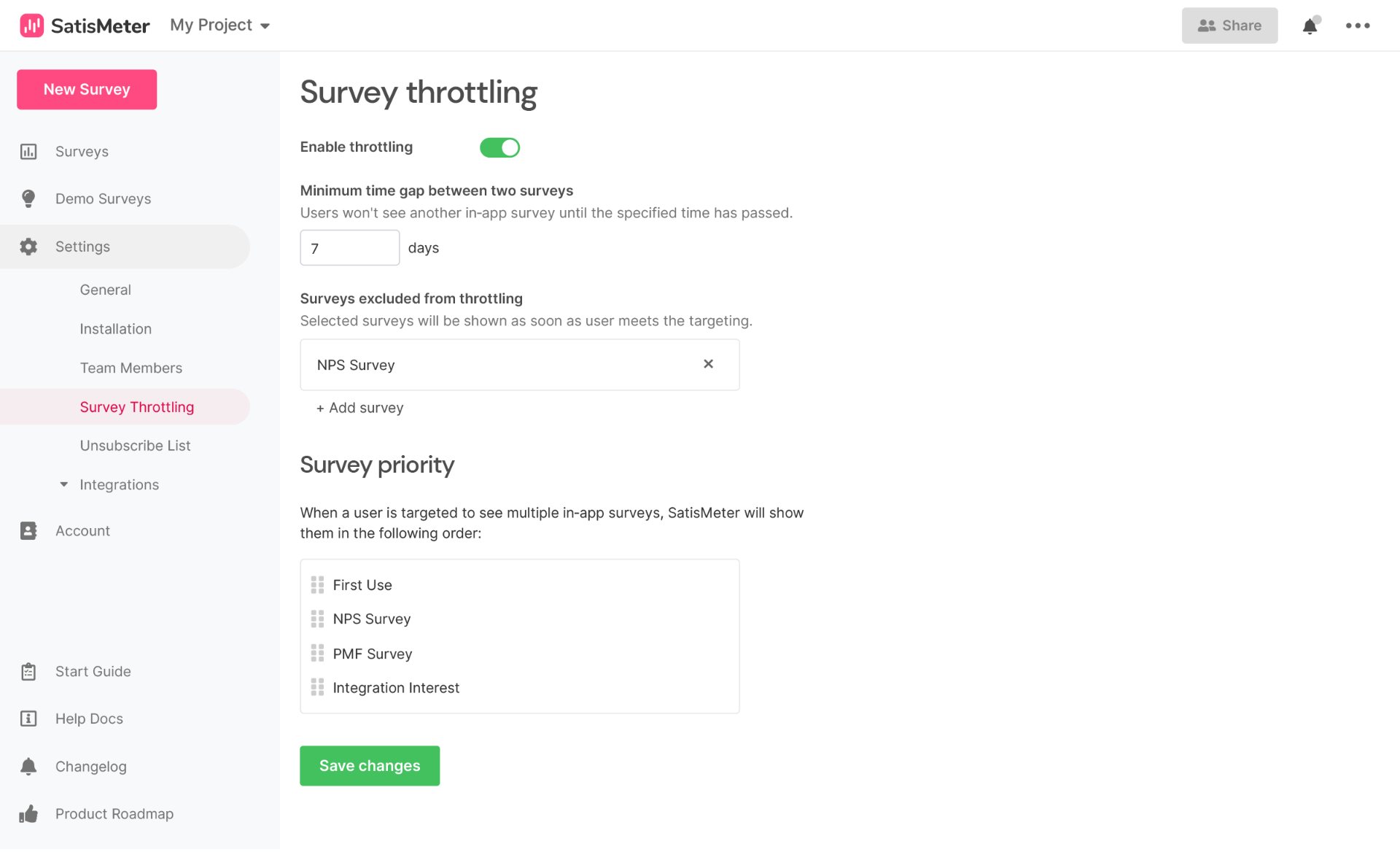
Survey throttling and sampling prevent over-surveying the same customers, a thoughtful touch for a recurring NPS program.
Deployment covers web, in-app, email, iOS, and Android. Worth flagging directly, SatisMeter was acquired by Productboard, and its pace of development has slowed noticeably since, which matters for a multi-year commitment.
Unlimited projects, team members, and surveys across every plan is a genuine plus too, since nobody has to ration who gets access as the team grows.
Pros:
- Response-based pricing, rather than user-based, is a real fit for large user bases
- Survey throttling and sampling to avoid over-surveying customers
- Deployment across web, in-app, email, iOS, and Android
- Unlimited projects, team members, and surveys across plans
Cons:
- Roadmap continuity is uncertain following the Productboard acquisition
- No native AI analysis of open-text responses at any tier
How SatisMeter Compares to Refiner: SatisMeter flips Refiner’s pricing model from user-based to response-based, the single most direct fix for a team paying for reach it never surveys.
Pricing: Free plan available. Paid plans start at $199/month.
User Rating: 4.7/5 (G2)
6. Wootric (InMoment): Best for Enterprise Voice-of-Customer Across Multiple Touchpoints
Wootric is the pick for a team that needs NPS, CSAT, and CES measured across more customer touchpoints than a product-only tool reaches. Surveys are deployed through web apps, mobile apps, email, links, Intercom Messenger, and SMS on higher tiers.
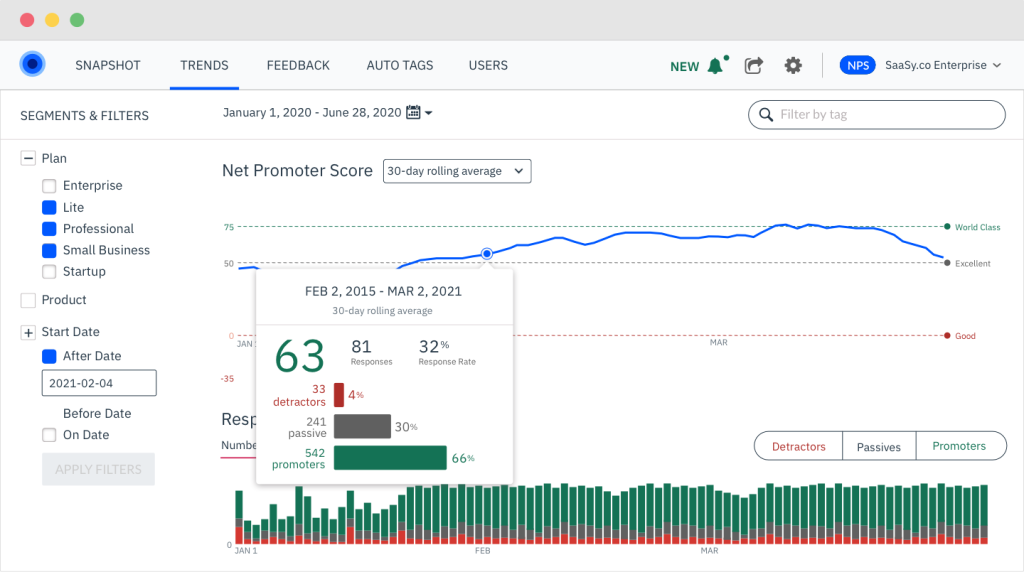
Automated feedback theme categorization and text analytics handle open-text responses without manual review. Integrations with Intercom, Zendesk, Freshdesk, and Mixpanel mean a low score can trigger a workflow rather than sit unnoticed.
Since InMoment acquired Wootric, the product has leaned further into enterprise deployments, so a smaller team may find the sales process heavier than the survey setup.
Larger customer success teams tend to get the most value here, since the platform is built around routing feedback to an owner rather than just displaying it on a dashboard.
Pros:
- NPS, CSAT, and CES across web, mobile, email, Intercom Messenger, and SMS
- Automatic feedback theme categorization and text analytics
- Integrations trigger workflows based on detractor scores
- Supports importing and analyzing historical feedback
Cons:
- Pricing is quote-only with no published starting point
- Advanced functionality is reserved for higher-tier plans
How Wootric Compares to Refiner: Wootric reaches more customer touchpoints than Refiner’s product-focused scope, with built-in text analytics that go further than Refiner’s own response tagging.
Pricing: Quote-only, contact vendor for pricing.
User Rating: 4.6/5 (Capterra)
7. AskNicely: Best for Frontline Coaching Workflows Tied to NPS
AskNicely is built around what happens after a score comes in, routing a low rating directly to the employee who handled that customer with enough context to act on immediately.
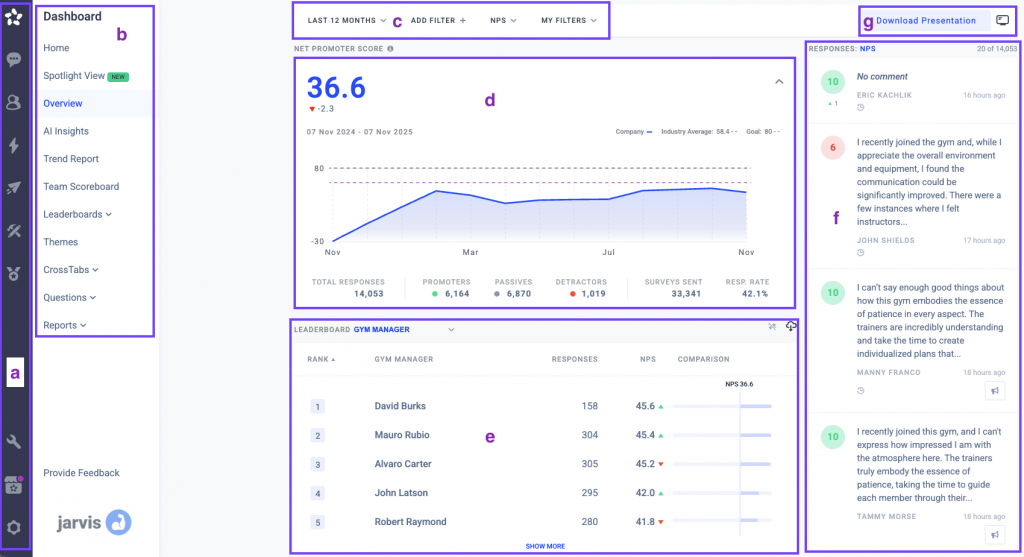
That coaching layer is genuinely absent from Refiner’s product-focused approach. AI-powered dynamic surveys reduce the setup work of writing survey copy.
Email, WhatsApp, and SMS channels reach customers outside the product entirely, and in-app surveys arrive on the higher Transform tier. This is priced for mid-market and above, though the most expensive option on this list is for a smaller team evaluating on cost alone.
Field service and hospitality businesses, in particular, tend to adopt it fastest, since coaching is already part of how those teams operate day-to-day.
Pros:
- Coaching workflows route low scores directly to the frontline employee involved
- AI-powered dynamic surveys reduce setup time
- Email, WhatsApp, and SMS channels, alongside in-app surveys
- Review and testimonial requests are built into the same platform
Cons:
- Priced for mid-market and above, well past most tools on this list
- More service-focused than product-focused compared to Refiner
How AskNicely Compares to Refiner: AskNicely focuses on the service and coaching side of feedback, where Refiner focuses on the product side, a different job entirely, rather than a direct swap.
Pricing: Quote-only, contact vendor for pricing.
User Rating: 4.6/5 (Capterra)
8. Retently: Best for a Pure NPS/CSAT/CES Specialist With E-Commerce Integrations
Retently is the pick for a team that wants a focused NPS, CSAT, and CES specialist rather than Refiner’s broader in-product research scope.
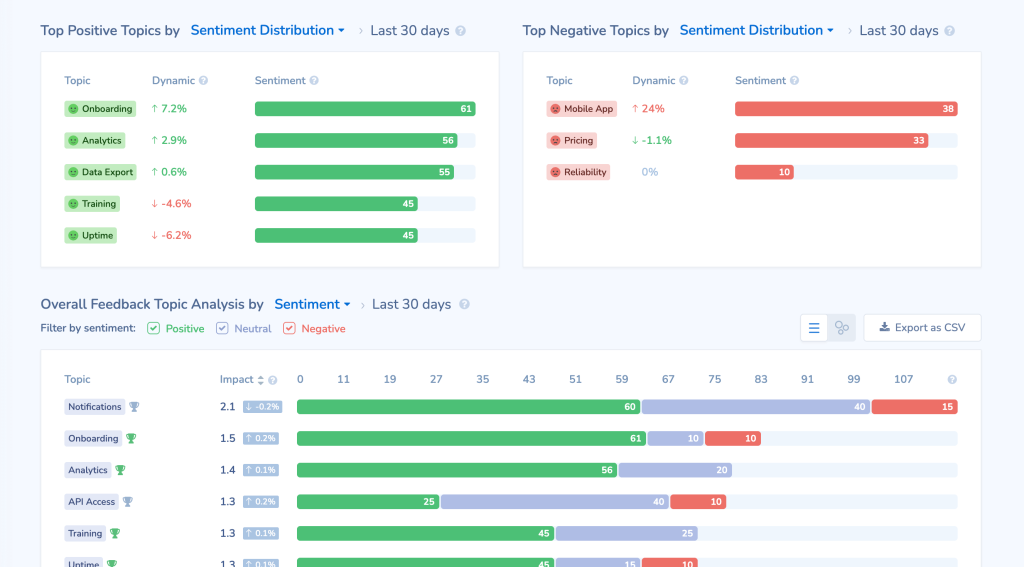
Shopify and WooCommerce integrations go deeper here than anywhere else on this list, a real advantage for a team tied to an e-commerce operation. Drip-campaign style automated follow-up sequences chase down non-responders on their own.
Getting a first campaign live takes an afternoon at most: import contacts, personalize the survey, and send. Published pricing is a genuine contrast to Refiner’s quote-only tiers, with a real number to budget against from the start.
Teams coming off a heavier platform especially appreciate how quickly a first campaign comes together, often within the same afternoon they sign up.
Pros:
- Pure NPS, CSAT, and CES focus with strong e-commerce integrations
- Drip-campaign style automated follow-up sequences
- Published pricing with no sales conversation required
- Multi-channel distribution including email, SMS, and in-app
Cons:
- Narrower scope than Refiner’s broader in-product research capability
- No dedicated mobile SDK for native in-app surveys
How Retently Compares to Refiner: Retently trades Refiner’s in-product research depth for a tighter NPS-first focus at a published price, a fit for a team whose feedback program centers on loyalty metrics rather than product discovery.
Pricing: Paid plans start at $99/month.
User Rating: 4.9/5 (Capterra)
9. Pendo: Best for Product Analytics, In-App Guides, and Surveys in One Platform
Pendo is where I would point a team that wants Refiner’s in-app feedback folded into a much wider product platform, analytics, guides, and segmentation alongside the surveys themselves.
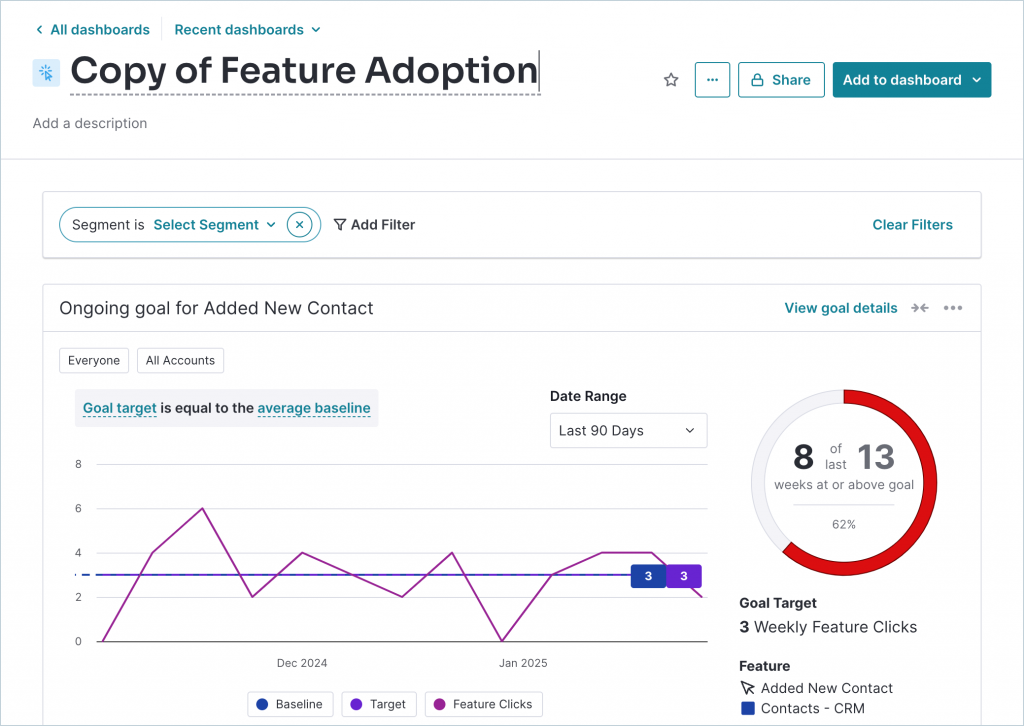
The resource center turns a support answer into a reusable in-app guide, something Refiner does not attempt. Segmentation is genuinely strong, allowing a team to slice feedback by the same criteria used to prioritize roadmap decisions.
Setup takes real time and usually a dedicated admin; this is a wider platform rather than a lighter one. Its review base, well past 200 on Capterra, is among the more substantial on this list.
Teams already investing in product-led growth tend to gravitate here first, since the guides and the analytics reinforce each other rather than living in separate tools that nobody connects.
Pros:
- Combines product analytics, in-app guides, and surveys in one platform
- Strong segmentation for targeting specific user groups
- Built-in resource center and product-led courses
- Robust feature set for validating roadmap decisions
Cons:
- Pricing is not published and can climb quickly as monthly active users grow
- Heavier setup that typically needs a dedicated admin
How Pendo Compares to Refiner: Pendo wraps Refiner’s in-app survey job inside a much broader product analytics platform, though it carries the same MAU-driven pricing dynamic Refiner does.
Pricing: Quote-only, contact vendor for pricing.
User Rating: 4.5/5 (Capterra)
10. Gainsight PX: Best for Product Adoption and In-App Engagement at Scale
Gainsight PX is the pick when a feedback strategy is tied directly to product adoption and churn reduction rather than research alone.
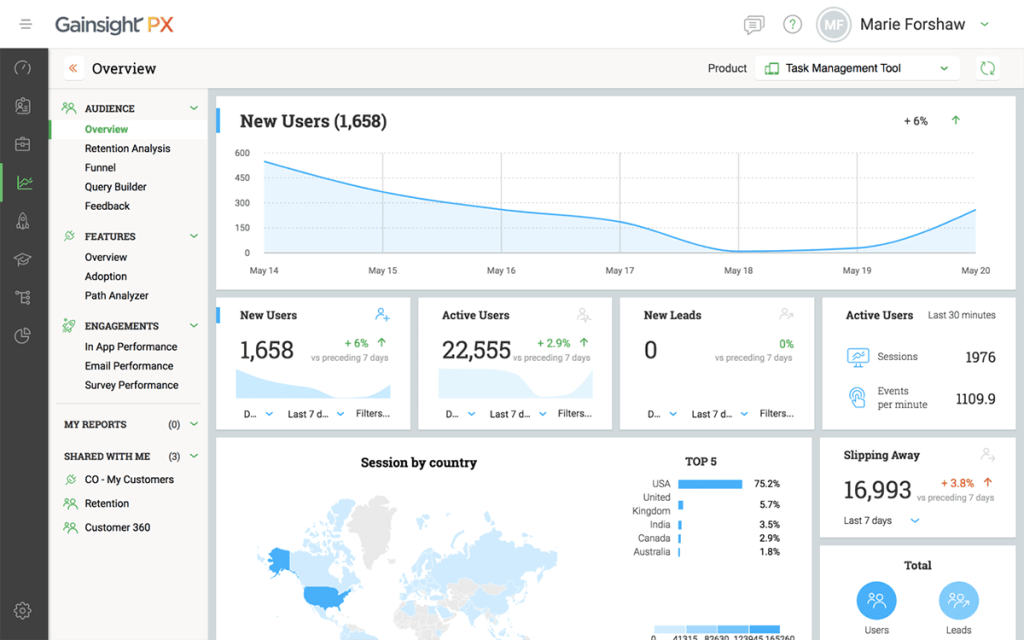
In-app guides, walkthroughs, and surveys all run off the same behavioral data, letting a team act on a friction point rather than just measure it.
Product analytics identify where adoption stalls before a survey even goes out. The tradeoff is a genuinely steeper learning curve than a focused survey tool; its Capterra ease-of-use score sits noticeably below its overall rating.
Larger product and customer success teams get the most value here. The Knowledge Center Bot is a useful addition as well, surfacing help content in context so a confused user finds an answer before they churn rather than after.
Pros:
- Combines product analytics with in-app guides and engagement
- Behavior-based targeting for personalized in-app experiences
- Strong fit for product adoption and churn reduction work
- Feature adoption and engagement tracking are built in
Cons:
- Ease of use rates noticeably below the platform’s overall Capterra score
- A broader platform scope creates a steeper learning curve than a focused survey tool
How Gainsight PX Compares to Refiner: Gainsight PX extends past Refiner’s feedback-collection scope into product engagement and adoption, a fit for a team whose real goal is changing behavior rather than only measuring it.
Pricing: Quote-only, contact vendor for pricing.
User Rating: 4.4/5 (Capterra)
Which Refiner Alternative Should Be Your Top Pick?
Ten tools are a lot to weigh. If you read only one section, make it this one. These are the three I would genuinely point a team toward, and each answers a different version of what is actually pushing people off Refiner.
1. Qualaroo: Best Overall Pick if You Want Context Plus Automatic Analysis
Qualaroo tops this list because it covers Refiner’s core contextual job and then does more with the responses once they arrive.
Native AI Sentiment Analysis and word cloud generation surface themes automatically, so nobody spends an afternoon reading open-text answers to find a pattern that was already there.
Question branching means a frustrated respondent and a happy one follow completely different paths. Heatmaps and Session Recordings add a visual layer to every response, showing what a user was doing right before they answered.
For a team that wants an in-the-moment context without the manual analysis afterward, this is the fastest path there. Flat-rate pricing with unlimited responses closes the loop on the cost side,e too, so a growing user base never inflates the bill on its own the way a user-based model does.
2. Survicate: Best if You Need to Reach Beyond the Product Itself
If Refiner’s in-app focus is the actual constraint, Survicate is where I would look next, multichannel surveys across web, email, link, and mobile all feeding one centralized Research Hub.
AI-powered theme identification handles much of the analysis that Refiner leaves to manual tagging. Audience targeting using attributes and events covers most of what Refiner’s behavioral triggers do for a typical program.
The tradeoff is a steep free-to-paid jump with no smaller tier in between, a real consideration for a team not ready to commit at that level yet.
For a team whose feedback program has already outgrown the product itself, though, consolidating email, link, and mobile responses into one place is usually worth that jump.
3. SatisMeter: Best if the Pricing Model Is the Real Complaint
For a team paying for Monthly Active Users, it never actually surveys; SatisMeter flips that model on its head, billing based on responses collected instead.
For a product with a large user base and a modest survey program, that single change can reshape the entire budget conversation. Survey throttling prevents over-surveying the same customers across recurring campaigns.
The catch is worth taking seriously. SatisMeter’s development pace has slowed since its Productboard acquisition, so a team planning several years out should weigh that alongside the pricing advantage.
There is also no native AI analysis of open-text answers at any tier, so reading through comments remains a manual job.
How Did I Evaluate These Refiner Alternatives?
I evaluated the Refiner alternatives in this list based on what a product team actually needs once contextual feedback starts arriving, a way to understand it without a manual review pass, and a pricing model that does not punish a growing user base.
User Reviews and Ratings: Every rating here is pulled directly from Capterra, weighed against review count rather than the star average alone. Refiner’s own listing rests on a thin review base, so I treated it with more caution than a tool backed by hundreds of entries. Where a tool had no usable Capterra data, I said so plainly rather than substituting a different source silently.
Essential Features and Functionality: Whether a tool adds real analytical depth, native AI sentiment analysis, automatic theme detection, closed-loop workflows, mattered more than a long feature checklist. Refiner already handles behavioral targeting well, so matching that was table stakes rather than a differentiator. What separated tools was what happened to a response after it arrived.
Ease of Use: I looked at how much setup stands between signing up and a first live survey, since Refiner’s own behavioral configuration already asks for real effort upfront. A tool that traded a little targeting depth for a same-day launch earned genuine credit here. Anything that demanded a dedicated admin had to justify that with real depth elsewhere.
Customer Support: I checked whether support is available at the entry price or reserved for larger deals, which matters for a team that depends on quick help mid-campaign. Quote-only vendors were weighed on whether support came bundled or as another line item. A platform that only responds reliably at enterprise scale scored lower regardless of features.
Value for Money: I weighed what a tool’s depth actually costs to unlock, since Refiner’s MAU-based model is the single most common reason teams start looking elsewhere. Published, predictable pricing carried more weight than a feature set whose real cost only appears after a sales call. Response-based and flat-rate models earned specific credit for solving that exact problem.
Personal Experience and Experts’ Opinions: Where I have used a tool directly, that experience shaped what is written here, including small practical details that never show up on a pricing page. Where I have not, I leaned on patterns that repeat consistently across independent research rather than any single source. Recent platform changes, acquisitions, and sunsets included, were verified before any tool made this list.
FREE. All Features. FOREVER!
Try our Forever FREE account with all premium features!
How Do You Choose the Right Refiner Alternative for Your Team?
Name the actual reason Refiner is not working for you, not the reason you assume should matter, and the table below points to the right pick directly.
| If Your Main Refiner Frustration Is… | Consider This Alternative |
| Paying per user instead of per response | SatisMeter or Qualaroo |
| Wanting automatic analysis instead of manual tagging | Qualaroo or Zonka Feedback |
| Needing to reach beyond the product itself | Survicate or Wootric (InMoment) |
| Wanting behavioral evidence alongside survey responses | Hotjar |
| Needing omnichannel coverage, including offline and SMS | Zonka Feedback |
| Running a service business that needs frontline coaching | AskNicely |
| Wanting a focused NPS specialist with published pricing | Retently |
| Tying feedback directly to product adoption and churn | Gainsight PX or Pendo |
Collecting Feedback Is Easy. Paying Fairly for It Is Not
Every tool on this list can trigger a survey inside a product, Refiner included, and does it well enough to earn a solid rating.
What sends people looking elsewhere is rarely the surveying itself. It is a bill that scales with users rather than responses, a real number that only appears after a sales call, and a scope that stops at the edge of the product.
That is why the right pick splits a few different ways. A team paying for users it never surveys wants a different answer than one that needs feedback from email, SMS, and offline channels.
Refiner was never built to reach. Platform changes are worth separating out, too.
If the goal is to close the analysis gap without a user-based bill, I would start with Qualaroo. The free plan lets a team run real contextual Nudges and test the AI feedback analysis against their own responses before committing to anything.
Frequently Asked Questions
What is the best free alternative to Refiner?
Qualaroo's free plan covers up to 50 responses with every premium feature included, AI Sentiment Analysis among them, a genuinely usable starting point rather than a stripped-down trial. Survicate, Hotjar, and SatisMeter all offer real free tiers too, though each caps a different metric, so the right one depends on whether responses, sessions, or channels matter most.
Is Qualaroo cheaper than Refiner?
For most teams, yes. Qualaroo's Essentials plan costs $19.99 per month with unlimited responses, while Refiner bills based on the number of Monthly Active Users tracked. A product with a large user base and a modest survey program pays substantially more under the Refiner's model, and its pricing past the entry tier requires a sales conversation.
Which Refiner alternative includes native AI-powered analysis?
Qualaroo, Zonka Feedback, Survicate, and Wootric all build AI-powered analysis of open-text responses directly into the product, whether that is sentiment analysis, theme detection, or automatic categorization. This goes further than Refiner's own response tagging, which identifies patterns without fully interpreting the reasoning behind them for you. Qualaroo and Zonka Feedback go deepest here among the ten.
Which Refiner alternative prices by responses instead of users?
SatisMeter is the most direct answer, billing on responses collected rather than Monthly Active Users tracked. Qualaroo takes a different approach again, flat-rate pricing with unlimited responses, so neither user count nor response volume changes the monthly bill once a plan is chosen. Retently also publishes a flat monthly price rather than scaling with either metric, making budgeting straightforward from the start.
Is Refiner still actively developed?
Refiner continues to operate as a standalone platform with a SaaS-focused product roadmap. Its Capterra review base is genuinely thin compared to most tools on this list, so there is less independent evidence available than for a more established platform. That is worth weighing alongside the product itself rather than treating the rating as settled.
Which Refiner alternative is best for omnichannel feedback?
Zonka Feedback covers the widest range here: website, in-app, email, SMS, WhatsApp, and offline surveys, all running from one platform. Wootric is the second-closest match, reaching web apps, mobile apps, email, links, Intercom Messenger, and SMS on its higher tiers, with text analytics applied across all of them. Both reach well past Refiner's in-app scope.
What should I look for in a Refiner alternative besides price?
Check whether a tool analyzes open-text responses automatically or just tags them for someone to interpret later. Beyond that, weigh which channels it actually reaches, whether pricing is published or quote-only, and whether real support exists at the entry price rather than only once a deal reaches enterprise size. Recent acquisitions are worth checking too, since they often slow down a roadmap.
Does any Refiner alternative connect feedback to product adoption?
Gainsight PX and Pendo both do, pairing survey responses with product analytics and in-app guides so a team can act on friction rather than only measure it. Both carry heavier setup requirements and quote-only pricing, so they fit teams whose feedback work is already tied to a formal adoption program. Neither is a lighter swap for Refiner's focused survey scope.
FREE. All Features. FOREVER!
Try our Forever FREE account with all premium features!

 We'd love your feedback!
What did you like & how can we make it even better?
 Thanks for your feedback!
 Ask Your Question
Have a question? Get expert help to make your decision easier.