
Most growth-stage CX and product teams start searching for SurveySensum alternatives once a demo call comes and goes, and they still don’t have a clear number to work with.
SurveySensum’s own site describes its ideal user as a team starting or aligning a VoC program. That’s exactly the moment you don’t want to burn weeks in a sales cycle before finding out whether the tool even fits your budget.
Two things usually trigger the search. Either the sales call came back with a price your budget can’t absorb, or you looked closer at what “CX service” actually means and realized you wanted software, not a guided program with a consultant attached to every step.
A third group has shown up more recently: teams whose Delighted account went dark in June 2026, and who now need a replacement that isn’t a full enterprise suite.
All three are common enough that an entire market of alternatives exists to answer them. It ranges from enterprise suites built to match SurveySensum’s scale to lightweight, self-serve tools for teams that just want NPS running by lunchtime.
Below, I’ve broken down 10 of the strongest SurveySensum alternatives, covering what each one costs, where it’s genuinely strong, and where it falls short. That way, you can build a real shortlist before you sit through another demo.
Why Look for a SurveySensum Alternative?
A few patterns come up often enough across reviews and evaluations to explain why teams start looking elsewhere:
Service-Bundled Pricing: SurveySensum does list plans, but they bundle onboarding and CX support into the price, and third-party reads of its pricing page put the entry CX plan around $300 per month. That’s a big jump from tools you can start on for free, and custom tiers still route through a sales conversation.
The Bundled Service Model: CX professionals guide setup, analysis, and closed-loop action. That’s genuinely useful for a team standing up its first VoC program, but it’s overhead for a team that already knows its metrics and just wants a tool that gets out of the way.
Execution Friction: Reviewers describe exporting data into pivot tables or Tableau as clunky. Some integrations also need support intervention rather than working self-serve.
Conflicting Price Signals: Third-party sites quote starting prices that don’t match each other or SurveySensum’s own plan page. Confirm the current number directly before building a budget around it.
None of that should be the deciding factor on its own. Still, it’s worth knowing going in that the number you find on a third-party site may not match what SurveySensum actually quotes you.
10 Best SurveySensum Alternatives
Skip the tab-hopping. Here’s where all 10 land on price and rating before you read a single full profile.
| Tool | Best For | Starting Price | User Rating |
| Qualaroo | In-context web, app, and prototype feedback | Free; from $19.99/month | 4.7/5 |
| Qualtrics | Enterprise experience management | Custom quote | 4.6/5 |
| Medallia | Large-scale enterprise CX programs | Custom quote | 4.5/5 |
| Zonka Feedback | Offline, kiosk, and omnichannel CX | From $199/month | 4.8/5 |
| Survicate | In-product and website feedback | Free; from $89/month | 4.6/5 |
| Simplesat | One-click CSAT inside your helpdesk | From $119/month | 4.8/5 |
| Retently | SaaS and e-commerce NPS | From $50/month | 4.9/5 |
| AskNicely | Frontline and service-team NPS | Custom quote | 4.6/5 |
| SurveySparrow | Conversational, chat-style surveys | Free; from $19/month | 4.4/5 |
| InMoment | Enterprise CX with text analytics | Custom quote | 4.4/5 |
Here’s the full breakdown:
1. Qualaroo: Best for Capturing Real-Time User Insights In-App & on Your Website Using Contextual, AI-Powered Micro-Surveys
Of all the SurveySensum alternatives on this list, Qualaroo has been my go-to for in-context feedback since I built my own VoC workflows around it. It still feels like the one tool designed for product teams who move fast, rather than teams that want a research department attached.
The core of it is the Nudge™: small, non-intrusive surveys that show up while a user is actually on your site or in your app, not three days later in an inbox they’ll ignore.
You can target a Nudge to users who just abandoned checkout, paid customers on a specific plan, visitors from one campaign, or practically any segment you can define.
Branching works intelligently, so respondents only see the follow-up questions that actually apply to them. Native AI Sentiment Analysis turns thousands of open-text responses into themes you can read in minutes instead of weeks.
Pros:
- AI Survey Creator drafts a full Nudge from a prompt, no manual setup required
- Question branching and skip logic, so respondents only see relevant follow-ups
- Native Customer Feedback Analysis AI, including AI Sentiment Analysis and word cloud generation for open-text responses
- Heatmaps and Session Recordings show what a user was doing right before they responded
- Advanced targeting by behavior, URL, exit intent, and custom user properties
- Identify API ties responses back to a real user by email or customer ID
- Nudge for Prototype works on Figma, Adobe XD, and InVision before a product ships
- Multilingual surveys in 100+ languages
- iOS and Android SDK for native in-app surveys
- Salesforce, HubSpot, and Slack integrations for CRM-connected feedback workflows
Cons:
- With this many targeting and survey options to work through, getting your setup exactly right can take some time
- Reporting could be a little more straightforward when you’re reviewing larger volumes of feedback
How Qualaroo Compares to SurveySensum: Both aim at real-time, actionable feedback, but the delivery model is opposite. SurveySensum bundles CX consulting into its plans, which puts its entry price well above a self-serve tool. Qualaroo lets you start on a free plan and move to paid tiers from $19.99/month, and it’s built for teams that want in-context targeting and behavioral data without a guided program attached. If self-serve setup and a low entry cost are on your checklist, this is the more direct fit.
Pricing: Free plan with core features included; paid plans start at $19.99/month (Essentials), followed by Business at $49.99/month and Enterprise at $149.99/month for custom targeting volume and advanced integrations.
User Rating: 4.7/5 (Capterra)
Hootsuite used Qualaroo Nudges to test messaging variations on its site and saw a 16% lift in conversion at 98% statistical significance. That’s the kind of measurable outcome that’s hard to get from a tool you’re still waiting on a consultant to help you configure.

2. Qualtrics: Best for Running Enterprise-Scale Experience Management Programs With Deep Survey Logic & Predictive Analytics
Qualtrics comes up first whenever I’m consulting on an enterprise CX build, and for good reason.
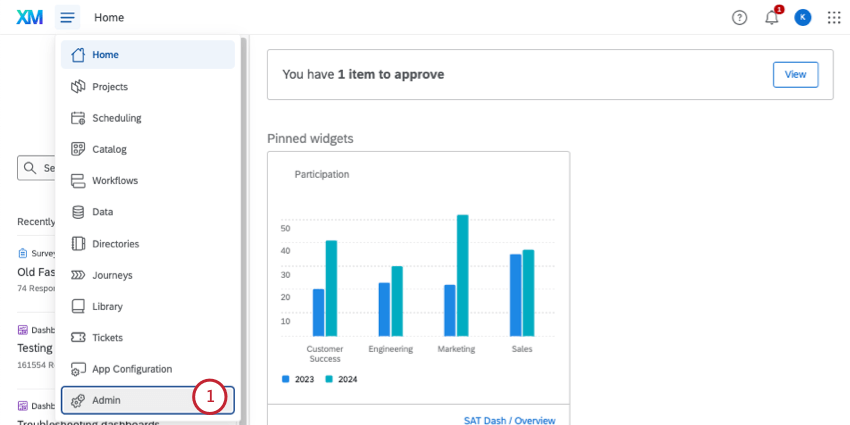
It’s the platform most large organizations already have somewhere in their stack. It’s built to handle everything from a quick NPS pulse to a full multi-touchpoint research program, with role-based dashboards and predictive analytics layered on top.
Reviewers consistently call out how adaptable the survey logic is, with branching that holds up even for complicated, multi-country projects.
The tradeoff shows up just as consistently: cost climbs fast past the entry tier, and reviewers often describe the interface as click-intensive and slow. It’s a strong destination if your organization has the budget and a dedicated admin to run it, less so for a lean VoC program.
Pros:
- Deepest survey logic and branching available in an enterprise platform
- Role-based dashboards and predictive insights for large organizations
- Handles everything from a simple NPS pulse to full research programs
- Broad third-party integrations, including Salesforce and Adobe
Cons:
- Costs climb quickly, and reviewers frequently flag it as expensive relative to what smaller teams need
- Navigation is often described as slow and click-heavy for new users
How Qualtrics Compares to SurveySensum: Qualtrics is quote-only, and SurveySensum still routes its custom tiers through sales, so neither gives you a fully self-serve evaluation. What Qualtrics offers over SurveySensum is a longer track record and deeper survey logic for structured, multi-touchpoint research. If you’re closer to SurveySensum’s growth-stage size, Qualtrics is likely more platform than you need.
Pricing: Not published; Qualtrics is quote-only, with cost scaling based on program size, modules, and features.
User Rating: 4.6/5 (Capterra)
3. Medallia: Best for Unifying Solicited & Unsolicited Feedback Across Every Channel in Large Enterprises
Medallia is the platform I point enterprise CX directors toward when feedback has to flow in from web, contact center, frontline, and unstructured channels all at once, with text analytics stitched on top of all of it.
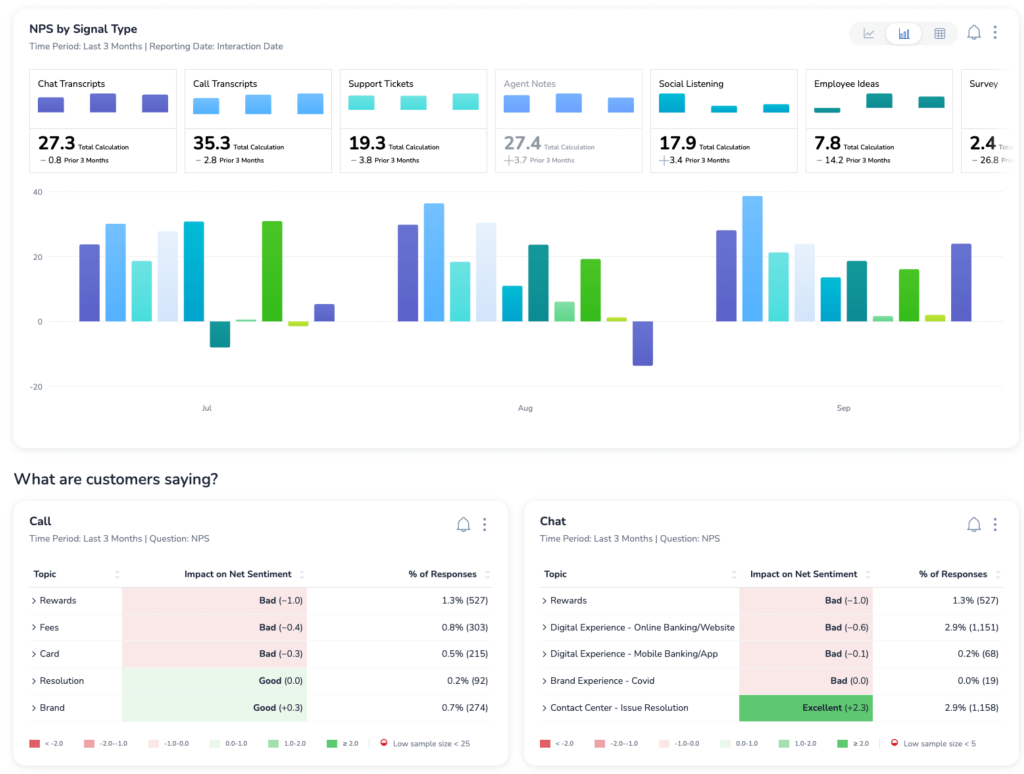
It’s built for organizations that need to unify solicited and unsolicited signals into one system employees actually use daily, not a reporting tool the CX team checks once a quarter.
That breadth is also the catch. Medallia doesn’t publish pricing anywhere, deployments lean heavily on implementation support, and teams without a dedicated CX or IT resource often find setup slower and more involved than they expected.
It’s a platform genuinely built for scale, and that shows in both what it can do and what standing it up actually takes.
Pros:
- Captures solicited and unsolicited feedback across the broadest range of channels
- Strong text and sentiment analytics for large, unstructured data sets
- Built for enterprise-wide adoption, not just a CX team dashboard
- Established track record with large, complex organizations
Cons:
- No published pricing anywhere, and evaluations require a full sales cycle
- Implementation and onboarding lean heavily, often needing dedicated internal resources
How Medallia Compares to SurveySensum: Both sell a service-heavy enterprise model, and Medallia is even less transparent on cost. If pricing clarity was your reason for looking past SurveySensum, Medallia won’t solve that. Where it differs is scale: Medallia is built for organizations well beyond SurveySensum’s growth-stage target, with unified channel coverage that few tools on this list can match.
Pricing: Not published; Medallia runs a sales-quoted enterprise model, with cost scaling by channels, modules, and deployment size.
User Rating: 4.5/5 (Capterra)
4. Zonka Feedback: Best for Collecting Omnichannel Feedback Across Kiosks, SMS, WhatsApp & Offline Locations
I’ve set up Zonka Feedback for a client who needed kiosk surveys running at physical retail locations alongside their usual email and web collection. It’s the one tool on this list that handles offline capture as a first-class feature rather than an afterthought.
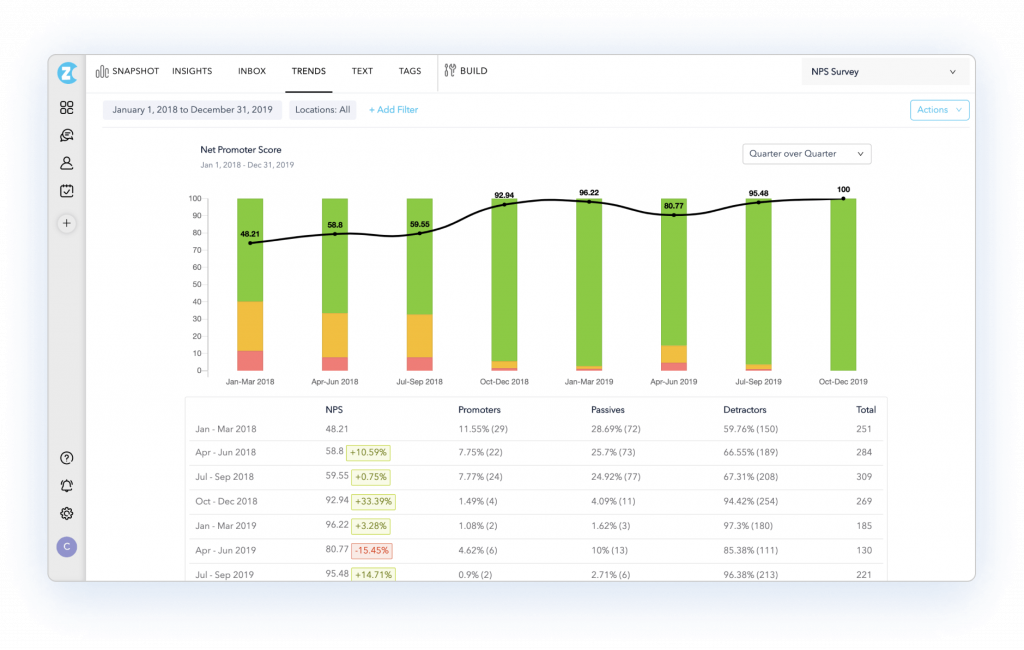
Beyond kiosks, it covers SMS, WhatsApp, in-app, and email from one dashboard. A centralized inbox and case management make sure nothing collected offline gets lost before someone acts on it.
It’s the closest structural match to what SurveySensum offers in terms of channel breadth.
The catch is the AI Feedback Intelligence layer (thematic analysis, sentiment, and impact scoring), which sits on a separate and noticeably pricier tier. There’s also no free plan to test the waters first.
Pros:
- Genuine omnichannel coverage, including SMS, WhatsApp, kiosk, and offline capture
- Centralized feedback inbox with case management to close the loop
- Strong Capterra rating built on consistent ease-of-use feedback
- Reputation management tools bundled alongside survey collection
Cons:
- No free plan or free trial, so there’s no low-risk way to try it first
- The AI Feedback Intelligence layer is listed at $999/month versus $199/month for the base plan, which can surprise teams budgeting off the entry price alone
How Zonka Feedback Compares to SurveySensum: If offline, kiosk, or frontline multi-location CX is the actual job, Zonka matches SurveySensum’s multi-channel pitch feature for feature. Both list entry plans but push add-ons and custom tiers through sales, so get a full quote from each before comparing real cost. Zonka’s centralized inbox and case management give it an edge on actually closing the loop once feedback comes in.
Pricing: Feedback Management from $199/month; AI Feedback Intelligence listed at $999/month; no free plan or free trial.
User Rating: 4.8/5 (Capterra)
5. Survicate: Best for Launching In-Product & Website Surveys Fast With a Usable Free Plan
Survicate is what I turn to when a team wants in-product and website surveys running within a day, with no procurement cycle standing in the way.
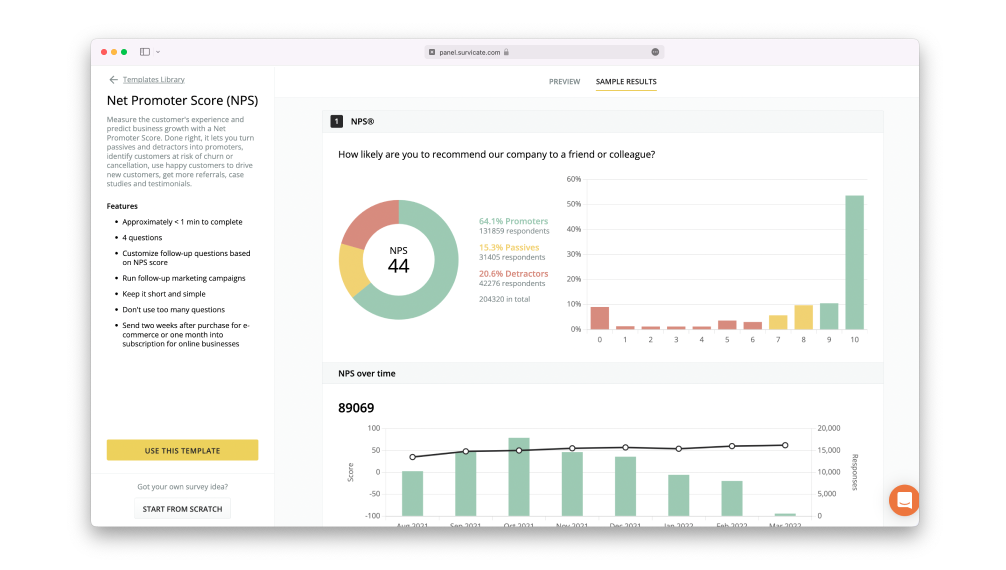
It covers NPS, CSAT, and CES out of the box and ships with an AI survey creator and a decent integration catalog. The free plan is generous enough to run a small real program on, not just a trial shell.
Where it gets more complicated is the response meter. The free tier stops at 25 responses a month, paid tiers are priced by response bands, and overages run $0.79 per additional response once you’re past your allotment.
For a team that’s scaling collection fast, that structure is worth modeling out before you commit, since the sticker price and the real monthly cost can diverge quickly.
Pros:
- Fast to set up across web, in-product, and email with no procurement delay
- Genuinely usable free plan for small teams testing the category
- AI-powered theme and sentiment surfacing included
- Solid integration catalog for a tool at this price point
Cons:
- Response-metered pricing means real cost climbs with volume, and overage charges add up
- Separate caps on responses and data points can catch teams off guard mid-month
How Survicate Compares to SurveySensum: Survicate answers the self-serve complaint directly: you can be collecting responses the same day you sign up, no sales call required. What it doesn’t match is SurveySensum’s bundled CX guidance, so if strategic support was the appeal, Survicate assumes you’ll bring that expertise in-house.
Pricing: Free plan for up to 25 responses per month; Starter from $89/month, with Growth from $114/month billed annually and overage charges beyond your response allotment.
User Rating: 4.6/5 (Capterra)
6. Simplesat: Best for Embedding One-Click CSAT & NPS Surveys Directly in Your Helpdesk Workflows
Simplesat is the tool I point support and service teams toward when they want CSAT, CES, and NPS running inside the workflows they already use.
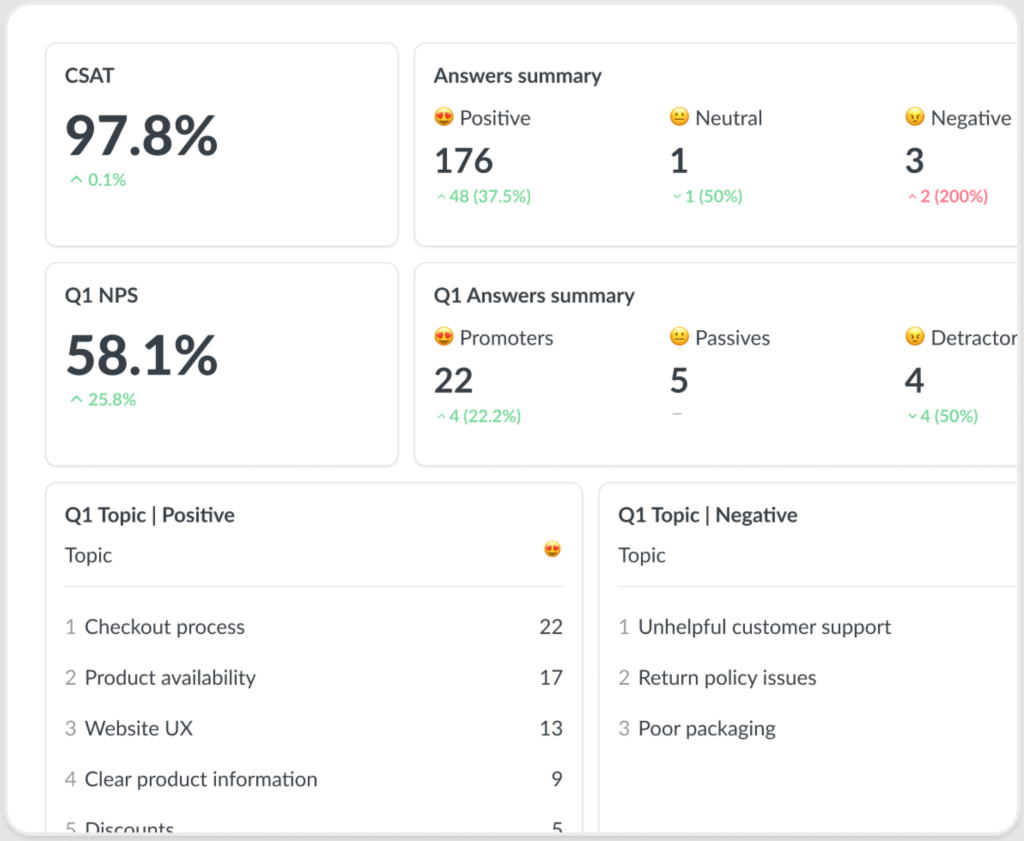
Its signature move is the one-click survey. Customers rate an interaction straight from a support email or ticket reply, which keeps response friction close to zero.
It connects to 50-plus helpdesk and PSA tools, including Zendesk, Freshdesk, ConnectWise, and Autotask, and agents can see their feedback inside the helpdesk without needing a paid seat. Setup is self-serve, and you can start collecting responses the same day.
The trade-off is entry cost. There’s no free plan, and the starting price sits well above the lightweight tools on this list, so it makes the most sense once CX feedback is a standing program rather than an experiment.
Pros:
- One-click CSAT and CES surveys embedded directly in support emails and ticket replies
- 50-plus integrations with helpdesk and PSA tools, including Zendesk, Freshdesk, ConnectWise, and Autotask
- Pricing scales with response volume, not team size, so agents don’t need paid seats to see feedback
- Self-serve setup, with most teams collecting responses within days
Cons:
- No free plan, only a 14-day trial, so there’s no long-term way to test it at zero cost
- Built around support and service workflows, so in-app and website targeting isn’t where it shines
How Simplesat Compares to SurveySensum: Both focus on CX metrics tied to real customer interactions, but Simplesat skips the consulting layer entirely. Prices are published, you sign up, connect your helpdesk, and go live on your own. If SurveySensum’s guided program felt like more than you needed and most of your feedback comes from support conversations, Simplesat is the lighter, faster path.
Pricing: Standard from $119/month billed annually for 1,000 monthly responses and 5 users; Pro and Elite tiers scale from there; Enterprise is quote-only.
User Rating: 4.8/5 (Capterra)
7. Retently: Best for Running Ongoing NPS Programs for SaaS & E-Commerce Teams
Retently is the tool I reach for when a SaaS or e-commerce team wants an ongoing NPS motion rather than a one-off pulse.
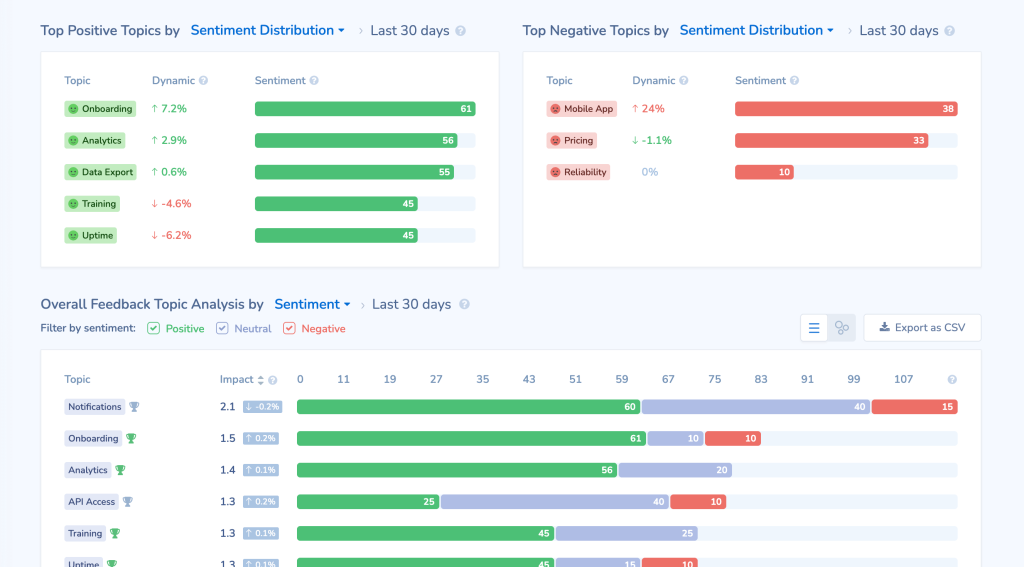
Surveys, campaigns, and trend tracking are included in the entry tier, and the dashboards are clean enough that a non-technical team can read them without training.
It’s a natural next step for a team that started on a free NPS tool and outgrew it, without jumping straight to an enterprise platform.
The narrower focus is also the honest limitation. Retently does NPS, CSAT, and CES well, but it doesn’t try to be a full CX suite, and its integration catalog is thinner than the broader platforms on this list.
Pros:
- Purpose-built for ongoing SaaS and e-commerce NPS programs
- Clean dashboards and trend tracking without a learning curve
- Automated follow-up sequences for detractors baked in
- Consistently strong reviews on ease of use and support
Cons:
- The feature set stays narrow compared to full CX suites, by design
- Integration catalog is thinner than platforms built for larger teams
How Retently Compares to SurveySensum: Retently covers the core NPS and CSAT job SurveySensum does, often at a fraction of the cost, but it makes no attempt to replace the CX consulting layer SurveySensum bundles in. It’s a fit once you already know what you’re measuring and just need the mechanics handled well.
Pricing: Basic at $50/month for 2,500 monthly surveys and 3 user seats; Essential at $179/month; Professional at $359/month.
User Rating: 4.9/5 (Capterra)
8. AskNicely: Best for Coaching Frontline Service Teams With Real-Time NPS Scores
AskNicely is the one I recommend to frontline service teams. Once you see it coaching reps off live NPS scores instead of a quarterly report, it’s easy to see why.
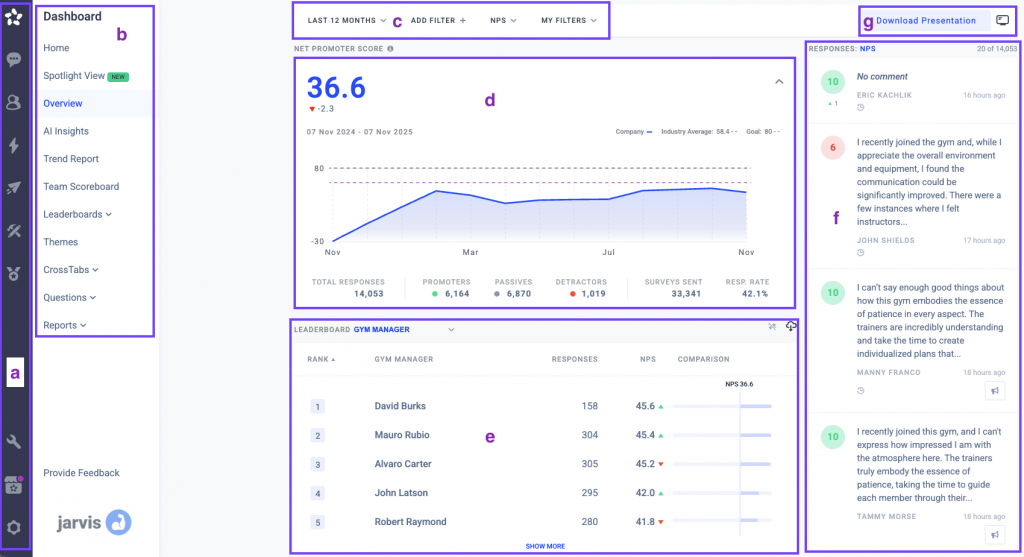
It’s built around the idea that feedback should change behavior immediately. Scores route straight to managers and reps in real time, with leaderboards and automated workflows tied to each individual response as it comes in.
That real-time coaching loop is genuinely different from most tools on this list, which stop at reporting and leave the follow-through to someone else.
However, there’s no free plan or published rate card, and cost typically lands well above the lightweight tools here once you get a quote. Reporting depth is also built for coaching conversations rather than the deep cross-channel analysis a research team might want.
Pros:
- Real-time coaching workflows tie NPS scores directly to frontline behavior
- Unlimited users on its core tier, useful for large service teams
- AI-powered dynamic surveys and automated follow-up
- Strong adoption and setup speed praised consistently in reviews
Cons:
- No free plan and no published pricing, so testing it means going through a sales conversation first
- Reporting covers core coaching use cases well but isn’t built for deep, multi-channel analysis
How AskNicely Compares to SurveySensum: SurveySensum’s CX professionals guide strategy from the outside. AskNicely builds the coaching loop into the product itself, so frontline managers act on scores without waiting on an outside consultant. It’s a narrower job than SurveySensum’s full VoC program, done well for teams whose feedback problem is really a frontline behavior problem.
Pricing: Not published; AskNicely is quote-only, with cost typically scaling by response volume and team size.
User Rating: 4.6/5 (Capterra)
9. SurveySparrow: Best for Boosting Completion Rates With Conversational, Chat-Style Surveys
SurveySparrow’s conversational, chat-style format is the reason I bring it up whenever a team complains that their survey completion rates are embarrassingly low.
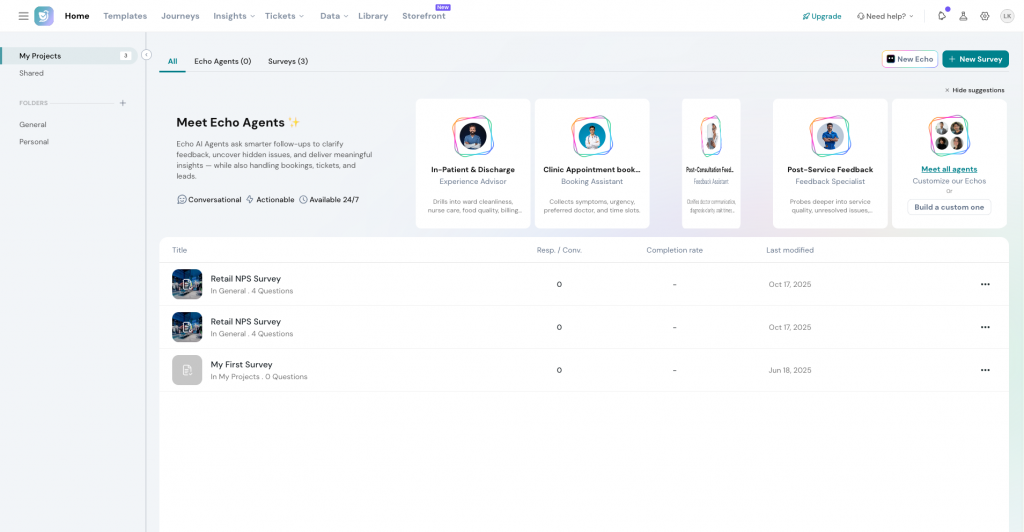
Instead of a traditional grid of questions, respondents get one question at a time in a format that feels more like a text conversation than a form. That alone measurably improves completion on longer surveys.
It covers NPS, CSAT, and CES, supports surveys in 130-plus languages, and includes basic workflow automation for routing responses to the right team.
Pricing is seat-based, which is the detail to watch closely. The entry price looks appealing for a solo user, but every additional seat adds real cost, so a growing team’s actual bill often lands well above what the plan page first suggests.
Pros:
- Conversational survey format improves completion rates on longer surveys
- Supports surveys in 130-plus languages
- Reasonable entry pricing for solo or small-team use
- Basic workflow automation included from the lower tiers
Cons:
- Seat-based pricing climbs quickly once more than one person needs access
- CX, NPS, and 360 suites are billed as separate add-on products
How SurveySparrow Compares to SurveySensum: Where SurveySensum leans on human guidance to keep response quality high, SurveySparrow leans on format, betting that a better-feeling survey gets better answers on its own. It’s a lighter, cheaper starting point, though a growing team should model seat costs before assuming it stays that way.
Pricing: Free plan for 75 responses per quarter; Basic at $19/month billed annually; Business at $79/month, seat-based beyond the included users.
User Rating: 4.4/5 (Capterra)
10. InMoment: Best for Turning Unstructured Enterprise Feedback Into Prioritized Actions With Text Analytics
InMoment is what I shortlist for CX leaders who already have a text analytics mandate from leadership. Someone upstream wants unstructured feedback turned into a prioritized action list, not just another satisfaction score on a dashboard.
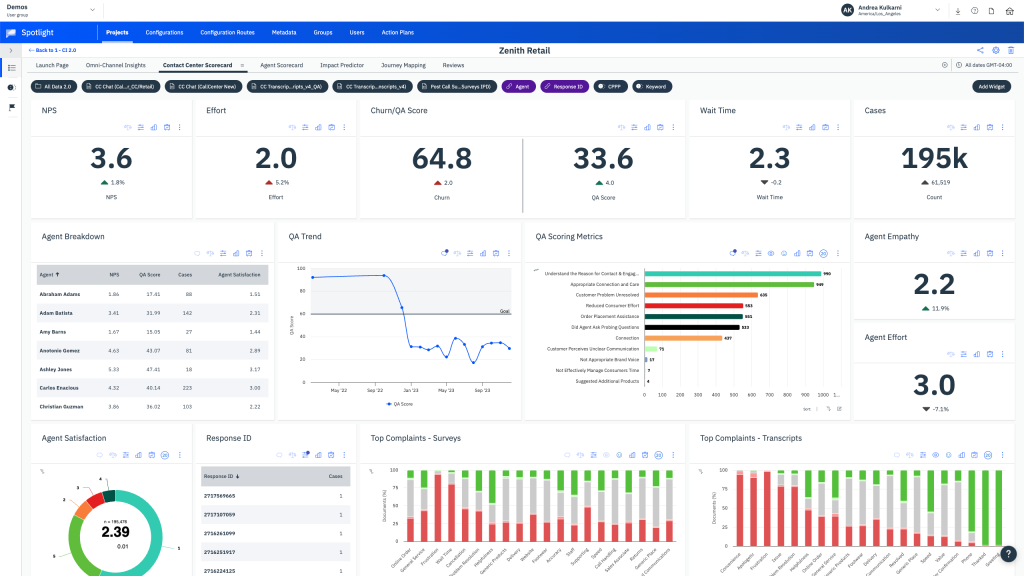
It pulls feedback across channels and applies sentiment and thematic analysis on top. It’s aimed squarely at organizations big enough to have a dedicated CX or insights function that actually reads the output every week.
Like the other enterprise names on this list, there’s no public pricing and no self-serve path in. Every evaluation starts with a sales conversation.
Users consistently rate the partnership and account support side highly, but onboarding and setup come up almost as often as heavier than teams expect going in.
Pros:
- Strong text and sentiment analytics for large volumes of unstructured feedback
- Multichannel capture built for enterprise-wide CX programs
- Reviewers consistently praise the partnership and account support experience
- Established track record with large, complex CX deployments
Cons:
- No published pricing or self-serve entry point, so every evaluation starts with sales
- Onboarding and setup lean heavier than most teams’ anticipation going in
How InMoment Compares to SurveySensum: Both sell CX outcomes as much as software, with the guidance built into the price. InMoment aims higher up-market than SurveySensum’s growth-stage target, so it’s worth a look mainly if your organization has already outgrown a lighter, self-serve program.
Pricing: Not published; InMoment is quote-only, with evaluation starting through a sales conversation rather than a self-serve trial.
User Rating: 4.4/5 (Capterra)
Which SurveySensum Alternative Should You Pick?
If you only read three of the ten, make it these. Each one answers a different version of “what am I actually trying to fix?”
1. Qualaroo: Best Overall for In-Context Feedback
Qualaroo is the pick if your real problem is feedback that feels disconnected from the moment it happened.
A Nudge asks the question while someone is on your site, in your app, or clicking through a Figma prototype, and the Identify API ties every answer back to a real user.
Customer Feedback Analysis AI then sorts open-text responses by sentiment and theme, so you’re reading patterns instead of spreadsheets.
The math is simple. You can start with the free plan today, move to Essentials at $19.99/month (about $240/year), or step up to Business at $49.99/month (about $600/year) when you need more volume and integrations.
2. Zonka Feedback: Best for Omnichannel and Offline Programs
If your feedback program needs to run outside a browser, on kiosks, over SMS and WhatsApp, or at in-person locations, Zonka Feedback is the closest match to what SurveySensum promises on channel breadth.
It centralizes everything into one inbox with case management, so a response collected on a tablet in a retail store doesn’t get lost before someone acts on it.
The pricing math deserves a close look. The AI Feedback Intelligence tier, which adds the thematic analysis and impact scoring that make the data genuinely actionable, is listed at $999/month, closer to $12,000 a year.
That’s a fivefold jump, so decide upfront whether you need AI analysis on day one. There’s no free plan or trial, so confirm current pricing with Zonka before you budget.
3. Qualtrics: Best for Enterprise-Scale CX Programs
Qualtrics is the pick once your CX program has outgrown anything self-serve and you need the deepest survey logic, branching, and role-based governance in the category.
It’s the platform most large organizations already run somewhere in their stack, built for structured, multi-touchpoint research rather than a single in-app Nudge.
The real cost isn’t just the license. Qualtrics is quote-only, so choosing it means a full sales cycle, and pricing scales with the modules and volume you add. Budget for the people too.
If your organization already has that admin and a CX team in place, Qualtrics is the safer, more tested bet than a newer enterprise platform. If not, you’ll likely pay for depth you don’t use.
How Did I Evaluate These SurveySensum Alternatives?
I evaluated the SurveySensum alternatives in this list based on what actually determines whether a VoC program sticks past its first quarter, not just which tool demos well.
User Reviews and Ratings: I weighted each tool’s Capterra rating together with how many reviews sit behind it. A high score from a small pool tells a different story than a slightly lower one backed by hundreds, so I treated review volume as part of the signal, not a footnote.
Essential Features and Functionality: I checked whether each tool actually covers the core job, which is NPS, CSAT, or CES collection with some form of analysis, rather than assuming feature parity. Zonka’s offline capture and Qualaroo’s Identify API are the kind of functional differences that only show up once you look past the marketing page.
Ease of Use: Setup time and learning curve matter more than most buyers expect going in. I looked specifically at how long it takes a non-technical user to get a first survey live, since that’s the gap between tools like Simplesat and Qualtrics.
Customer Support: I looked at whether support is self-serve, bundled, or paid-tier-only, since that changes the real cost of ownership. Tools that route every question through a dedicated CX consultant, like SurveySensum, come with a different support model entirely than one with a self-serve help center.
Value for Money: I compared list price against what a team actually pays at realistic volume, not just the entry tier. Response-metered pricing like Survicate’s and seat-based pricing like SurveySparrow’s can both look cheaper on the pricing page than they end up being on the invoice.
Personal Experience and Experts’ Opinions: Where I’ve configured or watched a client run a tool directly, I said so. Where I haven’t, I leaned on consistent patterns across verified reviews rather than a single anecdote, since one glowing or scathing review rarely tells the whole story.
FREE. All Features. FOREVER!
Try our Forever FREE account with all premium features!
How Should You Decide Between These Tools?
Match the decision to the actual constraint you’re working around, not the feature list that looks most impressive on paper.
| If Your Priority Is | Pick |
| Self-serve, in-context web and app feedback | Qualaroo |
| Offline, kiosk, and multi-location CX | Zonka Feedback |
| One-click CSAT inside your helpdesk, or replacing Delighted | Simplesat |
| Frontline coaching tied to live NPS scores | AskNicely |
| Ongoing SaaS or e-commerce NPS at low cost | Retently |
| Enterprise scale with an existing CX team | Qualtrics or Medallia |
| Text analytics mandate from leadership | InMoment |
| Higher survey completion on longer forms | SurveySparrow |
The Right SurveySensum Alternative Comes Down to Fit
None of the ten SurveySensum alternatives above is a straight upgrade over the platform in every dimension, and that’s the honest takeaway.
Different picks solve different jobs. If channel breadth and offline capture matter most, Zonka Feedback earns its spot. If your feedback lives inside support conversations, Simplesat keeps it there.
If your organization has already scaled beyond what a mid-market tool can handle, Qualtrics or Medallia are proven enterprise options, even with their own opaque pricing.
And if you’re planning to grow this program over the next year rather than just patch a gap this quarter, choose a tool that scales with you, not one you’ll be replacing in 12 months.
For most teams that came to this page looking for feedback tied to real user behavior, not just another survey form, Qualaroo is the strongest starting point. You can set up your first Nudge on the free plan today and see what your users actually say before you ever book a demo.
Frequently Asked Questions
What is SurveySensum, and why do teams look for alternatives?
SurveySensum is a CX and VoC platform that pairs NPS, CSAT, and CES surveys with a team of CX professionals who guide setup, analysis, and closed-loop action. Teams look elsewhere when they want a self-serve tool instead of a guided program, or when bundled services push the price past what a lean VoC budget can absorb.
Is there a free SurveySensum alternative?
Yes. Qualaroo, Survicate, and SurveySparrow all offer free plans you can start on today. Qualaroo's free plan includes its premium features with no time limit, though every free tier here caps volume in some way, whether by monthly responses, pageviews, or quarterly limits. Check those caps against your expected traffic before you commit.
What does SurveySensum cost?
SurveySensum lists flat-rate and usage-based CX plans on its pricing page, with onboarding and survey setup support included, and larger programs quoted through sales. Third-party pricing trackers have recorded entry plans around $300 per month, but confirm the current figure on SurveySensum's own page, since tiers and bundled services change.
Which SurveySensum alternative is best for a small team?
Retently and SurveySparrow are the strongest fits for a small team just getting started. Retently gives you a focused NPS, CSAT, and CES program from $50 per month, while SurveySparrow has a free plan and a $19 Basic tier. Both go live in an afternoon without developer help, and neither pushes you into an enterprise suite you'd never fully use.
Which alternative fits an enterprise or growth-stage VoC program?
Qualtrics and Medallia are the closest matches for large, structured research programs run by dedicated CX teams. For growth-stage programs, Qualaroo's Enterprise tier and Zonka Feedback both scale well when you need more than a lightweight tool but aren't ready for a full enterprise deployment, its implementation timeline, or its price tag.
What makes Qualaroo different from SurveySensum?
Qualaroo lets you start free and move to paid tiers from $19.99 per month, and it centers on in-context Nudges triggered by real user behavior on your site, app, or prototype. You configure and own the targeting and strategy yourself, instead of working through bundled CX professionals on someone else's timeline and budget.
How do these alternatives compare on Capterra ratings?
Ratings across the ten tools range from 4.4/5 to 4.9/5 on Capterra, but the number of reviews behind each score varies a lot. A high rating built on a few dozen reviews carries less weight than a slightly lower one backed by hundreds of reviews, so check review volume on each tool's Capterra page alongside the score.
Can I switch to another tool without losing historical feedback data?
Most platforms, including Qualaroo, let you export historical responses as CSV files for a standard migration. Confirm export formats and retention limits before canceling, since some tools restrict access once a subscription lapses. If you're coming from Delighted, which shut down on June 30, 2026, check whether you saved an archive before the cutoff.
FREE. All Features. FOREVER!
Try our Forever FREE account with all premium features!

 We'd love your feedback!
What did you like & how can we make it even better?
 Thanks for your feedback!
 Ask Your Question
Have a question? Get expert help to make your decision easier.