
Retently alternatives were on my mind after a brief stretch of using it. I was impressed by its core offerings, NPS, CSAT, and CES surveys, and by how quickly a first campaign could go out. But that was it. Once I wanted more than a score, I kept bumping up against the edges of what it can do.
Pricing deserves a fair mention. Retently starts at $99 per month on a flat rate and offers a 7-day trial rather than a free plan.
The catch is the survey credit meter, where every email sent, every in-app or link survey opened, and every reminder spends a credit. Capterra’s 4.9 rests on 30 reviews, which is encouraging but thin.
Since then, I have tested plenty of platforms against the same criteria, and ten made this list. I weighed each on surveys, channels, analysis, and cost, and on where it beats Retently. Qualaroo is among them, and I point out where it comes up short.
One shortcut: work out whether you want a stronger NPS tool or a broader feedback tool, since that narrows the field fast.
Why Are Teams Looking for Alternatives to Retently?
Retently handles its focused job well, and I am not arguing otherwise. The points below are where my own time with it, together with its pricing page, hinted that certain teams would do better elsewhere. All of them are about fit: the breadth of the toolkit, how usage is counted, and the evidence behind the rating.
Retently Stays Narrow on Purpose
When I used Retently for a brief while, I was impressed by its core offerings: NPS, CSAT, and CES surveys. But that was it, and I kept wanting more advanced functionality. The channel list on its pricing page covers email, links, embeds, Intercom messages, kiosks, and web pop-ups; a mobile app SDK is not among them. For a team whose questions go beyond a score, narrow becomes limiting quickly.
Survey Credits Run Down Faster Than You Expect
Retently meters usage in survey credits, and one is spent for every email survey sent and every time a customer opens an in-app, a link, or an Intercom survey. Reminders and repeat surveys also cost credits. When credits run out, email and in-app surveys queue until the next month, and link and Intercom surveys become unreachable for customers. Responses are not capped, but a busy month can still stall a campaign.
There Is No Free Plan to Start On
Retently offers a 7-day free trial, and Capterra lists paid plans starting at $99 per month on a flat-rate basis. That price is modest, yet a trial is not a place to keep a small program running while you decide. A few tools here let you start on a free plan instead. For a team still proving that NPS changes anything, that matters.
The Rating Rests on a Small Sample
Capterra gives Retently a 4.9 overall, with 4.7 for value, but that rating comes from just 30 reviews. A near-perfect score from a small group is encouraging, not conclusive. Tools with hundreds or thousands of reviews give a steadier read on how they hold up over time. I weighed that when comparing the options below.
The Top 10 Retently Alternatives
The table gives each tool’s entry price and Capterra rating up front, with my notes after it. Begin with the entries nearest to how you use Retently now, since some stay NPS-centered and others stretch much further.
| Tool | Best For | Starting Price | Capterra Rating |
| Qualaroo | Capturing Real-Time User Insights In-App & on Your Website Using Contextual, AI-Powered Micro-Surveys | Free plan; from $19.99/mo | 4.7/5 |
| Survicate | Multichannel surveys with a centralized research hub | Free plan; from $114/mo | 4.6/5 |
| SurveyMonkey | Familiar surveys with pre-written answer choices | $30/mo | 4.6/5 |
| Typeform | Conversational surveys with a large template library | $28/mo | 4.7/5 |
| AskNicely | Real-time NPS sharing across teams | Quote-only | 4.6/5 |
| Zonka Feedback | Omnichannel CX automation with AI feedback intelligence | Quote-only | 4.8/5 |
| Qualtrics (XM for CX) | Predictive analytics and churn detection | Quote-only | 4.6/5 |
| InMoment | Advanced analytics for market research and CX programs | Quote-only | 4.4/5 |
| SurveySparrow | Conversational, chat-style surveys | Quote-only | 4.4/5 |
| Refiner | Behavior-triggered in-product microsurveys for SaaS | $149/mo | 4.6/5 |
1. Qualaroo: Best for Capturing Real-Time User Insights In-App & on Your Website Using Contextual, AI-Powered Micro-Surveys
Retently alternatives that go beyond a score are what I ended up needing, and Qualaroo is the one I now prefer. It changed how I approach user experience strategy because everything lives in one place: a large template library gets me live in minutes, surveys match my brand’s design, and integrations keep feedback from getting stuck in silos.
I collect real-time feedback from website visitors with Nudges™ that ask the right question at the right moment, and I track NPS, CSAT, and CES from the same account. The native Customer Feedback Analysis AI makes sense of open-text answers, with AI Sentiment Analysis surfacing the emotion behind them.
Behavior, traffic source, and technology all work as targeting rules; the Identify API pins a question to one named user, and Heatmaps and Session Recordings show what that person did beforehand. A blank page is optional, since the AI Survey Creator drafts from a prompt.
Pros
- AI Survey Creator drafts a full Nudge from a prompt, no manual setup required
- Question branching and skip logic so respondents only see relevant follow-ups
- Native AI Customer Feedback Analysis, including AI Sentiment Analysis and word cloud generation for open-text responses
- Heatmaps and Session Recordings show what a user was doing right before they responded
- Advanced targeting by behavior, URL, exit intent, and custom user properties
- Identify API ties responses back to a real user by email or customer ID
- Nudge for Prototype works on Figma, Adobe XD, and InVision before a product ships
- Multilingual surveys in 100+ languages
- iOS and Android SDK for native in-app surveys
- Salesforce, HubSpot, and Slack integrations for CRM-connected feedback workflows
Cons
- Free-plan users should not expect a dedicated onboarding or account manager, since that service is reserved for the paid plans.
- Qualaroo is delivered only through the cloud, so there is no downloadable or on-premise version, and you need an internet connection.
How Qualaroo Compares to Retently: Retently is a focused NPS, CSAT, and CES tool with a credit meter and a 7-day trial. Qualaroo covers those metrics and adds contextual targeting, native AI analysis, and behavioral context on its free plan, though a program built around outbound email sends may still better suit Retently’s campaign focus.
Pricing: Free plan available, up to 50 responses with all premium features. Essentials at $19.99/month, Business at $49.99/month, and Enterprise from $149.99/month.
User Rating: 4.7/5 (Capterra)
GraphicSprings saw a 41 percent increase in revenue using Qualaroo surveys. It is a reminder that the answer behind a score is often worth more than the score itself.
2. Survicate: Best for Feedback Beyond a Score, Across Channels
Survicate is the natural next step for a team that has outgrown a score-only tool. Surveys cover the website, the product, email, and shared links, and every reply lands in one Research Hub, so NPS sits beside the open-ended questions that explain it.
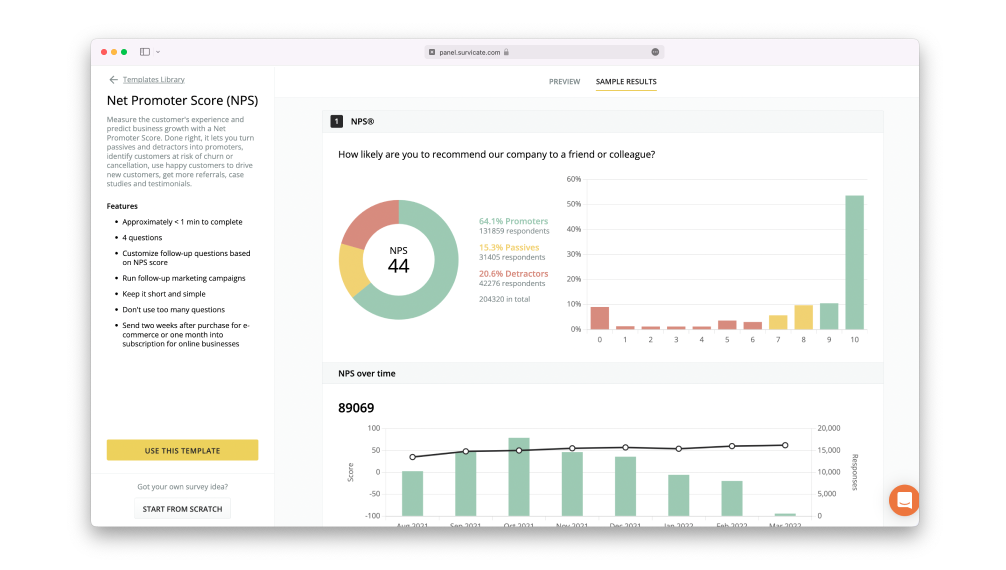
Attributes and events determine who sees a question; a survey left half-done still yields usable data, and AI-assisted analysis sorts comments into themes. NPS, CSAT, and CES formats are all there, so you do not lose what Retently did well.
A permanent free plan covers 25 responses a month, paid plans start at $114 a month, and the response volume slider drives most of the price. It builds no guides or product analytics dashboards.
Pros
- A shared Research Hub for web, product, email, and link replies
- AI-assisted analysis that groups comments by theme
- NPS, CSAT, and CES formats built in
- A permanent free plan for easy testing
Cons
- Price rises with the response volume slider
- No guides or product analytics dashboards
How Survicate Compares to Retently: Survicate keeps the NPS, CSAT, and CES basics and adds wider channels and AI-assisted analysis, with a free plan, though its entry price is higher than Retently’s.
Pricing: Free plan available, up to 25 responses a month. Paid plans start at $114/month.
User Rating: 4.6/5 (Capterra)
3. SurveyMonkey: Best for Familiar Surveys With Pre-Written Answer Choices
I have used SurveyMonkey, and its Answer Genius is the feature that won me over. I choose an answer type, and it fills in a set of pre-written choices, and I can stretch the scale to more or fewer options, which saves real time on every NPS-style question.
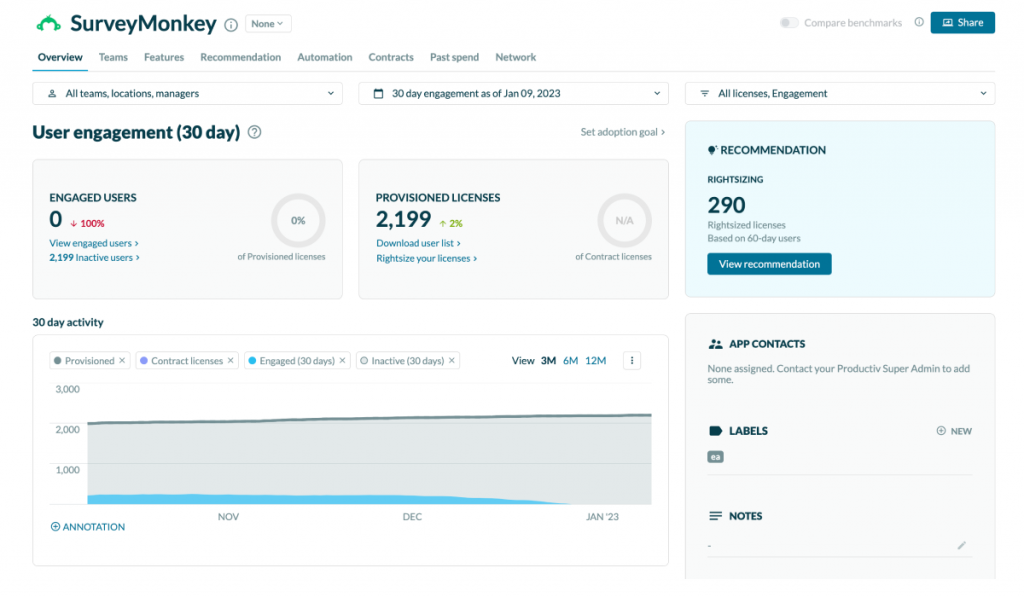
The wider toolkit helps too: a deep question bank, logic that shows only relevant questions, recurring surveys, reminders, and NPS measurement built in.
Published pricing starts at $30 per user per month, and more than 10,000 Capterra reviews make it the best-evidenced option here. Logic can be effortful to configure, and the more advanced analytics and visualizations are out of reach on lower plans. I still reach for it whenever a stakeholder wants something familiar.
Pros
- Answer Genius supplies pre-written choices and adjustable scales
- A deep question bank of well-crafted questions
- Recurring surveys and reminders
- Built-in NPS measurement
Cons
- Logic takes effort to configure
- Advanced analytics and visualizations are limited
How SurveyMonkey Compares to Retently: SurveyMonkey offers a far larger review base and a broader survey toolkit, but less NPS-specific focus, and it prices per user.
Pricing: Paid plans start at $30/user/month.
User Rating: 4.6/5 (Capterra)
4. Typeform: Best for Friendly, Conversational Surveys Without Design Work
Typeform let me skip the design grind and think about the data I needed. Multiple-choice and drop-down questions arrive with suggested answer options, which sped up every build for me and would help anyone without design skills.
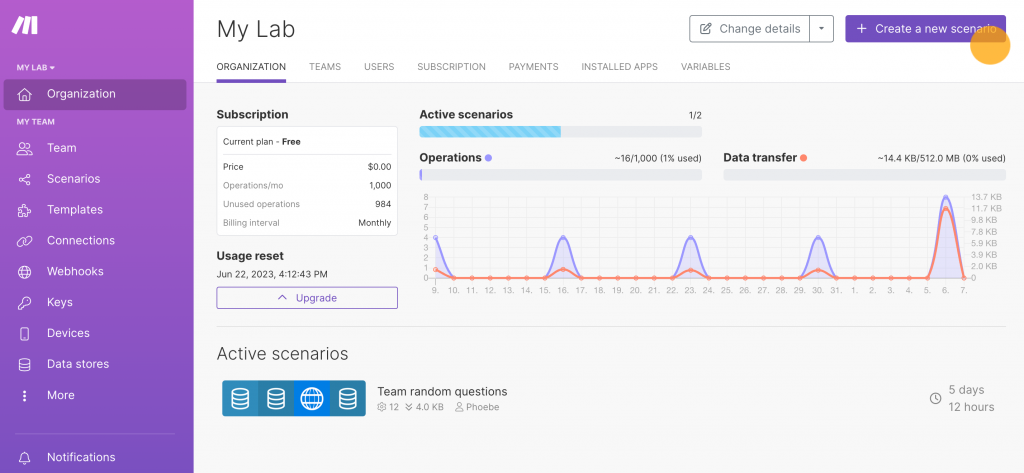
Logic jumps turn a survey into a conversation, ready-made templates number in the hundreds and include NPS, CES, and CSAT, and over 500 integrations handle follow-up. A short pilot with one NPS template usually shows whether the format lifts your response rate.
Pricing starts at $28 a month. Support has felt slow to respond, and customization goes less far than some rivals, so it suits teams that value a friendly look over deep control.
Pros
- Logic jumps for a conversational flow
- A big template library that includes NPS, CES, and CSAT
- More than 500 integrations
- Suggested answer options for faster building
Cons
- Support can be slow to respond
- Less customization than some rivals
How Typeform Compares to Retently: Typeform trades Retently’s NPS focus for a friendlier, more flexible survey builder with many integrations, but with less customer-experience-specific automation.
Pricing: Paid plans start at $28/month.
User Rating: 4.7/5 (Capterra)
5. AskNicely: Best for Real-Time NPS Sharing Across Teams
AskNicely impressed me most with how quickly feedback reaches the team. NPS, 5-star, CSAT, and customer effort scores appear on web, mobile app, and TV dashboards the moment they arrive, and integrations with HubSpot, Salesforce, and Microsoft Dynamics keep the data flowing.
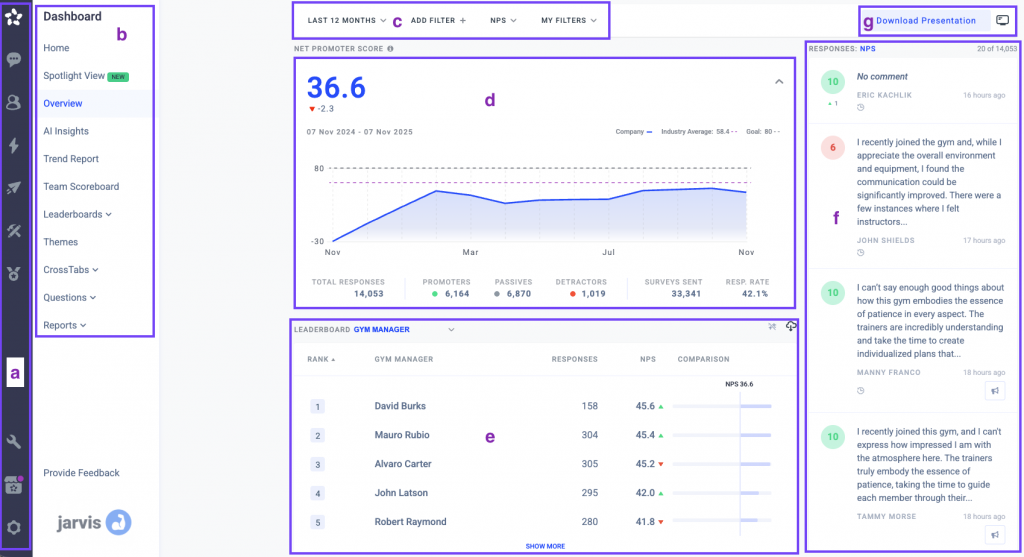
Automated follow-ups gently remind people who have not responded, which lifts response rates, and I could tag colleagues with internal notes to close the loop.
A conversational tone keeps surveys short, and preview cards help me judge the look before sending. Skip logic works well, but complex logic is limited, NPS dominates its thinking, and pricing is not published. Capterra rates it 4.6 on 73 reviews.
Pros
- Scores shown on web, mobile, and TV dashboards in real time
- Automated follow-ups that lift response rates
- Team tagging with internal notes
- HubSpot, Salesforce, and Microsoft Dynamics integrations
Cons
- Complex survey logic is limited
- Pricing is not published
How AskNicely Compares to Retently: AskNicely goes further on team collaboration and real-time sharing than Retently, but leans even harder on NPS and requires a quote.
Pricing: Quote-only, contact vendor for pricing.
User Rating: 4.6/5 (Capterra)
6. Zonka Feedback: Best for Omnichannel CX Automation
A peer I trust swears by Zonka Feedback for CX automation, and after looking closely, I see why. It can automatically send surveys based on customer interactions, such as an NPS survey after a purchase or a CES survey after a support chat.
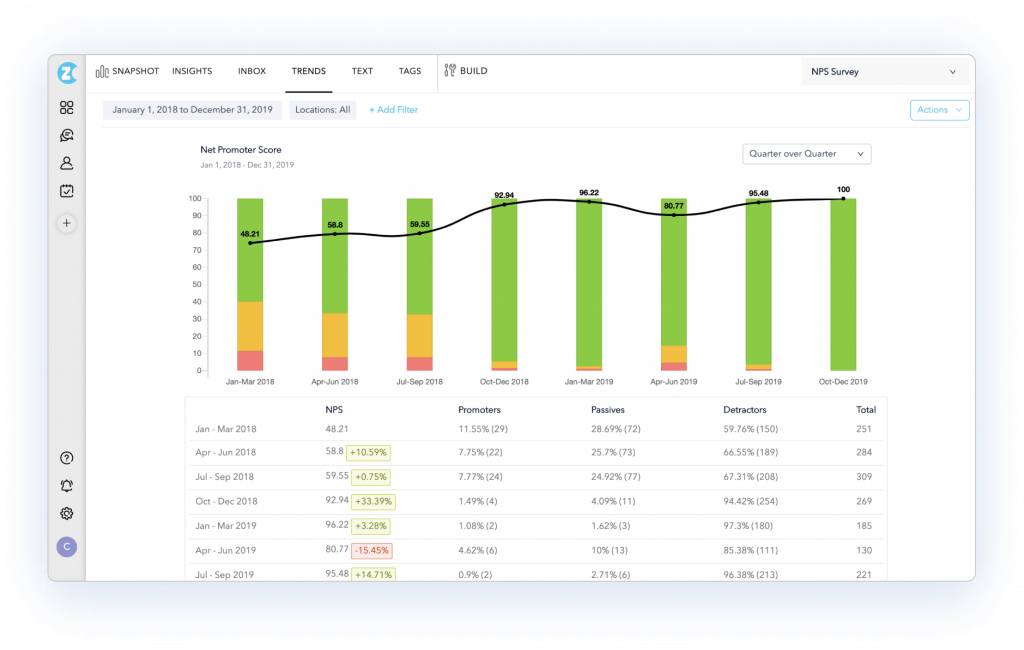
Delivery covers email, SMS, tablet, kiosk, website, and offline, and real-time alerts flag unhappy customers fast. Alerts and notifications reach the right person immediately, and integrations with Slack, HubSpot, and Salesforce keep follow-up in familiar tools.
Reports include sentiment analysis and word clouds, with role-based access and single sign-on for enterprise needs. Pricing is quote-only, and Capterra’s 4.8 rests on 68 reviews.
Pros
- Surveys triggered automatically by customer interactions
- Email, SMS, tablet, kiosk, website, and offline delivery
- Real-time alerts for unhappy customers
- Sentiment analysis and word clouds
Cons
- Pricing is not published
- More platform than a pure NPS program needs
How Zonka Feedback Compares to Retently: Zonka keeps Retently’s automation focus and spreads it across many more channels with AI analysis added, though a quote is required.
Pricing: Quote-only, contact vendor for pricing.
User Rating: 4.8/5 (Capterra)
7. Qualtrics (XM for CX): Best for Predictive Analytics and Churn Detection
If you want to see what predictive analysis can do, Qualtrics is the one I recommend. Its AI mines feedback automatically, so I can predict churn, train the model on my own data to sharpen it, set customer risk thresholds, spot at-risk customers, and act on the drivers of churn.
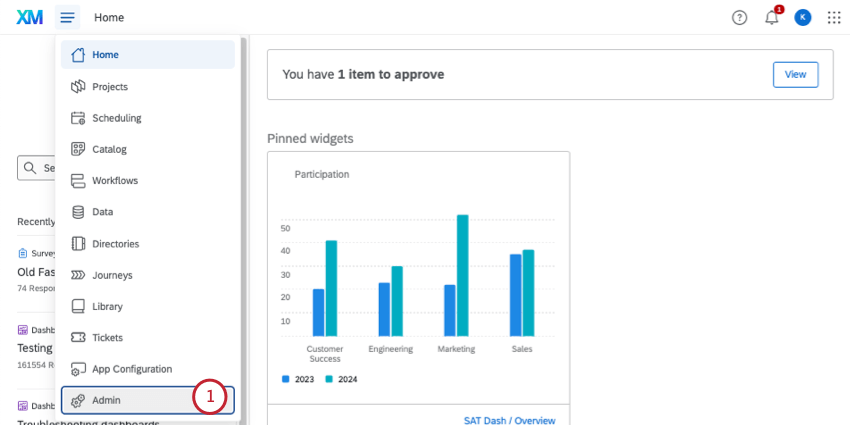
Surveys run across the website, email, mobile app, QR codes, and SMS, built in a drag-and-drop editor with templates, skip logic, translations, and rebranding. The iQ engine sifts feedback with AI and machine learning.
Adding contract data to directories is time-consuming, responses can arrive late, and pricing is not suited to small teams.
Pros
- AI that predicts churn and flags at-risk customers
- Multi-channel surveys with a drag-and-drop editor
- The iQ engine for AI-powered feedback analysis
- Translations and rebranding options
Cons
- Adding contract data to directories takes time
- Pricing is not suited to small teams
How Qualtrics Compares to Retently: Qualtrics stretches well past NPS into predictive and enterprise research, with heavier setup and quote-based pricing.
Pricing: Quote-only, contact vendor for pricing.
User Rating: 4.6/5 (Capterra)
8. InMoment: Best for Advanced Analytics in Market Research and CX Programs
InMoment is where I turned for market research, and its analytics run deeper than anything else here. Linkage and correlation analysis reveal hidden relationships and help predict market trends, and customer journey maps helped my team tune CX programs and cut churn.
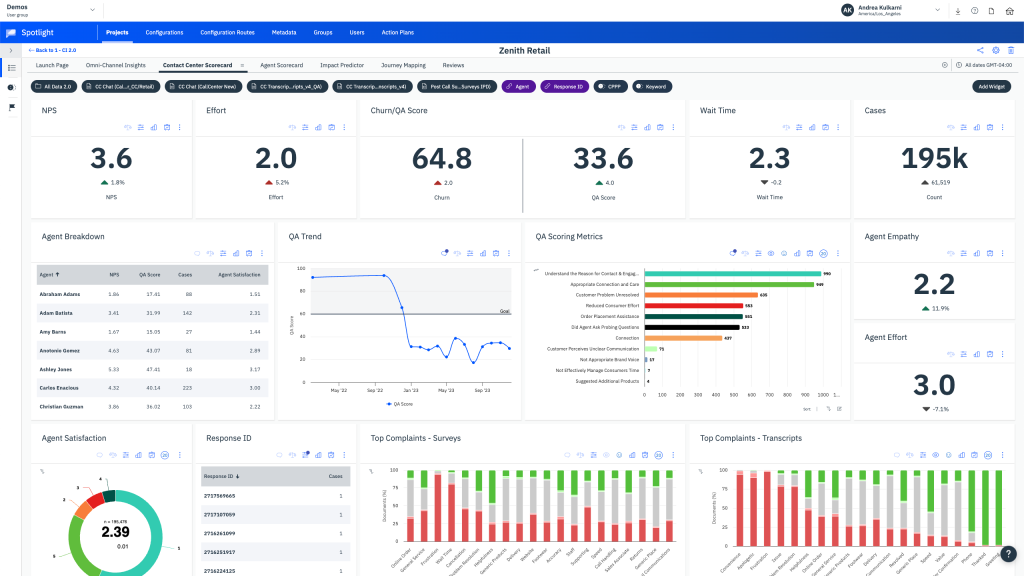
Case management gathers individual and collective feedback, text analysis gauges sentiment, and surveys reach people by email, in-app, SMS, Intercom Messenger, links, and QR codes.
Multi-question surveys can only be added as web forms and cannot be triggered with sampling, and the dashboard shows a lot at once. Pricing is quote-only, and Capterra’s 4.4 comes from a small number of reviews.
Pros
- Linkage and correlation analysis for market trends
- Customer journey maps and case management
- Text analysis for sentiment
- Email, in-app, SMS, Intercom, link, and QR delivery
Cons
- Multi-question surveys are limited to web forms
- The dashboard can feel crowded
How InMoment Compares to Retently: InMoment is far stronger on analytics and market research, but heavier, quote-based, and less approachable for a small program.
Pricing: Quote-only, contact vendor for pricing.
User Rating: 4.4/5 (Capterra)
9. SurveySparrow: Best for Conversational, Chat-Style Surveys
SurveySparrow is worth a look for teams whose NPS surveys sit unanswered because they feel like forms. Surveys read like a chat, one question per screen, with room for images, GIFs, and video, which tends to help people finish.
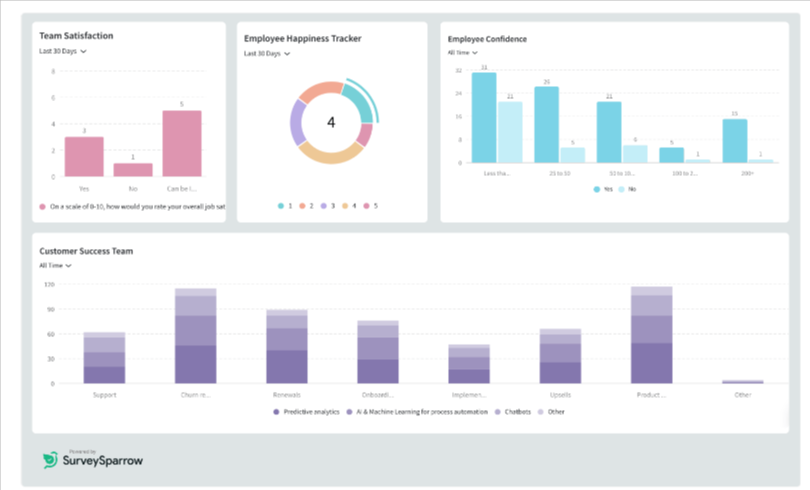
Follow-up actions fire from Visual Workflows the moment a response lands; templates handle NPS and CSAT; and surveys can be delivered offline, inside apps, via email, and in several languages. Reports update in real time, so scores show as they arrive.
Its Capterra score is 4.4 across 121 reviews, one of the lowest here, and you have to contact the vendor for prices, so look at both before committing.
Pros
- A chat-style flow with images, GIFs, and video
- Visual Workflows that trigger follow-ups
- Templates for NPS and CSAT
- Offline, in-app, email, and multi-language delivery
Cons
- A rating below most tools here
- Pricing is not published
How SurveySparrow Compares to Retently: Against Retently, SurveySparrow gives respondents a friendlier flow and offline delivery, at the cost of a lower rating and unpublished pricing.
Pricing: Free trial available. Pricing requires contacting the vendor.
User Rating: 4.4/5 (Capterra)
10. Refiner: Best for NPS Inside the Product
Refiner is for teams that want NPS inside the product, not only in an inbox. Triggers include behavior, user attributes, devices, and lifecycle stage inside web and mobile apps, and a single editor covers NPS, CSAT, CES, and product-market-fit questions.
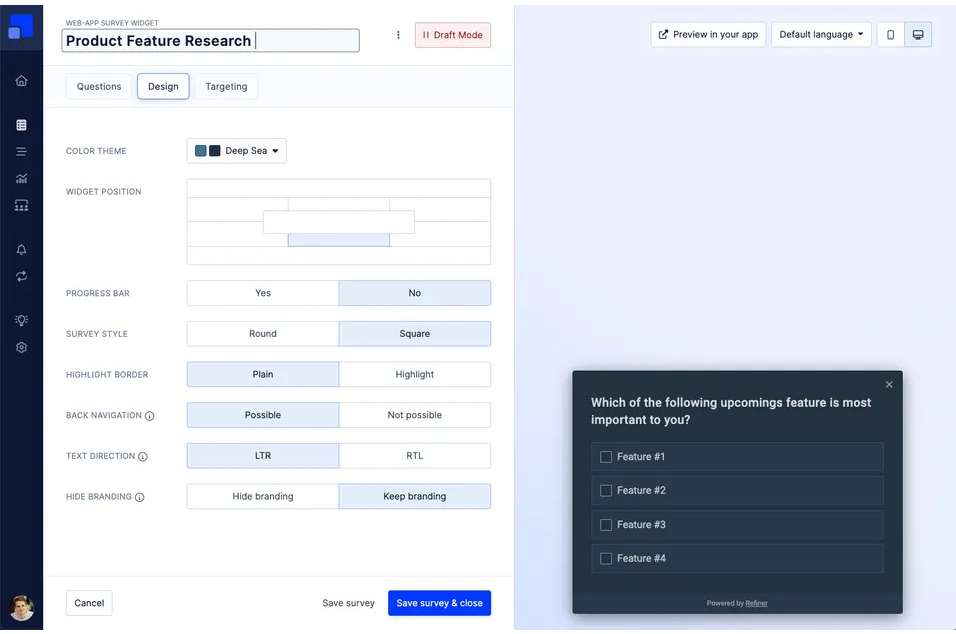
Scheduled repeats chart a score over time, and Segment and Zapier links carry answers into product data.
Billing counts monthly active users; it doesn’t build guides or analytics, and the Capterra rating of 4.6 comes from very few reviews, so I would run a trial first. A first survey goes live quickly because there is so little else in the tool.
Pros
- Surveys triggered by behavior and lifecycle stage
- Scheduled repeats that chart a score over time
- Segment and Zapier hooks
- A limited free plan
Cons
- Billing follows monthly active users
- No guides or analytics
How Refiner Compares to Retently: Refiner moves NPS into the product with sharper targeting, but it is email-light and meters by users.
Pricing: Limited free plan available. Paid plans start at $149/month.
User Rating: 4.6/5 (Capterra)
Which Retently Alternative Should Be Your Top Pick?
Short on time? These three picks each answer a different reason people give for leaving Retently.
1. Qualaroo: Best Overall for More Than a Score, Starting Free
Qualaroo is where I would start if you want the score and the reasons behind it. A large template library gets a survey live in minutes, Nudges ask the right question at the right moment, and targeting by behavior, source, and technology keeps each one relevant.
NPS, CSAT, and CES live in the same account, and native AI analysis reads open-text answers with sentiment scoring, tagging, and a summarizer, free plan included. The Identify API reaches a named user, and Heatmaps and Session Recordings show what led up to a reply.
Feedback travels through Salesforce, HubSpot, and Slack; translations cover more than 100 languages; and Nudge for Prototype lets me test a survey before launch. The free plan unlocks every premium feature, so I could test the whole tool before paying, and flat-rate paid tiers keep costs steady as volume grows.
2. AskNicely: Best if Your Team Needs Real-Time Sharing
If the problem is getting feedback in front of the right people fast, AskNicely is the one I would test. Scores appear on web, mobile app, and TV dashboards as they arrive. HubSpot, Salesforce, and Microsoft Dynamics integrations keep data within familiar tools, and automated follow-ups boost response rates.
Tagging colleagues with internal notes helped close the loop across departments, and real-time dashboards on web, mobile, and TV keep results visible without anyone having to export a report. Automated follow-ups also boost response rates by nudging people who have not yet responded. Capterra rates it 4.6 on 73 reviews, a reasonable base.
The compromises are plain: the complex survey logic is limited, it leans heavily on NPS, and pricing is not published, making budgeting harder. For teams where collaboration and visibility matter more than survey flexibility, those trade-offs are usually worth accepting, and the real-time sharing is genuinely strong.
3. Qualtrics: Best if You Want Predictive Power
If you want to see what predictive analysis looks like, Qualtrics is the one I recommend. Its AI automatically mines feedback, predicts churn, and lets me train the model on my own data, set customer risk thresholds, and identify at-risk customers and the drivers of their churn.
Surveys run across the website, email, mobile app, QR codes, and SMS from a drag-and-drop editor, and the iQ engine analyzes feedback with AI and machine learning. Know the costs going in: adding contract data to directories takes time, responses may arrive late, and pricing is suited to larger organizations.
For teams ready to invest in setup, the depth is worth it, turning feedback into something closer to a forecast than a report. Setting thresholds for customer risk means the system flags trouble before a renewal conversation turns awkward, and training the model on your own data sharpens predictions over time.
How Did I Evaluate These Retently Alternatives?
I evaluated the Retently alternatives in this list based on what a team needs once NPS is not enough: a wider toolkit, usage that is easy to understand, and analysis that explains the score. All ten went through the same six checks, and I flagged any score built on a thin sample or a quote. My own time with Retently shaped the weighting, so breadth and clarity on cost count for a lot.
Six factors carried the weight:
User Reviews and Ratings
Scores come from Capterra, each read next to its review count. Retently’s 4.9 on 30 reviews is a thin base, and Refiner’s and InMoment’s are thin too, so I trusted them less. Thousands of steady reviews, as SurveyMonkey has, outweigh a flawless score from a handful.
Essential Features and Functionality
NPS, CSAT, and CES coverage came first, followed by channels, follow-up automation, and what a tool does with open-text answers. Everyday usefulness beats feature count, meaning what a team really touches in a normal week. Reach beyond a single score earned a strong plus, since that was my own gap.
Ease of Use
I asked how quickly a team can send a first survey without training. Retently set a high bar for fast campaigns, so tools that went live in minutes scored well. A long implementation had to earn its keep elsewhere.
Customer Support
Picture a campaign breaking mid-send. I checked whether real help comes with entry plans or only bigger contracts, and whether quote-based vendors bundle support or sell it as an extra. Help that shows up only at enterprise scale costs a tool point.
Value for Money
Retently’s 4.7 for value and modest entry price set the benchmark, so I priced each tool with real analysis included. Free plans and posted prices beat costs revealed after a sales call. I also noted which tools meter usage in credits or responses, since that is where a simple price gets complicated.
Personal Experience and Experts’ Opinions
The entries for tools I have used are marked as such and carry details that no pricing page shows. Where a peer’s experience shaped an entry, I say that as well. I screened vendors for shutdowns and acquisitions before anything else, since a platform that disappears costs more than any license.
FREE. All Features. FOREVER!
Try our Forever FREE account with all premium features!
How Do You Choose the Right Retently Alternative for Your Team?
Pick the row that matches what pushed you to search. A row naming several tools lists different ways to solve the same problem, so skim my notes first.
| If My Main Retently Frustration Is… | Consider This Alternative |
| I want more than NPS, CSAT, and CES | Qualaroo, Survicate, or Typeform |
| Credits and quotas keep running down | Qualaroo, whose paid plans are flat-rate |
| There is no free plan to start with | Qualaroo, Survicate, or Refiner |
| I need real-time sharing across teams | AskNicely or Zonka Feedback |
| I want predictive analytics or market research depth | Qualtrics or InMoment |
| I want a familiar survey builder | SurveyMonkey or Typeform |
| I want NPS inside the product | Refiner or Qualaroo |
When NPS Is Not Enough, Widen the Toolkit
A score tells you how people feel, and Retently reports it cleanly. My search started elsewhere: I wanted the reasons behind the score, a toolkit wider than three metrics, and a usage meter I did not have to watch.
The right fit depends on your next step. A wider survey toolkit points to Qualaroo, Survicate, or Typeform.
Getting feedback in front of the team fast points to AskNicely or Zonka Feedback, and predictive or market-research depth points to Qualtrics or InMoment. Qualaroo suits teams that want the score and the why, and it starts free.
For NPS with the reasons attached, begin with Qualaroo: enable the free plan, publish a Nudge, and let the first real answers show what the AI analysis can do.
Frequently Asked Questions
Does Retently have a free plan?
No. Retently offers a 7-day free trial, and Capterra lists paid plans from $50 a month on a flat rate. To begin free, Qualaroo's plan includes 50 responses and every premium feature; Survicate gives 25 responses a month, and Refiner has a limited tier. Compare the caps carefully.
How do Retently's survey credits work?
Retently spends one credit for every email survey sent, every time a customer opens inside your app, a link, or an Intercom survey, and for reminders and repeat surveys. When credits run out, email and in-app surveys queue until the next month, and link and Intercom surveys become unreachable. Responses themselves are not capped.
What is the cheapest Retently alternative?
Qualaroo costs the least to enter, with a free plan and paid tiers from $19.99 a month. Check what each plan counts, whether responses or users. Typeform starts at $28 a month and SurveyMonkey at $30 per user, while Survicate starts at $114 and Refiner at $149. AskNicely, Zonka Feedback, Qualtrics, InMoment, and SurveySparrow are quote-based.
Which alternative is best for more than NPS?
Qualaroo, Survicate, and Typeform widen the toolkit the most. Qualaroo adds contextual targeting, native AI analysis, and behavior context. Survicate gathers web, product, email, and link replies in one hub, and Typeform offers hundreds of templates and a conversational flow. All three still handle NPS, CSAT, and CES, so you keep what Retently did well.
Can Qualaroo replace Retently's email campaigns?
Partly. Qualaroo runs surveys on the website, in the app, by email, and through links, but it is built around asking in context, not outbound campaign management. If your program is mostly scheduled, email NPS, Retently, SurveyMonkey, or AskNicely may suit you better, while Qualaroo suits programs that ask inside the experience.
Which alternatives analyze open-text feedback best?
InMoment offers text analysis, and Qualtrics offers its iQ engine, while Qualaroo scores sentiment, tags themes, builds Word Clouds, and summarizes answers from the free plan up. Zonka Feedback includes sentiment analysis and word clouds, and AskNicely offers text analytics. InMoment and Qualtrics are quote-based and aimed at larger programs.
Which alternatives support real-time team collaboration?
AskNicely is the strongest, showing scores on web, mobile app, and TV dashboards as they arrive and letting you tag colleagues with internal notes. Zonka Feedback sends real-time alerts so unhappy customers get a fast response. Both are quote-based, so expect a sales conversation before you can compare costs.
What is the smoothest way to switch from Retently?
Export your NPS history first so you keep a baseline, then list the survey types, triggers, and channels you rely on. Check how each candidate counts usage, since credits and response limits differ. Note who owns each campaign, and pilot your top two on one real campaign, because scoring and targeting behave differently across tools.
FREE. All Features. FOREVER!
Try our Forever FREE account with all premium features!

 We'd love your feedback!
What did you like & how can we make it even better?
 Thanks for your feedback!
 Ask Your Question
Have a question? Get expert help to make your decision easier.