
Alchemer alternatives tend to enter the conversation at one specific moment: the day a small research team tries to add a fourth login.
Until then, Alchemer is a pleasure to use. It offers 43 question types, more than 20 logic options, and a workflow engine that turns a low score into a ticket. Then the published plans run out of seats, and the conversation shifts from surveys to contracts.
The numbers explain why. Capterra gives Alchemer a 4.5 across 319 reviews, but only a 3.9 for value for money, the lowest mark on its page.
So I went through 10 tools to see which ones handle research-grade surveys without that cliff. Qualaroo is on the list, and I am plain about where it falls short: it asks questions in context, and it is not a panel or a research suite.
The shortcut I would give anyone is to decide first whether you run research projects or continuous feedback, because the shortlist splits right there.
Why Are Teams Looking for Alchemer Alternatives?
Alchemer has a loyal following, and Capterra’s own summary calls it intuitive and user-friendly. None of the points below change that.
They describe the places where the plan structure, the exports, and the analysis start to pinch. Each one is about fit: who the plans are built for, what each tier unlocks, and what happens to the data after it is collected.
Per-User Plans Stop at Three Seats
Alchemer’s published plans are priced per user, and Capterra’s FAQ notes that Professional and Full Access are capped at three users. A fourth analyst, therefore, turns a price list into a negotiation, and the Business Platform contract that follows has no public figure. That cliff is why the cost of growing a program is so hard to forecast. Capterra’s summary flags high and increasing pricing concerns, and its 3.9 for value sits below every other rating on the page.
The Features Researchers Rely On Sit Higher Up
Advanced logic and offline response collection begin on Professional, and SPSS exports and advanced research question types begin on Full Access, which is where a research team finally gets what it came for. Alchemer Workflow and Alchemer Mobile are part of the broader platform, and certain integrations are reserved for enterprise contracts. A third-party read also puts the Collaborator account limit at 75,000 responses a year. A team that needs one advanced capability ends up buying the whole ladder beneath it.
Exports, Hosting, and Integrations Feel Dated
Data downloads can be clunky, and the back-end hosting, skip-logic feature, and upload file-size limits all leave room for improvement. The integration stack is thinner than the workspace tools most teams already use, making automatic triggers and scheduled data transfers harder to set up than they should be. None of this breaks a survey. These are the details that quietly eat hours across a long project, and they are the first things I check in any replacement.
Manual Analysis Does Not Scale
Depending on the sample size, a basic dashboard is no longer enough. Categorizing 200 open-text answers by hand is tedious but possible, and categorizing thousands that arrive over a few weeks is not. Sentiment analysis and text analytics turn that pile into themes, and teams that read comments at volume need them built in. That gap is where several of the tools below, Qualaroo included, earn their place.
The Top 10 Alchemer Alternatives
All ten tools are listed below by entry price and Capterra rating, with my notes following. Start with the ones that most closely resemble your real program, since a few are research platforms and the rest are lighter tools.
| Tool | Best For | Starting Price | Capterra Rating |
| Qualaroo | Capturing Real-Time User Insights In-App & on Your Website Using Contextual, AI-Powered Micro-Surveys | Free plan; from $19.99/mo | 4.7/5 |
| SurveyMonkey | Familiar surveys backed by a global panel | $30/mo per user | 4.6/5 |
| QuestionPro | Research suite with panels and communities | Free plan; from $83/user/mo | 4.8/5 |
| Qualtrics (XM for CX) | Enterprise research and experience management | Quote-only | 4.6/5 |
| Sogolytics | Detailed reports, cross-tabs, and panel services | Quote-only | 4.7/5 |
| Jotform | Forms, surveys, and payments with a free plan | Free plan; from $34/mo | 4.7/5 |
| Zoho Survey | Business surveys inside the Zoho ecosystem | Free plan; from $7.42/mo | 4.6/5 |
| Microsoft Forms | Quick surveys inside Microsoft 365 | $99.99/yr (Microsoft 365) | 4.6/5 |
| Survicate | Multichannel surveys with a centralized research hub | Free plan; from $114/mo | 4.6/5 |
| Zonka Feedback | Omnichannel CX with native AI feedback intelligence | Quote-only | 4.8/5 |
1. Qualaroo: Best for Capturing Real-Time User Insights In-App & on Your Website Using Contextual, AI-Powered Micro-Surveys
Alchemer alternatives that start from a visitor’s screen, not a mailing list, are what I wanted, and Qualaroo is built that way. A short question shown while someone is still on the page or inside the product elicits a reaction rather than a memory, and I use those reactions to decide what to fix first.
Once responses arrive, the written ones do not need a spreadsheet. Customer Feedback Analysis AI pairs AI Sentiment Analysis with a word cloud engine, tags replies by theme, and condenses long threads. At the same time, reports can be sliced by location, device, and operating system.
Reach is wide: websites, apps, SaaS products, email, links, and design prototypes, with NPS charts that track scores over time, white-labeling, branching, and more than a dozen question types. Behavior and actions steer who sees what, and the Identify API links an answer to a known user.
Pros
- AI Survey Creator drafts a full Nudge from a prompt, no manual setup required
- Question branching and skip logic so respondents only see relevant follow-ups
- Native AI Customer Feedback Analysis, including AI Sentiment Analysis and word cloud generation for open-text responses
- Heatmaps and Session Recordings show what a user was doing right before they responded
- Advanced targeting by behavior, URL, exit intent, and custom user properties
- Identify API ties responses back to a real user by email or customer ID
- Nudge for Prototype works on Figma, Adobe XD, and InVision before a product ships
- Multilingual surveys in 100+ languages
- iOS and Android SDK for native in-app surveys
- Salesforce, HubSpot, and Slack integrations for CRM-connected feedback workflows
Cons
- Hands-on onboarding and a dedicated account manager belong to the paid tiers, not the free one
- Qualaroo is hosted-only, with no downloadable or on-premise version, and no way to use it offline
How Qualaroo Compares to Alchemer: Alchemer offers researchers 43 question types, advanced logic, and workflow automation on a quote-based, per-user pricing model. Qualaroo serves teams that want a steady stream of in-context feedback with AI analysis from the free plan, and it offers fewer export options and research-grade question types.
Pricing: Free plan available, up to 50 responses with all premium features. Essentials at 19.99/month, Business at $49.99/month, and Enterprise from $149.99/month.
User Rating: 4.7/5 (Capterra)
Lalamove, a growing logistics company, uses Qualaroo surveys to learn how satisfied customers are with product features and what would improve them, and to see which acquisition channels work best. Those insights have supported the growth of 20 to 30 percent across 110 cities.

2. SurveyMonkey: Best for Familiar Surveys Backed by a Global Panel
More than ten thousand Capterra reviews sit behind SurveyMonkey, which is the first thing I notice when I set it beside Alchemer’s 319. That volume of feedback usually means the rough edges have been found and sanded down.
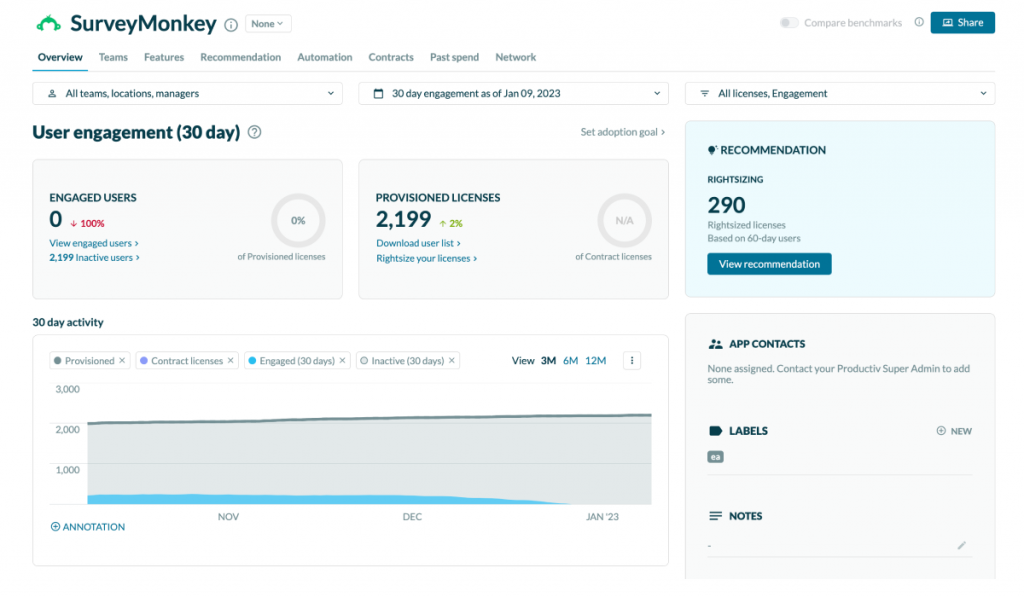
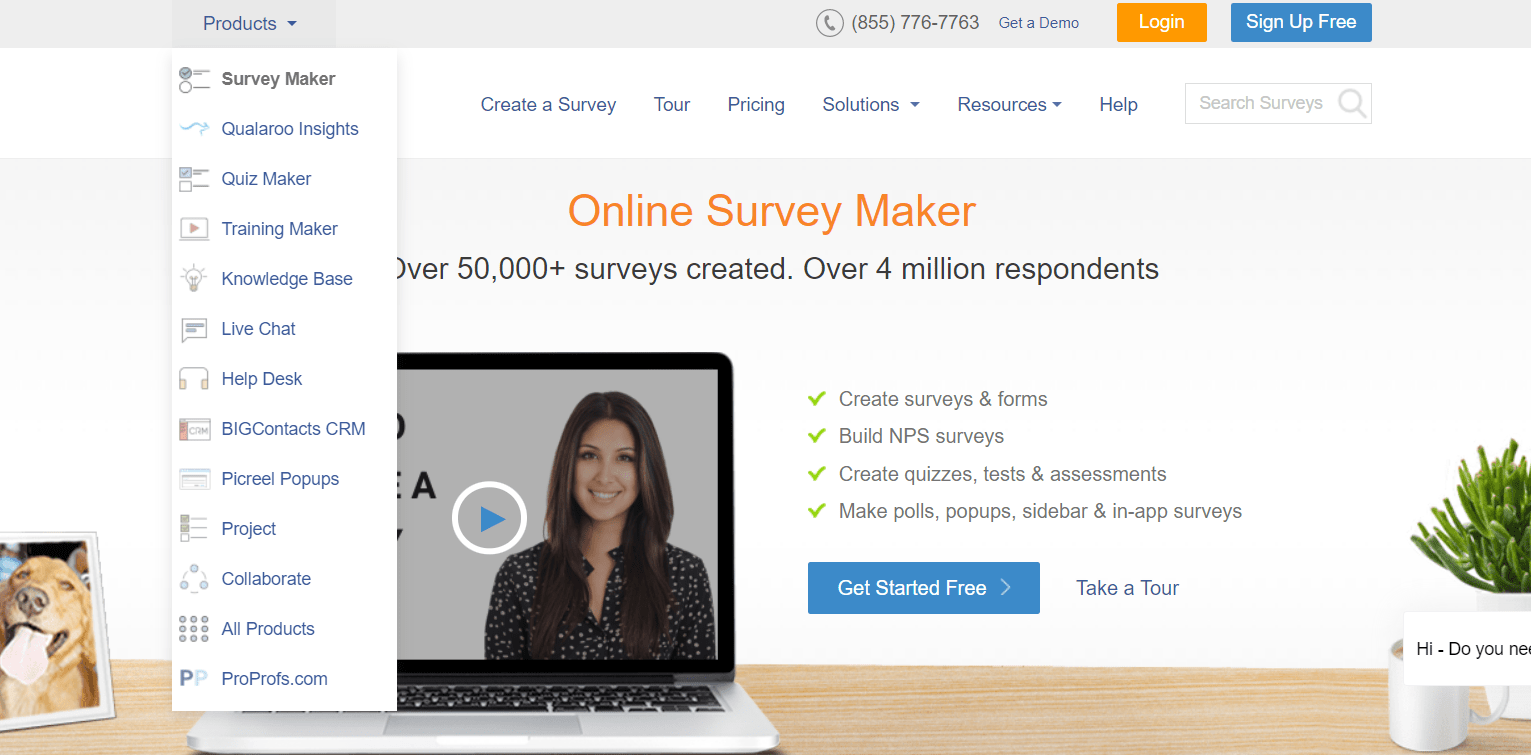
A visual editor handles scoring, question randomization, and progress bars, with multiple answer types, translation, skip logic, and themes on top. Sentiment analysis, a word cloud generator, and an NPS calculator are built into the platform, and Slack, HubSpot, and Mailchimp integrations automate data flow. It can even send in-app rating prompts to app users.
PitchBook’s marketing team used periodic surveys and NPS to hear customers directly, lifted its response rate to 35 percent, and turned the insights into customer success stories and campaigns. Entry pricing is $30 per user per month. The analytics dashboard could present data better, and the editor glitches now and then.
Pros
- A visual editor with scoring, randomization, and progress bars
- Built-in sentiment analysis, word clouds, and an NPS calculator
- iOS and Android apps to monitor a campaign on the go
- Slack, HubSpot, and Mailchimp integrations
Cons
- The analytics dashboard needs better data presentation
- The editor sometimes glitches while designing surveys
How SurveyMonkey Compares to Alchemer: Compared to Alchemer, SurveyMonkey offers a much larger review base and a gentler start for small teams, but gives up some depth in logic and research question types.
Pricing: Paid plans start at $30/user/month.
User Rating: 4.6/5 (Capterra)
3. QuestionPro: Best for Research Programs With Panels and Communities
If what you value in Alchemer is research depth, QuestionPro is the closest relative on this list. Four Capterra categories carry it: Survey, Community, Employee Engagement, and Market Research, and a 4.8 across more than 500 reviews gives it the sturdiest evidence of any research-grade tool on this page.
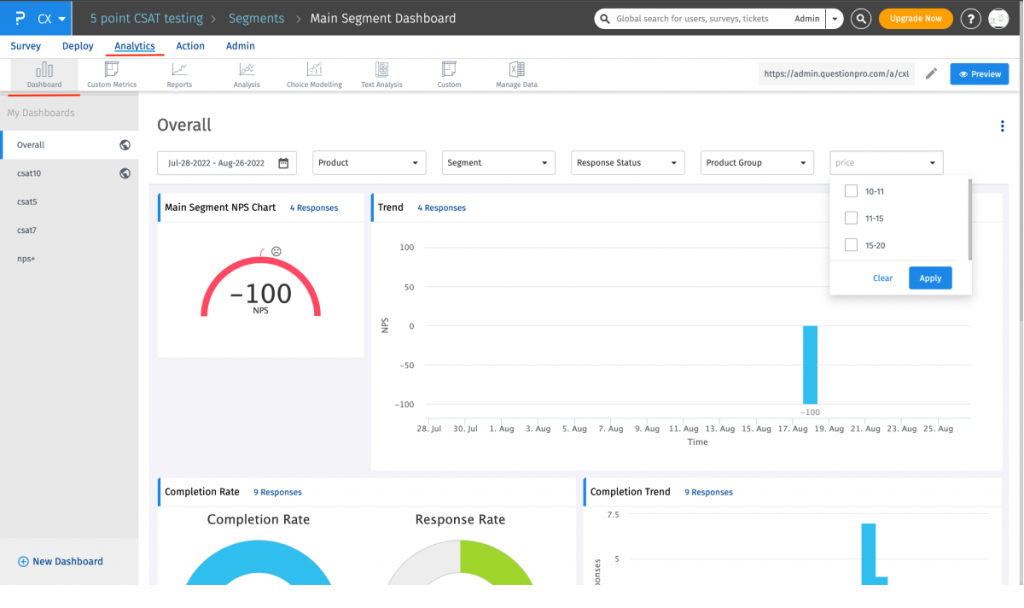
It bills per user as well, so it does not remove the per-user math. Advanced is $99 per user per month for any team size; Team Edition is $83 per user but requires a minimum of 5 seats; both are billed annually, with a free version and a 10-day trial to test first.
Yearly response allowances run to 25,000 on Advanced and 100,000 on Team Edition, and advanced segmentation lives on the upper tiers. It earns a shortlist spot when panels and communities matter, and the team can fill five seats, but it is the wrong pick if you are trying to escape per-seat math.
Pros
- Surveys, communities, and market research in one suite
- A free version and a 10-day trial
- Allowances of 25,000 and 100,000 responses a year on paid plans
- A very strong Capterra rating
Cons
- Per-user pricing, with a five-seat minimum on Team Edition
- Response allowances and advanced segmentation depend on the tier
How QuestionPro Compares to Alchemer: QuestionPro matches Alchemer’s research depth and adds communities, but it carries the same per-user pricing logic and a five-seat floor on its cheaper-per-seat plan.
Pricing: Free plan available. Paid plans start at $83/user/month, billed annually.
User Rating: 4.8/5 (Capterra)
4. Qualtrics (XM for CX): Best for Research Programs Run Across Departments
Picture a program with several departments, a brand tracker, and an employee survey all drawing on the same data. Qualtrics is built for that room, and it is the one tool here that treats Alchemer’s whole category as a starting point.
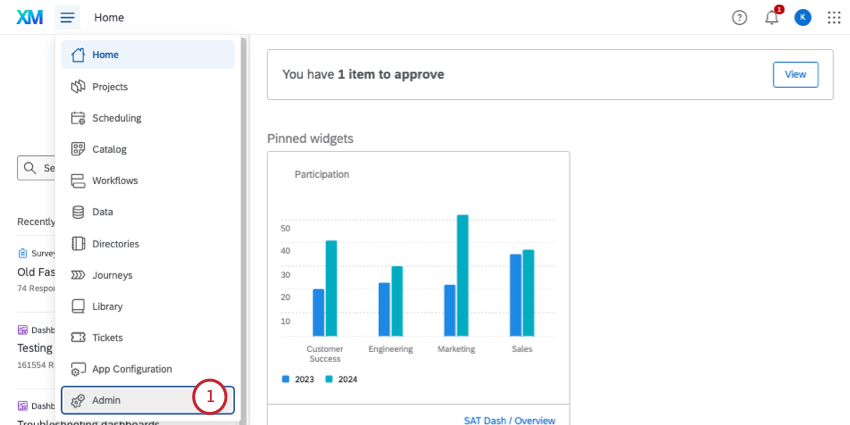
Multi-program experience management brings customer, employee, product, and brand research under a single governance model, with deeper analytics, predictive intelligence, and a broad range of integrations. Governance and role-based access matter once survey data is shared across teams.
The price of that reach is effort and money. Setup takes real time, pricing is quote-based, and for a team of three running one tracker, it is far more platform than the job needs. I would only move here when the program, not the survey, is the thing you are scaling, and I would budget for a proper implementation before the first study goes live.
Pros
- Multi-program experience management under one roof
- Deep analytics and predictive intelligence
- Enterprise governance and role-based access
- A long list of integrations
Cons
- Setup takes time and effort
- Quote-based pricing and a far more robust platform than a small program needs
How Qualtrics Compares to Alchemer: Qualtrics operates at a larger scale than Alchemer, with more robust governance and analytics, and a higher price and implementation to match.
Pricing: Quote-only, contact vendor for pricing.
User Rating: 4.6/5 (Capterra)
5. Sogolytics: Best for Detailed Reports, Cross-Tabs, and Panel Services
Sogolytics, formerly SoGoSurvey, is the tool I would hand to a team that lives in the report rather than the questionnaire. It builds custom segmentation, pivot table, and comparison reports, and its data can be exported from the platform as XML, SPSS, CSV, Word, or HTML, which matters if an SPSS export is on your must-have list.
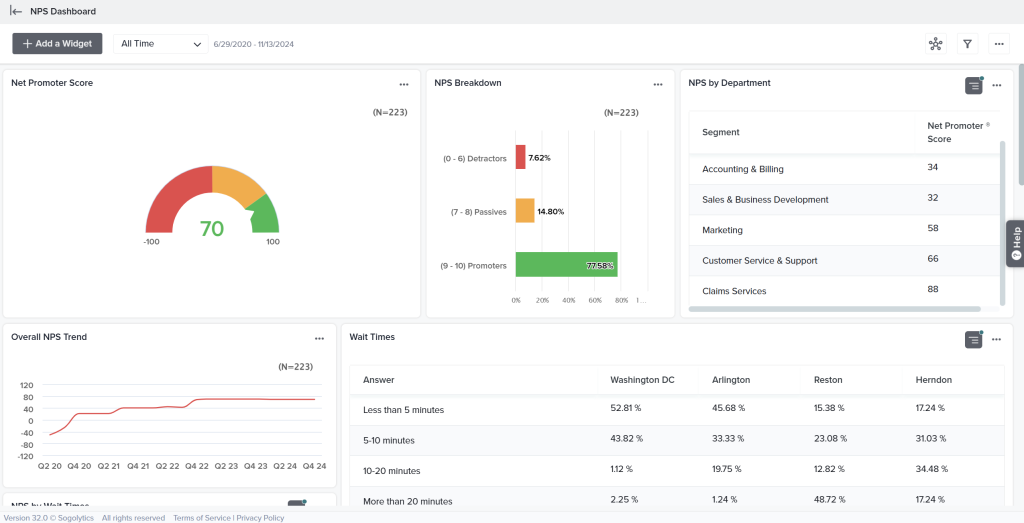
A dedicated panel service helps reach the required sample size; scheduled campaigns send reminders to people who have not yet completed; and surveys are distributed via the website, email, SMS, links, social media, and offline channels. Anonymous surveys, white-labeling, and file attachments round out the toolkit.
First Credit Union replaced a slow, inconsistent mystery-shopper program with surveys sent to real members, then built customer journey maps and learned that quick service drove loyalty. Styling options are limited, and internal comments on responses would help. Pricing is quote-only, so budgeting starts with a conversation.
Pros
- Custom, segmentation, pivot table, and comparison reports
- Export to XML, SPSS, CSV, Word, and HTML
- Panel services for reaching a sample size
- Automatic reminders for people who have not responded
Cons
- Fewer styling options than some rivals
- No option for internal comments on responses
How Sogolytics Compares to Alchemer: Sogolytics matches Alchemer’s reporting and export depth with quote-based pricing rather than a posted price list, but offers fewer styling options and no workflow engine.
Pricing: Quote-only, contact vendor for pricing.
User Rating: 4.7/5 (Capterra)
6. Jotform: Best for Forms, Surveys, and Payments With a Free Plan
Jotform has one of the broadest template libraries around, and if you have a use case, there is probably a template for it. It builds surveys, payment forms, sign-up forms, and appointment forms using a single drag-and-drop builder, with multi-page and single-page layouts.
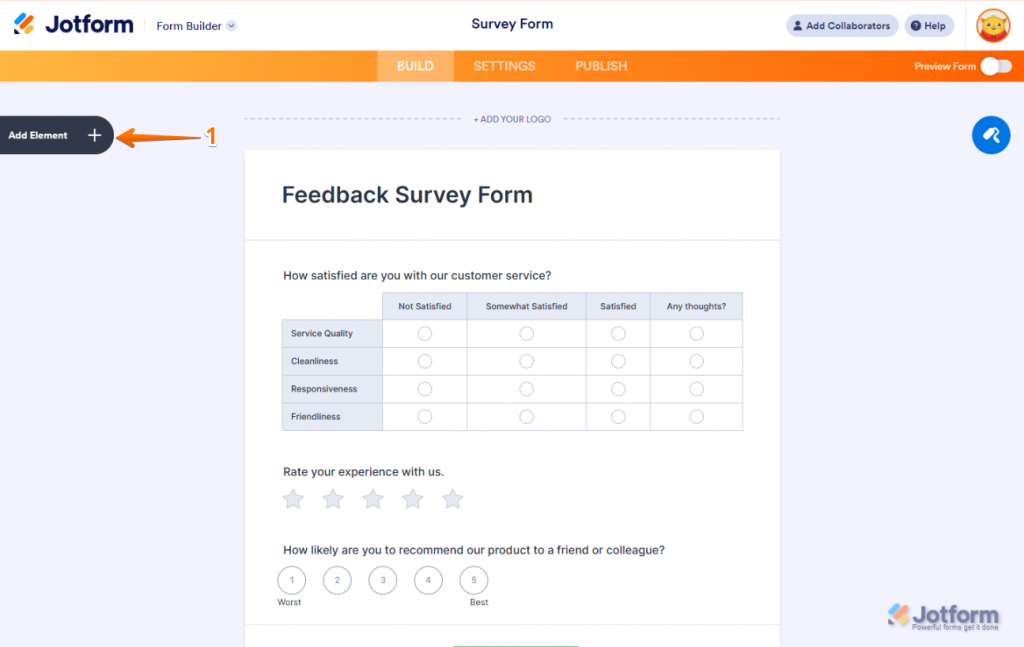
Autoresponder emails and conversation forms personalize the experience, SSL and reCAPTCHA protect submissions, and a visual report builder turns raw entries into graphs and stats. Teammates can collaborate by assigning forms and leaving comments, and custom CSS allows precise styling.
Reach, a UK publisher, used Jotform Enterprise to run polls and surveys that reacted to breaking news and saw monthly online submissions rise 325 percent year over year. New users face a learning curve, and adjusting picture sizes is hard. There is a free plan, with paid tiers starting at $34 per month.
Pros
- A huge template library and a drag-and-drop builder
- A visual report builder and team collaboration
- E-signatures and payment forms
- A free plan to start
Cons
- A learning curve for new users
- Picture sizes are hard to adjust in forms
How Jotform Compares to Alchemer: Jotform costs far less to start and covers forms and payments, but it lacks Alchemer’s research-grade logic and workflow automation.
Pricing: Free plan available. Paid plans start at $34/month.
User Rating: 4.7/5 (Capterra)
7. Zoho Survey: Best for Business Surveys Inside the Zoho Ecosystem
Zoho Survey makes the most sense if your CRM already lives in Zoho. Capterra gives it a 4.6 from 450 reviews and a 4.3 for value, comfortably above Alchemer’s 3.9, and pricing is flat-rate instead of per-user.
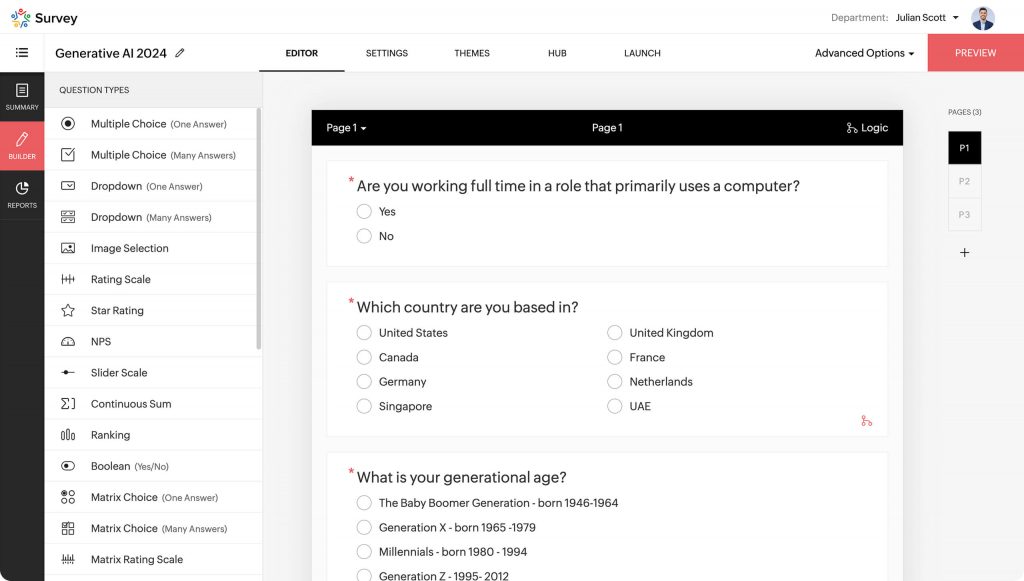
The free edition allows unlimited surveys with 15 questions and 150 responses per survey, and paid editions lift those limits. A drag-and-drop builder, more than 20 question types, 200-plus templates, and skip logic cover the basics, and cross-tab reports, a survey panel, and white-labeling extend it.
Captcha and password protection secure surveys, and native iOS and Android apps enable on-the-go access. Customization takes some time to get used to, and the interface could be livelier. Paid plans start at $7.42 per month, and because pricing is flat-rate, not per-user, adding colleagues does not change the bill.
Pros
- A flat-rate model and a free edition
- Cross-tab reports and a dedicated survey panel
- White-labeling and security options
- Native iOS and Android apps
Cons
- Customization takes time to learn
- The interface could be more dynamic
How Zoho Survey Compares to Alchemer: Zoho Survey offers a much gentler price and a smoother fit with other Zoho tools, with less research depth than Alchemer’s top tiers.
Pricing: Free plan available. Paid plans start at $7.42/month.
User Rating: 4.6/5 (Capterra)
8. Microsoft Forms: Best for Quick Surveys Inside Microsoft 365
Microsoft Forms is the quiet option, and for teams already paying for a Microsoft 365 subscription, which runs $99.99 a year, it comes at no additional cost. It builds surveys, quizzes, and polls for any browser and mobile device, and responses flow straight into Excel and Power BI for deeper analysis.
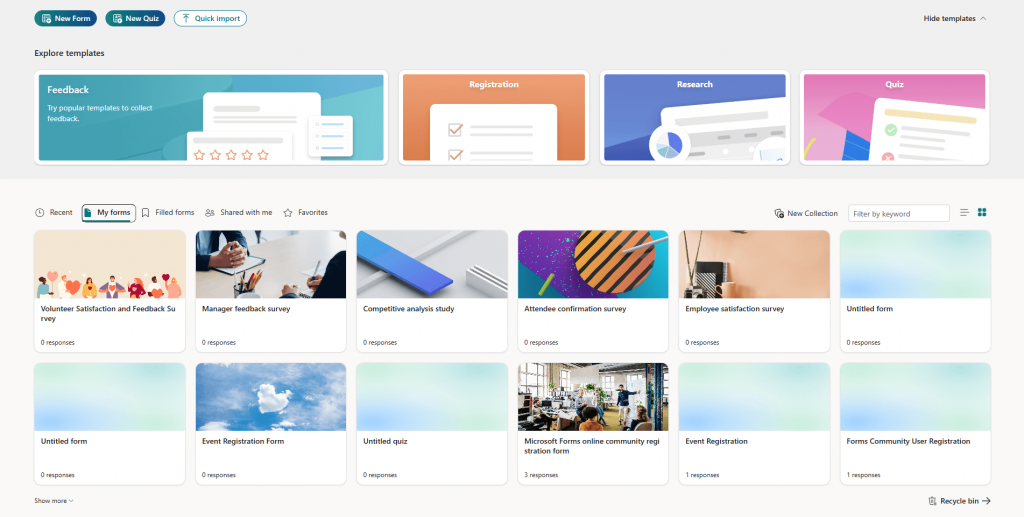
Settings cover scoring, deadlines, access permissions, and response notifications, and survey features include a progress bar, multiple question types, a randomizer, and start and end dates. Surveys can be embedded on a page, shared as a QR code or link, or sent by email.
Access permissions add security, which helps with employee surveys, and Capterra rates it 4.6 across roughly 320 reviews. Fewer integration options than the rest of this list, and limited customization, are the trade-offs, so it suits simple, internal programs better than research, and I would pick it mainly when the data is going straight into Excel or Power BI anyway.
Pros
- Comes with a Microsoft 365 subscription
- Native links to Excel, Power BI, Teams, and OneNote
- Access permissions for employee surveys
- A QR code and link sharing
Cons
- Fewer integrations than the other tools here
- Limited customization
How Microsoft Forms Compares to Alchemer: Microsoft Forms comes with a $99.99-a-year Microsoft 365 subscription and is simple, but it lacks Alchemer’s research-grade logic and question types.
Pricing: Included with a Microsoft 365 subscription, $99.99/year.
User Rating: 4.6/5 (Capterra)
9. Survicate: Best for Paying by Responses Instead of Seats
Survicate flips Alchemer’s billing logic: you pay based on how many answers you collect, not on how many colleagues log in. Replies from a web page, an in-app prompt, an email, or a shared link gather in one Research Hub, so the quarterly pulse and the always-on product survey sit in the same dashboard.
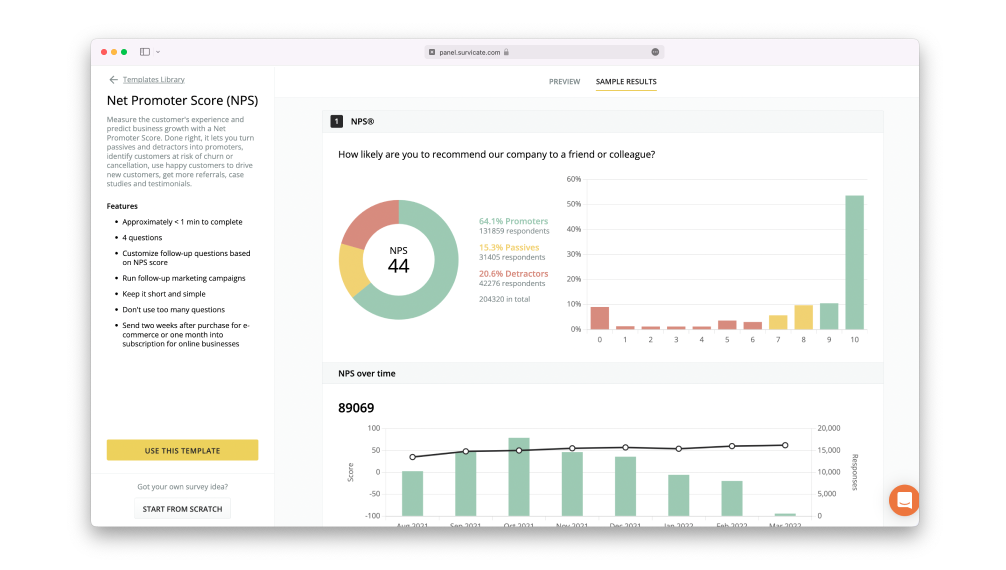
User attributes and in-product events can be limited per question; a half-finished survey still contributes partial data, and AI-assisted analysis clusters open comments by theme. It ships NPS, CSAT, and CES formats, so a standard program does not start from a blank page.
Start with the free plan, which allows 25 responses a month, and expect paid plans starting at $114 a month. Moving up a tier is a visible jump, which is why I would trial a real survey before committing. Leave Survicate out if you need panels, SPSS files, or a deep library of research question types.
Pros
- Replies from web, product, email, and links in one dashboard
- AI-assisted clustering of open comments
- NPS, CSAT, and CES formats included
- A permanent free plan
Cons
- Tier changes are a visible jump in price
- No panels, SPSS files, or deep research question library
How Survicate Compares to Alchemer: Survicate trades Alchemer’s research depth for broader channels and volume-based pricing rather than per-user seats.
Pricing: Free plan available, up to 25 responses a month. Paid plans start at $114/month.
User Rating: 4.6/5 (Capterra)
10. Zonka Feedback: Best for Turning Survey Answers Into Action
Alchemer Workflow takes a survey answer and does something with it. Zonka Feedback builds its entire product around that idea, making it the closest match for CX teams on this list. A low score triggers an alert; closed-loop routing hands the case to a named owner; and AI Feedback Intelligence mines the comment itself for recurring themes, mood, and trends.
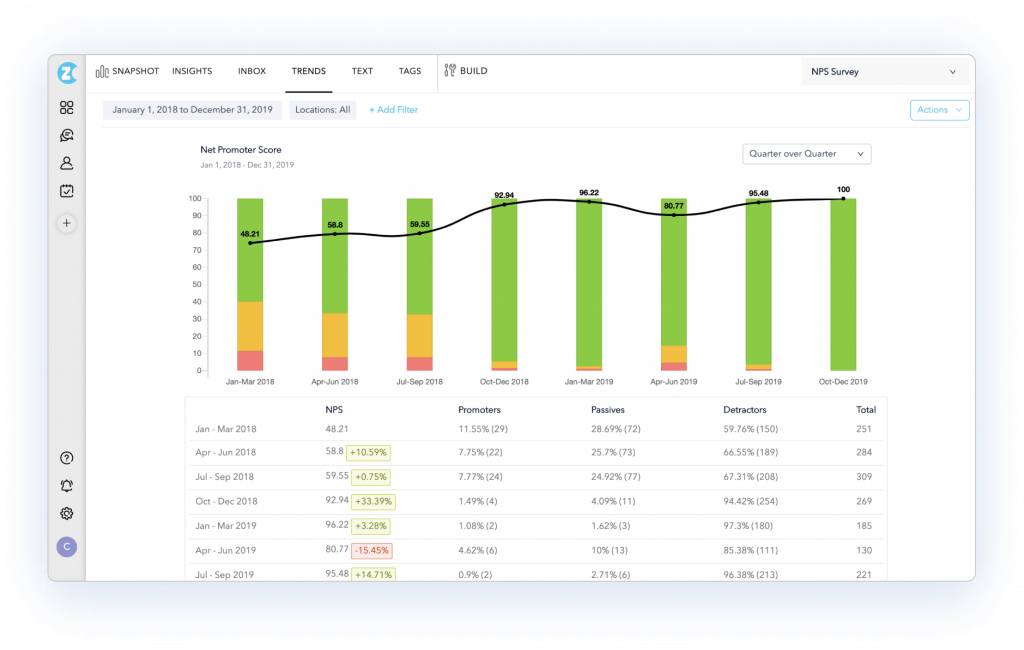
Collection is just as wide: email, SMS, tablets, kiosks, web pages, and offline devices all feed one inbox, and data can be hosted in your region when residency rules require it.
There is no public price list, so budgeting starts with a quote, and the 4.8 on Capterra comes from 68 reviews, a thin base for a score that high. It is a CX program tool, not a research tool, so expect no panels and no SPSS-style exports.
Pros
- Alerts and routing that turn a low score into a case
- Email, SMS, kiosk, web, and offline collection into one inbox
- AI that mines comments for themes, mood, and trends
- Regional hosting for data-residency rules
Cons
- No public price list
- No panels or research-style exports
How Zonka Feedback Compares to Alchemer: Zonka replaces Alchemer’s research focus with customer experience automation and native AI analysis, and requires a quote.
Pricing: Quote-only, contact vendor for pricing.
User Rating: 4.8/5 (Capterra)
Which Alchemer Alternative Should Be Your Top Pick?
Short on time? Three picks, one for each kind of Alchemer user I meet.
1. Qualaroo: Best for Continuous Feedback With Native AI Analysis
If your surveys are about customers in the middle of using something, Qualaroo is where I would start. A Nudge appears on a page or in an app while the visitor is mid-task; behavior and actions determine who sees it, and NPS, CSAT, and CES are shared across accounts.
Written answers receive sentiment scoring, tagging, and a summary from the free plan onward, and reports filter by location, device, and operating system to show which segment is struggling.
Websites, apps, SaaS products, email, links, and design prototypes are all covered, white-labeling keeps surveys on-brand, and the Identify API ties an answer to a named user. Lalamove’s 20 to 30 percent growth across 110 cities rests on this kind of insight. Every premium feature sits on the free plan, which lets me test the whole thing before paying, and no plan is priced per seat.
2. Qualtrics: Best if You Need Alchemer’s Depth at Enterprise Scale
If you want to stay in research-grade territory and your program has outgrown a small team, Qualtrics is the nearest step up. It runs customer, employee, product, and brand research as separate programs under one governance model, with deeper analytics and predictive intelligence than most research tools on this list.
Role-based access keeps shared survey data organized, and the integration list is long enough to connect most stacks. Be clear-eyed about the cost: setup takes real time, pricing is quote-based, and for a small team running one tracker, it is far more platform than the job needs.
Where the program is what is being scaled, not the survey, those trade-offs are usually acceptable, and the governance alone can justify the move once several departments share the data. It also gives researchers one place to compare results across customer, employee, and brand studies, which helps when leadership asks for a single view.
3. SurveyMonkey: Best if You Want a Familiar Name and a Published Price
If you want something your stakeholders already know, SurveyMonkey is the easy yes. More than ten thousand Capterra reviews sit behind it, a visual editor handles scoring, randomization, and skip logic, and sentiment analysis, a word cloud generator, and an NPS calculator come built in.
A global panel helps when you need respondents you do not already have, and PitchBook lifted its survey response rate to 35 percent with it. Know the limits: the analytics dashboard could present data better, the editor can glitch, and it prices per user, though its price list is public.
For teams that want less friction and more evidence behind the tool, it is a safe, sensible move, and the mobile apps make it easy to watch a campaign from anywhere. Its familiarity also shortens training, which matters when several people across departments need to build surveys without a research background.
How Did I Evaluate These Alchemer Alternatives?
I evaluated the Alchemer alternatives in this list based on what a research or CX team needs, once quote-only, per-user pricing makes budgeting hard: logic and question depth, analysis that scales, and a price you can check. Every candidate faced a single set of six questions, with thin samples and quoted prices highlighted. Alchemer’s 3.9 for value shaped the weighting, so cost counts for a lot.
Six factors carried the weight:
User Reviews and Ratings
What does the evidence say once I put each tool next to Alchemer’s 4.5 on 319 reviews? I took scores from Capterra and read every one besides its review count. Zonka’s 68 reviews earned extra caution, and the thousands behind SurveyMonkey and Jotform carried more weight than a few perfect ratings.
Essential Features and Functionality
Could the tool rebuild a survey with real branching, mixed question types, and a useful export? Question depth, logic, exports, and analysis came first, because those are what researchers actually miss. Features that sound impressive but go unused counted for little, and built-in analysis of written answers earned a strong plus.
Ease of Use
How long does a new team member need before their first live survey? Alchemer is praised as intuitive, so I held each alternative to that standard. Tools that reached a first survey in an afternoon scored well, and heavier platforms had to justify the extra learning.
Customer Support
What happens when a live survey breaks? Responsive support is how Capterra’s summary describes Alchemer’s, which is a high bar, so I checked whether real help ships with entry plans or only with larger contracts, and whether quote-based vendors bundle it or charge extra.
Value for Money
What does a team of five pay, not one? Because per-user pricing was my main grievance, I priced every tool based on realistic headcounts rather than a single seat. Posted prices and free plans scored higher than the numbers revealed after a sales call, and flat-rate models earned extra marks.
Personal Experience and Experts’ Opinions
Where have I used the tool, and where am I leaning on others? The entries for tools I use are marked as such. For everything else, I relied on research, published customer stories such as PitchBook’s and Reach’s, and findings that repeat across independent sources, after checking each vendor for shutdowns and acquisitions.
FREE. All Features. FOREVER!
Try our Forever FREE account with all premium features!
How Do You Choose the Right Alchemer Alternative for Your Team?
Pick the row nearest your biggest Alchemer headache. Where a row lists several tools, each fixes the same headache differently, so skim my notes before you decide.
| If My Main Alchemer Frustration Is… | Consider This Alternative |
| Quote-only, per-user pricing, I cannot check | Qualaroo, Survicate, Zoho Survey, or Jotform |
| I need SPSS exports and research question types | Sogolytics, Qualtrics, or QuestionPro |
| Manual analysis does not scale | Qualaroo, Zonka Feedback, or Qualtrics |
| I need panels and community research | QuestionPro, Sogolytics, or SurveyMonkey |
| I live in Microsoft 365 or Zoho | Microsoft Forms or Zoho Survey |
| I want workflows after feedback arrives | Zonka Feedback or Qualtrics |
Which Kind of Alchemer User Are You?
Leaving Alchemer is rarely about the survey editor. It is about a price you cannot see until a quote arrives, a package whose contents depend on what you negotiate, and analysis that has to keep up when thousands of comments arrive in a few weeks. Once those three are on the table, a shortlist tends to write itself.
Start by naming the program you really run: academic-style research, a customer experience effort, or quick internal polls.
Then, put one question to every vendor, namely, how seats, responses, and exports are counted, insist on the answer in writing, and run your two best candidates through one live project. A tool that behaves the same for five users as it does for one will save you more than any feature list.
In my own work, what finally changed the routine was asking while visitors were still on the page and having the written answers analyzed for me. That approach is the idea behind Qualaroo, and its free plan makes it easy to try it out with a single real survey.
Frequently Asked Questions
How much does Alchemer cost?
Alchemer is quote-only: it does not publish a price list. Capterra lists the pricing model as per-user, per-month, with a free version and a free trial, and its summary flags high and rising pricing concerns. Ask for a written quote that names the seats, responses, and modules included, since Survey, Workflow, and Mobile are parts of the same platform.
Does Alchemer have a free plan?
Capterra lists a free version and a free trial, though older material describes the free version as limited to 3 surveys, 100 responses, and 10 questions per survey. Because everything beyond it is quote-only, treat it as a way to test the editor, not to run a program. Compare it with the free plans from Qualaroo, Survicate, Zoho Survey, and Jotform.
Which Alchemer alternative exports to SPSS?
Sogolytics exports data in XML, SPSS, CSV, Word, and HTML formats, which is useful if an SPSS export is required. Qualtrics and QuestionPro also serve research-style programs. Check the export formats on the exact plan you would buy, since availability can depend on the tier, and ask the vendor for a sample export before you commit.
What is the cheapest Alchemer alternative?
Zoho Survey is the cheapest paid option at $7.42 a month, and it also has a free edition. Qualaroo has a free plan with paid tiers starting at $19.99; SurveyMonkey runs $30 per user; Jotform runs $34; and Survicate runs $114. Microsoft Forms comes with a $99.99-a-year Microsoft 365 subscription, QuestionPro bills per user, and Sogolytics, Qualtrics, and Zonka Feedback quote.
Is there an alternative to Alchemer Workflow?
Zonka Feedback is the closest, with real-time alerts and closed-loop workflows that hand negative feedback to an owner. Qualtrics offers broad automation at enterprise scale, and Qualaroo integrates with Salesforce, HubSpot, and Slack so that results reach the tools a team already uses. None of the Alchemer Workflow copies are exact, so map out your own follow-up steps first.
Can Qualaroo replace Alchemer?
For ongoing feedback gathered in context, yes. Qualaroo surveys websites, apps, and prototypes and analyzes the answers using built-in AI on the free plan. However, it cannot match Alchemer's 43 question types, SPSS-style exports, or research panels, so academic-style studies are best suited to QuestionPro, Sogolytics, or Qualtrics. Pilot one study first to see which side matters more.
Which alternatives analyze open-text answers automatically?
On Qualaroo, sentiment scoring, theme tags, Word Clouds, and summaries come with the free plan. Survicate sorts comments into themes, Zonka Feedback applies its AI Feedback Intelligence, and SurveyMonkey adds sentiment analysis and word clouds. Run each on a real batch of answers, since depth changes by plan.
What should I check before leaving Alchemer?
Export your survey data and question libraries first, then list the logic, workflows, and integrations your team depends on. Ask every vendor how seats and responses are counted, and get Alchemer's quote in writing, so every comparison rests on the same basis. Run your top two on one real project, because logic and reporting behave differently from tool to tool.
FREE. All Features. FOREVER!
Try our Forever FREE account with all premium features!

 We'd love your feedback!
What did you like & how can we make it even better?
 Thanks for your feedback!
 Ask Your Question
Have a question? Get expert help to make your decision easier.