Whether you’re sizing up SatisMeter for the first time or you’ve been running it long enough to feel where it stops being enough, the complaint rarely lands on the score itself.
It lands on everything that happens after. A number tells you where customers stand.
It doesn’t tell you why they landed there, and the pricing gets less forgiving, too, right around the point a growing team needs more survey types or more responses than the entry tier allows.
This list looks at ten tools I’d actually put up against that gap, Qualaroo included, whether what’s nudging you to look elsewhere is the Productboard acquisition or simply wanting a tool that explains a score instead of just displaying one.
Why Are Teams Looking for SatisMeter Alternatives?
No single review tipped me off to this. It’s a pattern that only becomes visible once you get past the star rating and into the actual complaints on G2, Capterra, and independent pricing writeups, and worth noting that SatisMeter’s own Capterra score comes from just four reviews, too small a sample to read much into either direction.
No Native AI Analysis: SatisMeter will collect an NPS, CSAT, or CES score just fine, but making sense of the open-text answer behind it is still a manual job; there’s no AI layer parsing that for you.
Survey Types Stay Narrow: You get a handful of survey templates, NPS, CSAT, CES, and micro-surveys, and that list stops growing right around where most competitors keep expanding.
Full Feature Access Costs More Than It Looks: The advertised $49 a month gets you in the door, but unlocking every survey type reportedly means a much bigger jump in tier, and that gap tends to surprise teams right as they’re scaling up.
The Free Tier Is Thin: The free plan’s response cap doesn’t leave much runway once a product’s actual response volume starts climbing.
The Productboard Acquisition Raises Roadmap Questions: Productboard’s acquisition of SatisMeter hasn’t shut the product down; it’s still running, but independent reviewers note the pace of updates has slowed noticeably. For any team planning a feedback program that needs to hold up for years, that’s a fair thing to weigh.
The Top 10 SatisMeter Alternatives
Before the full breakdowns, here’s a quick side-by-side on price and rating across all ten.
| Tool | Best For | Starting Price | User Rating |
| Qualaroo | Lightweight NPS/CSAT with AI feedback analysis | Free plan; paid from $19.99/month | 4.7/5 |
| Wootric (InMoment) | Enterprise VoC with sentiment and text analysis | Quote-only | 4.6/5 |
| AskNicely | Frontline, high-touch B2B NPS with coaching workflows | Quote-only | 4.6/5 |
| Retently | Pure NPS/CSAT/CES specialist, strong e-commerce integrations | Paid from $99/month | 4.9/5 |
| Survicate | Multichannel surveys with CRM sync | Free plan; paid from $114/month | 4.6/5 |
| SurveySparrow | Conversational surveys, broad CX use cases | Paid from $19/month | 4.4/5 |
| SurveyMonkey | Broad survey platform with an NPS module | Paid from $30/month | 4.6/5 |
| Zonka Feedback | Closed-loop CX with strong AI/value-for-money ratings | Quote-only | 4.8/5 |
| Alchemer | Flexible, research-grade survey logic | Quote-only | 4.5/5 |
| Qualtrics (XM for CX) | Full enterprise experience-management platform | Quote-only | 4.6/5 |
1. Qualaroo: Best for Capturing Real-Time User Insights In-App & on Your Website Using Contextual, AI-Powered Micro-Surveys
Of all SatisMeter alternatives, when a team wants NPS or CSAT feedback that explains itself rather than appearing as a lonely number in a spreadsheet, Qualaroo is where I land.
The Nudge™ fires a small, non-intrusive survey off real behavior, exit intent, time spent on a page, or right after a specific action, and native AI Sentiment Analysis sorts the open-text answers into themes instead of leaving someone to read hundreds of them manually.
With question branching, a detractor and a promoter get entirely different follow-up questions, not the same generic one. Teams coming from a narrower NPS tool usually notice the survey-type range first; Qualaroo was never boxed into just NPS, CSAT, and CES.
And teams shipping frequent releases tend to get the most mileage out of the exit-intent trigger specifically, since that’s the exact moment a user’s frustration is at its rawest.
Pros:
- AI Survey Creator drafts a full Nudge from a prompt, no manual setup required
- Question branching and skip logic so respondents only see relevant follow-ups
- Native Customer Feedback Analysis AI, including AI Sentiment Analysis and word cloud generation for open-text responses
- Heatmaps and Session Recordings show what a user was doing right before they responded
- Advanced targeting by behavior, URL, exit intent, and custom user properties
- Nudge for Prototype works on Figma, Adobe XD, and InVision before a product ships
- Identify API ties responses back to a real user by email or customer ID
- iOS and Android SDK for native in-app surveys
Cons:
- Dedicated onboarding/account manager services are generally reserved for the paid plans.
- There is no downloadable or on-premise version available (Internet connection required to use the tool)
How Qualaroo Compares to SatisMeter: Here’s the short version: Qualaroo does the same core NPS and CSAT work SatisMeter does, and then stacks native AI Sentiment Analysis, heatmaps, and session recordings on top, precisely the “why behind the score” layer reviewers keep flagging as absent from SatisMeter, no matter which tier you’re on. What it doesn’t have is SatisMeter’s Productboard-linked roadmap tooling, so a team already deep in that ecosystem might find more continuity staying put.
User Rating: 4.7/5 (Capterra)
Pricing: Free plan available, up to 50 responses with all premium features. Essentials at $19.99/month, Business at $49.99/month, and Enterprise from $149.99/month.
I like citing ProProfs Quiz Maker here, since the numbers speak directly to what this list is actually about: after bringing Qualaroo in, its NPS climbed from 18 to 50, and response rates improved by 20 percent along the way. That’s the kind of movement a feedback tool should produce when it’s not just collecting a score but actually helping a team understand and act on it.

2. Wootric (InMoment): Best for Enterprise VoC with Sentiment and Text Analysis
Wootric is the one I’d steer enterprise teams toward once NPS needs to live inside a larger voice-of-customer program instead of standing alone.
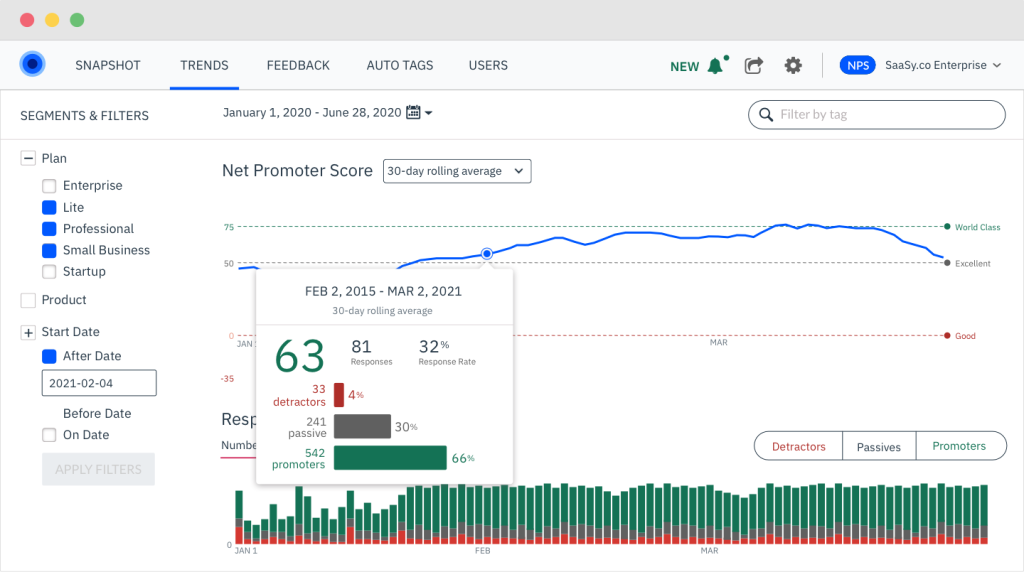
NPS, CSAT, and CES microsurveys come bundled with built-in text and sentiment analysis, and executive dashboards roll everything up for leadership automatically, no custom reporting required.
Integrations with Salesforce, Zendesk, Slack, and Intercom mean a low score kicks off a workflow rather than landing quietly in someone’s inbox.
What reviewers keep coming back to is how fast it surfaces which customers need attention first. This tends to land best with larger customer success teams, since the whole platform is built around routing feedback to an owner, not just displaying it on a screen.
Pros:
- NPS, CSAT, and CES microsurveys with built-in text and sentiment analysis
- Executive dashboards roll feedback up for leadership automatically
- Salesforce, Zendesk, Slack, and Intercom integrations trigger workflows off detractor scores
- Pulse surveys and site-intercept surveys alongside core NPS
Cons:
- Pricing is quote-only with no published starting point
- Reviewers note that the mobile dashboard experience lags behind the desktop version
How Wootric Compares to SatisMeter: Wootric goes noticeably further than SatisMeter on sentiment and text analysis straight out of the box, though that depth comes at the cost of SatisMeter’s simplicity. This is a heavier, more enterprise-oriented setup that a smaller team may not need.
User Rating: 4.6/5 (Capterra)
Pricing: Quote-only, contact vendor for pricing.
3. AskNicely: Best for Frontline, High-Touch B2B NPS
For service businesses that need NPS to actually reach frontline staff, not just sit on a dashboard, AskNicely is my recommendation.
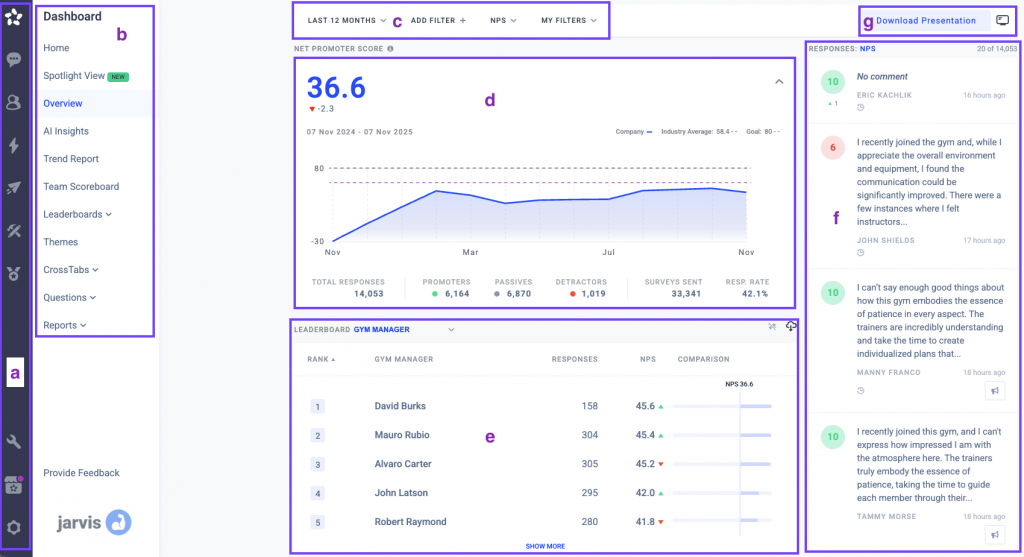
Coaching workflows are baked into the whole design: a low score gets routed directly to whoever handled that customer, along with the context they need to follow up right away.
The AI-generated question feature saves real time for teams that don’t want to draft survey copy themselves. Add in solid Salesforce and HubSpot integrations, plus an in-app SDK that covers mobile and web both, and it’s a well-rounded package.
One caveat worth being upfront about: this is priced for mid-market and up, so anyone comparing purely on cost will find it the priciest name on this list. Field service and hospitality businesses, in particular, tend to adopt it the fastest, and coaching is already baked into how those teams run day-to-day.
Pros:
- Coaching workflows route low scores directly to the frontline employee involved
- AI-generated survey questions reduce setup time
- Strong Salesforce and HubSpot integrations
- In-app SDK covers both mobile and web
Cons:
- No public pricing, and the sales-led process typically lands well above budget tools on this list
- Feature depth outside NPS is thinner than platforms built for multiple survey types
How AskNicely Compares to SatisMeter: AskNicely goes considerably deeper than SatisMeter on the coaching and follow-up side of NPS, but it’s built for a different buyer altogether, frontline service teams rather than product teams running lightweight pulse surveys.
User Rating: 4.6/5 (Capterra)
Pricing: Quote-only, contact vendor for pricing.
4. Retently: Best for Pure NPS/CSAT/CES Specialist
When a smaller team wants a pure NPS, CSAT, and CES specialist without paying for features they’ll never use, Retently is where I send them.
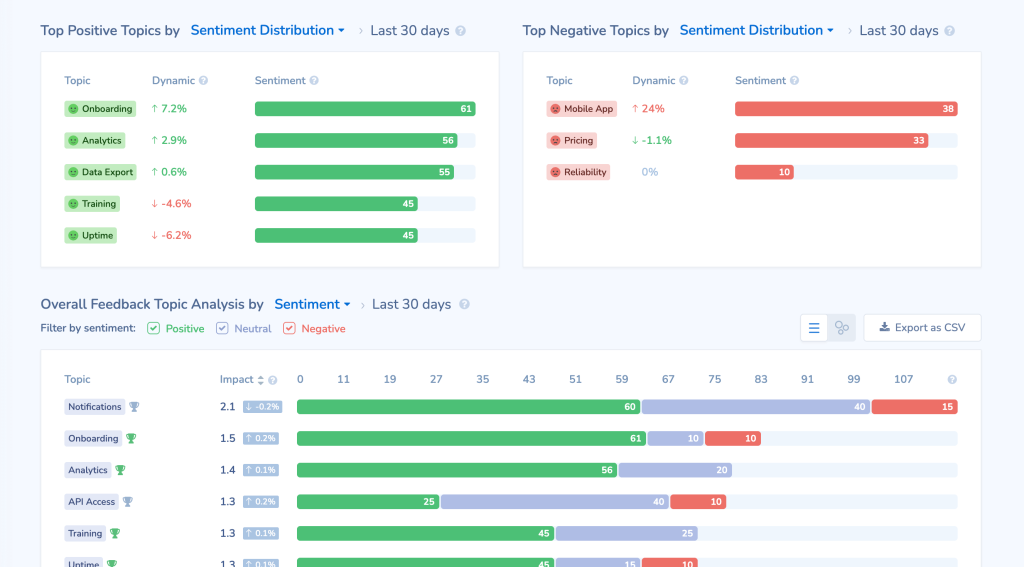
Its Shopify and WooCommerce integrations are genuinely the strongest on this entire list, and the drip-campaign follow-up sequences are a thoughtful extra that most competitors don’t bother with.
Getting started barely takes any time: import contacts, personalize the survey, and a first campaign can be live the same day.
I’ve watched reviewers make the jump from AskNicely specifically because Retently’s setup was simpler and the pricing friendlier. Teams coming off a heavier enterprise platform especially appreciate how fast a first campaign comes together, often the same afternoon they sign up.
Pros:
- Pure NPS, CSAT, and CES focus with strong e-commerce integrations (Shopify, WooCommerce)
- Drip-campaign style automated follow-up sequences
- Fast setup, a first campaign can go out the same day
- Multi-channel distribution including email, SMS, and in-app
Cons:
- Limited number of campaigns on entry-level plans
- No dedicated mobile SDK for native in-app surveys
How Retently Compares to SatisMeter: This is probably the closest like-for-like swap on the whole list: Retently covers the same core NPS/CSAT/CES ground SatisMeter does, with stronger e-commerce integrations and a Capterra rating built on a much larger review base.
User Rating: 4.9/5 (Capterra)
Pricing: Paid plans start at $99/month.
5. Survicate: Best for Multichannel Surveys with CRM Sync
When NPS is just one piece of a much bigger feedback picture, Survicate is the tool that comes to mind first. It handles targeted surveys across web, in-app, email, link, and mobile, all feeding one response pool, and an AI-powered Insights Hub summarizes the open-text answers on its own.
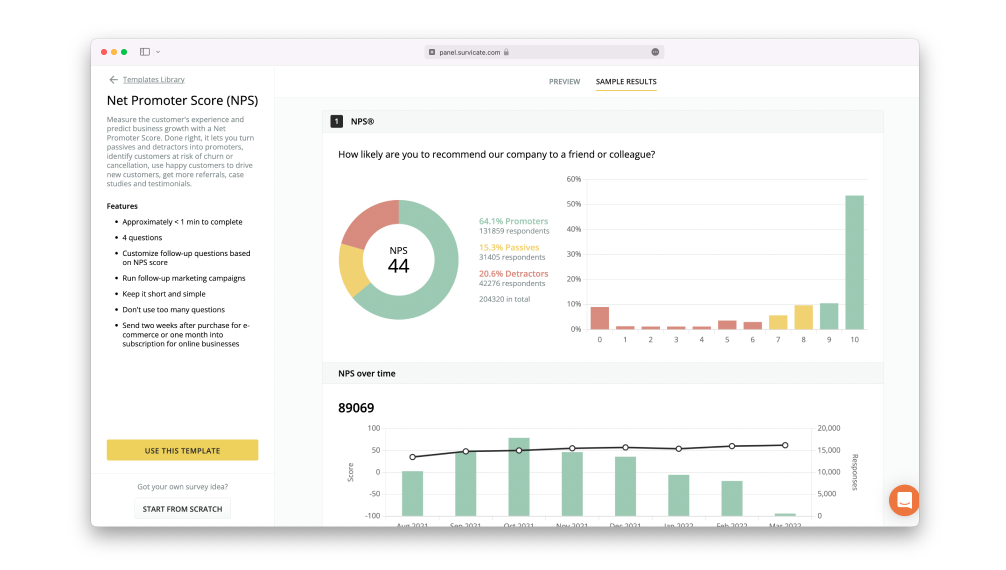
Something I keep seeing in reviews is praise for customer support, specifically, fast, human replies rather than a bot working through a ticket queue.
The identified-response workflow is another point in its favor: once a respondent is identified, their answer can update a CRM record and automatically kick off a follow-up, with no manual spreadsheet exports needed.
Teams switching from a single-purpose NPS tool tend to like how fast the first survey can go live, often the same day, with no onboarding call standing in the way.
Pros:
- Multichannel surveys across web, in-app, email, link, and mobile from one response pool
- AI-powered Insights Hub for open-text analysis
- 40+ native integrations, including HubSpot and Salesforce
- Identified-response workflow updates CRM records automatically
Cons:
- Reporting depth is lighter than research-focused platforms
- Some reviewers note occasional friction with survey list uploads
How Survicate Compares to SatisMeter: Survicate covers SatisMeter’s core NPS job without much trouble, then goes further by adding multichannel reach and AI-powered synthesis that SatisMeter simply doesn’t offer at any price point.
User Rating: 4.6/5 (Capterra)
Pricing: Free plan available. Paid plans start at $114/month.
6. SurveySparrow: Best for Conversational Surveys, Broad CX Use Cases
SurveySparrow is my pick for teams that want NPS woven into a broader, more conversational survey experience instead of living in a single-purpose tool.
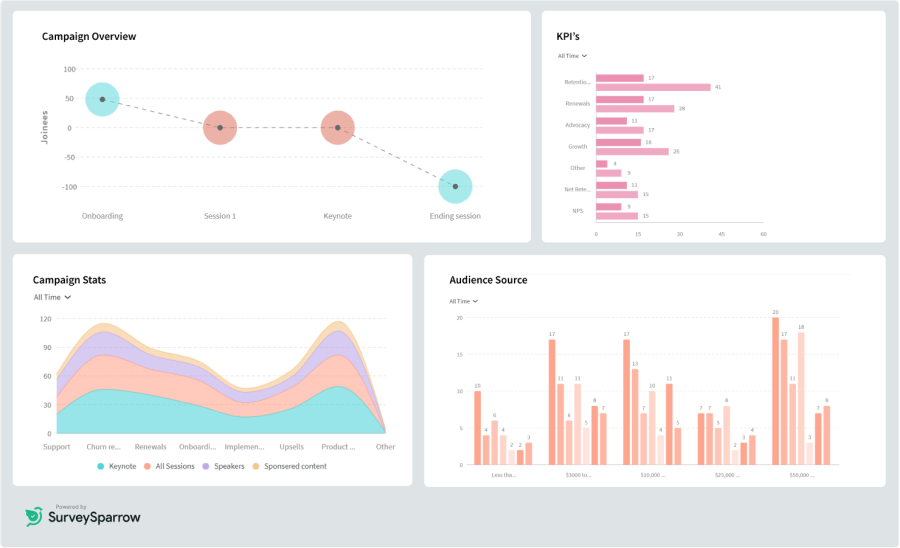
It’s one-question-at-a-time format reliably beats a traditional multi-field survey on completion rate, asking the exact same things. CSAT, NPS, and employee feedback all flow through the same builder, so a CX team isn’t stuck managing a separate tool per survey type.
A published starting price is a real edge, too; several tools on this list make you sit through a sales call just to learn what they cost.
Marketing and support teams especially like the multi-channel sharing; the same survey can go out by email, web, and social without being rebuilt each time.
Pros:
- Conversational, one-question-at-a-time format that improves completion rates
- NPS, CSAT, and employee feedback surveys in one builder
- Native integrations with HubSpot, Salesforce, and Shopify
- Published starting price, no sales call required for a baseline number
Cons:
- Higher-volume plans move to usage-based, quote-only pricing
- Some reviewers note that the reporting dashboard takes time to learn
How SurveySparrow Compares to SatisMeter: SurveySparrow matches SatisMeter’s survey-type range and then improves on it with a genuinely better completion-rate experience, all at a published entry price where SatisMeter’s full range ends up costing more.
User Rating: 4.4/5 (Capterra)
Pricing: Paid plans start at $19/month.
7. SurveyMonkey: Best for Broad Survey Platform with an NPS Module
Most teams are already familiar with SurveyMonkey, and its NPS module is built into a survey platform with far more range than SatisMeter offers.
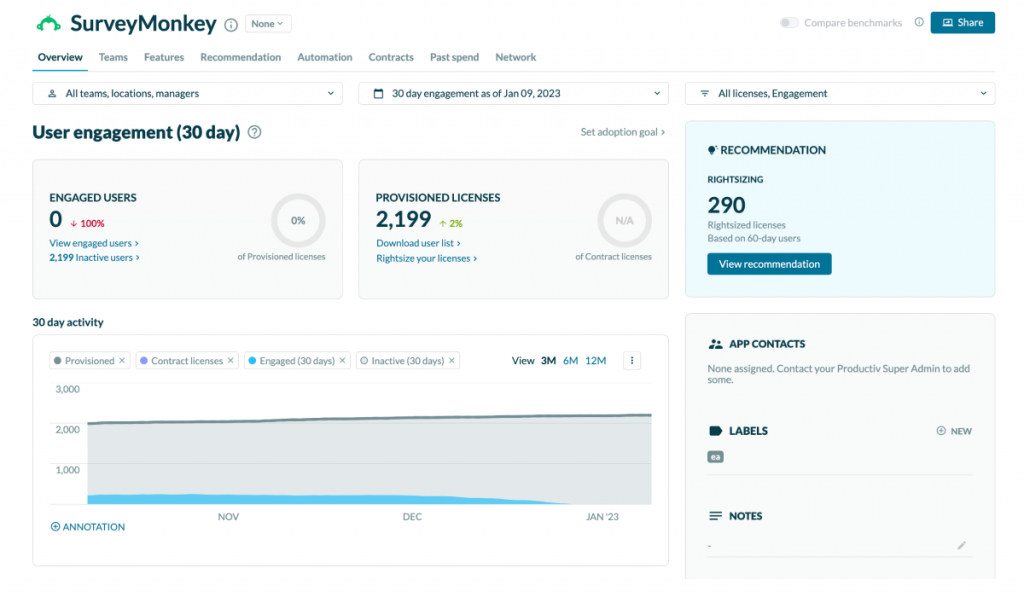
The methodology-backed templates go well past customer feedback, so a team that also needs employee surveys or market research never has to bring in a second vendor. Brand recognition does a lot of the work internally, too.
Getting a purchase approved is easier when nobody on the finance side has to ask who this vendor even is. Worth flagging the review count alone, well past ten thousand on Capterra, which puts it in a different tier of social proof than anything else here.
Teams already using SurveyMonkey for something else, employee engagement or market research, often just bolt on the NPS module because the account and billing are already set up.
Pros:
- The NPS module sits inside a much broader survey platform
- Methodology-backed templates cover employee, market research, and customer surveys
- Massive integration library and brand recognition that smooths internal approval
- Exports data in PDF, CSV, PPT, and XLS
Cons:
- NPS-specific features are less specialized than dedicated NPS tools
- Advanced logic and reporting depth require higher-tier plans
How SurveyMonkey Compares to SatisMeter: Think of SurveyMonkey as the broader platform pick: it handles SatisMeter’s NPS job as one module inside a much larger toolkit, which reads as either a major advantage or unnecessary breadth depending on how much range a team actually needs.
User Rating: 4.6/5 (Capterra)
Pricing: Paid plans start at $30/month.
8. Zonka Feedback: Best for Closed-Loop CX with Strong AI and Value-for-Money Ratings
Zonka Feedback earns the strongest value-for-money label on this list; it actually topped Capterra’s own Pricing Value Report for survey software.
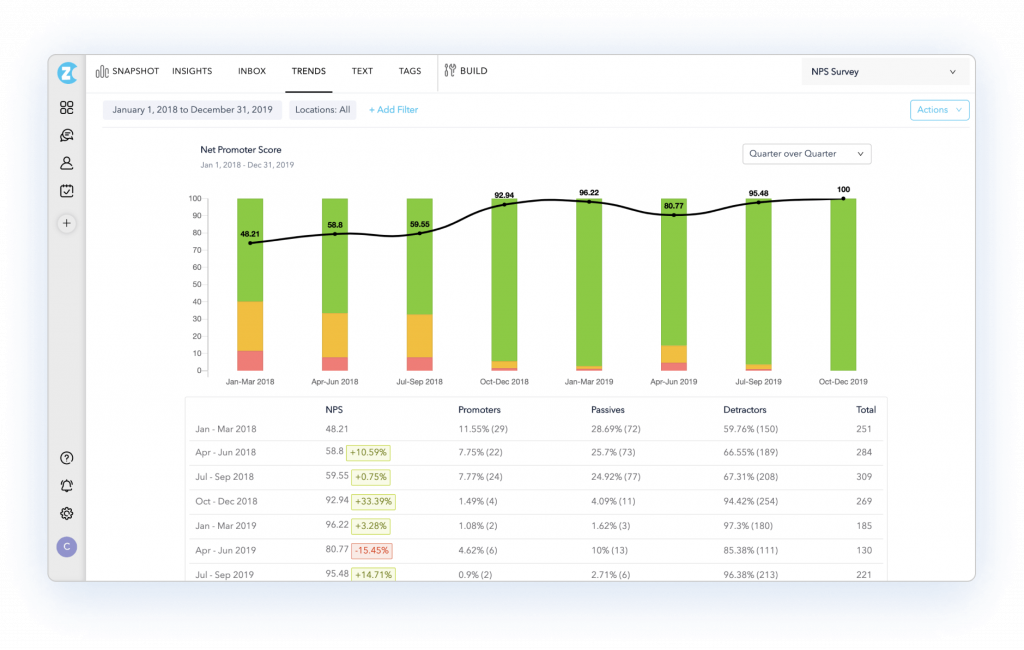
Its closed-loop ticketing turns a detractor’s response into an assigned, tracked issue rather than a number that just sits there, and AI-powered text and sentiment analysis works through open-text responses without anyone having to ask.
Distribution stretches across web, email, SMS, and kiosk, casting a wider net than most tools built just for NPS. What reviewers single out most is the depth of customization, useful for teams with specific branding needs spread across several survey touchpoints.
Businesses collecting feedback across both physical and digital locations get the most out of the kiosk and multi-channel options in particular, since most other tools on this list stick to digital channels only.
Pros:
- Closed-loop ticketing turns detractor responses into tracked, assigned issues
- AI-powered text and sentiment analysis handles open-text responses automatically
- Multi-channel distribution including web, email, SMS, and kiosk
- Strong customization for branding and question logic
Cons:
- The starting price sits above several other specialists on this list
- Some reviewers note a learning curve for the full reporting suite
How Zonka Feedback Compares to SatisMeter: Zonka Feedback answers the biggest SatisMeter complaint almost directly, no AI analysis, by building sentiment and text analysis in from the start, and the higher price tag reflects exactly that added depth.
User Rating: 4.8/5 (Capterra)
Pricing: Quote-only, contact vendor for pricing.
9. Alchemer: Best for Flexible, Research-Grade Survey Logic
A team that’s outgrown simple NPS templates and needs genuinely flexible survey logic, branching, piping, and custom scoring is exactly who I’d send toward Alchemer.
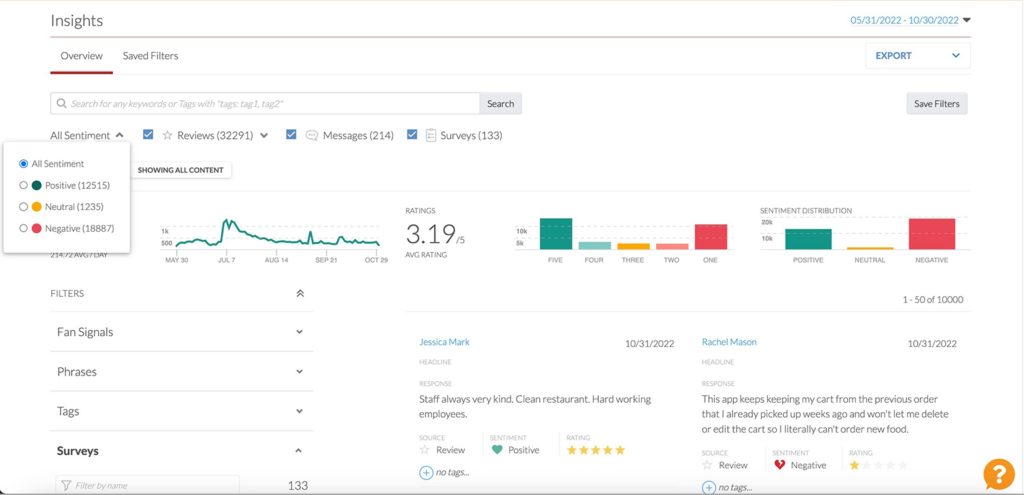
It goes well past what a dedicated NPS tool usually offers, handling 360-degree feedback and access controls that matter once multiple departments are running surveys under one roof.
That flexibility isn’t free, though; it comes with a steeper learning curve than a purpose-built NPS tool. Teams that need real methodological control over how a survey is designed, not just a fill-in-the-blank template, tend to end up here once simpler tools stop cutting it.
Research and analytics teams especially gravitate toward it, since the branching logic handles genuinely complex survey paths that most NPS-specific tools were never designed to support.
Pros:
- Deep, flexible survey logic including branching, piping, and custom scoring
- 360-degree feedback and access controls/permissions for multi-department use
- Strong data security and collaboration tools
- Broad question-type library beyond NPS templates
Cons:
- Steeper learning curve than a purpose-built NPS tool
- Pricing is quote-only with no published starting point
How Alchemer Compares to SatisMeter: Alchemer essentially trades SatisMeter’s simplicity for genuine survey-design flexibility, a good fit for teams that find SatisMeter’s four templates too rigid rather than too limited in scope.
User Rating: 4.5/5 (Capterra)
Pricing: Quote-only, contact vendor for pricing.
10. Qualtrics (XM for CX): Best for Full Enterprise Experience-Management Platform
Qualtrics is the one I’d hold in reserve for teams that need NPS as just one piece of a full experience-management program covering customer, employee, and research data under a single roof.
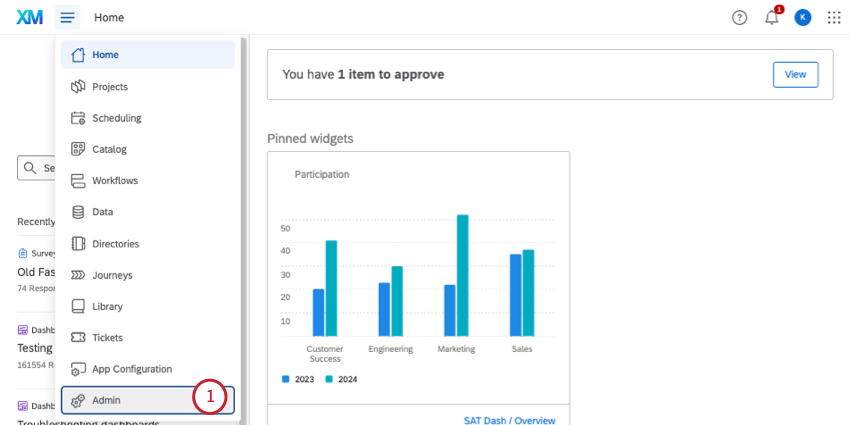
Predictive insights and automated workflows layer on top of real-time feedback collection, and role-based dashboards keep each team focused on what’s relevant to them.
Let me be direct about this: Qualtrics is built for a scale and budget most people evaluating SatisMeter alternatives haven’t reached yet.
Teams already running other Qualtrics modules, whether employee experience or brand tracking, often add CX here simply because the infrastructure and the contract already exist.
Pros:
- Predictive insights and automated workflows across customer, employee, and research data
- Role-based dashboards for different teams within one organization
- AI-driven analytics, including conversational surveys and iQ Analytics
- Industry-leading depth for multi-department experience management
Cons:
- No published pricing, median spend lands around $30,000 a year
- Significant overkill for a team that just needs NPS and CSAT pulse surveys
How Qualtrics Compares to SatisMeter: Put plainly, Qualtrics operates a full tier above SatisMeter in both scope and price, a move that only makes sense for teams whose feedback needs have outgrown a single-purpose NPS tool entirely.
User Rating: 4.6/5 (Capterra)
Pricing: Quote-only, contact vendor for pricing.
Which SatisMeter Alternative Should Be Your Top Pick?
Ten options are a lot to keep straight, so if this is the only section you read, make it this one. These are the three tools I’d genuinely point a team toward, and each solves a different flavor of the SatisMeter problem.
1. Qualaroo: Best Overall Pick if You Want AI Analysis Without Enterprise Pricing
Qualaroo takes the top spot because the single biggest complaint people have about SatisMeter, no AI analysis at any tier, is exactly what it solves natively across every paid plan.
Essentials runs $19.99 a month, noticeably under SatisMeter’s roughly $49 entry price, and that gets you native AI Sentiment Analysis plus heatmaps and session recordings SatisMeter never offers, no matter the tier.
Question branching automatically shows detractors and promoters different follow-ups instead of funneling everyone into one generic text box.
The one thing you’re trading away versus SatisMeter is its direct Productboard roadmap integration, which only matters if a team is already deep in that ecosystem.
2. Retently: Best if You Want a Pure NPS/CSAT/CES Specialist
For the closest like-for-like swap, I’d send teams to Retently: the same NPS, CSAT, and CES focus as SatisMeter, but with sharper e-commerce integrations and a Capterra rating that’s backed by a larger review base.
It runs $99 a month, more than SatisMeter’s starting tier, but the drip-campaign automation and quicker setup pay that difference back for teams cycling through surveys frequently.
The catch mirrors SatisMeter’s own weak spot: still no native AI analysis of open-text answers, so comments still get read one by one.
If you’re not chasing AI analysis specifically and just want a cleaner version of what SatisMeter already does, this is the safer, more direct swap on the list.
3. Zonka Feedback: Best if You Want SatisMeter’s Simplicity Plus Real AI Analysis
If the missing AI analysis is specifically what’s driving the search, Zonka Feedback is where I’d point that frustration; it topped Capterra’s own value report and builds sentiment and text analysis into every plan by default.
Closed-loop ticketing converts a bad score into a tracked, assigned issue rather than leaving it as a number nobody reads.
The downside is pricing lives behind a sales call instead of a published figure, so budgeting takes an extra step that most tools on this list skip.
For teams weighing this against Qualaroo specifically, the trade-off comes down to budget versus channel breadth. Zonka’s multi-channel and kiosk options go further, but at a price you won’t know until you ask.
How Did I Evaluate These SatisMeter Alternatives?
What actually mattered to me when evaluating these SatisMeter alternatives was whether each one closes the gap SatisMeter leaves wide open: turning an NPS or CSAT score into something a team can actually act on, rather than a number sitting on a dashboard.
Six factors went into that judgment:
User Reviews / Ratings: Every rating here comes from Capterra, and I weighed review count right alongside the star average, since SatisMeter’s own 5.0 score is built on just four reviews, too small a sample to treat as settled in either direction.
Essential Features & Functionality: AI-powered response analysis, breadth of survey types, and multichannel delivery counted for more than raw template count, since those are precisely the spots where SatisMeter’s scope thins out.
Ease of Use: How much setup time it takes to get a first survey live mattered here too, since a narrower tool doesn’t actually win anything if the simplicity still comes with a slow rollout.
Customer Support: Whether support comes standard or sits behind a sales conversation mattered more than usual here, given the uncertainty hanging over SatisMeter’s own roadmap post-acquisition.
Value for Money: I looked closely at what the jump from entry pricing to full feature access actually buys, since the jump SatisMeter itself requires to unlock every survey type is a genuine sore point reviewers bring up repeatedly.
Personal Experience / Experts’ Opinions: Where I’ve used a tool firsthand, that experience shaped what’s written here. Where I haven’t, I leaned on patterns that show up consistently across independent reviews rather than any one reviewer’s take.
FREE. All Features. FOREVER!
Try our Forever FREE account with all premium features!
How Do You Choose the Right SatisMeter Alternative for Your Team?
Name the actual reason you’re shopping around, not the reason you assume should matter, and the table below will point you straight to the right pick.
| If Your Main SatisMeter Frustration Is… | Consider This Alternative |
| No AI analysis of open-text responses | Qualaroo or Zonka Feedback |
| Wanting a pure NPS/CSAT/CES specialist | Retently |
| Needing frontline coaching workflows | AskNicely |
| Wanting NPS folded into a broader survey platform | SurveyMonkey or SurveySparrow |
| Needing flexible, research-grade survey logic | Alchemer |
| Running a full enterprise experience-management program | Qualtrics or Wootric (InMoment) |
| Wanting multichannel reach with CRM sync | Survicate |
The Score Was Never the Point
Any tool on this list can fire off an NPS survey and spit out a score; that part’s easy. What I’d actually ask before switching is: what happens once the number lands? Does the team understand why customers feel that way, and does anyone follow up on it?
That’s exactly where SatisMeter falls short; there’s no native path from open text to real insight, regardless of price.
The right answer isn’t the same for everyone on this list, either. A team running a full enterprise experience-management program has different needs than one just trying to catch a churn signal before it becomes a cancellation, which is why Qualtrics and Retently both earned a spot here even though they solve almost opposite problems.
And if the Productboard acquisition is part of what’s pushing the search in the first place, that’s worth weighing on its own merits; a vendor’s roadmap matters just as much as its feature list once you’re planning past this quarter.
If closing SatisMeter’s biggest gap, no AI analysis, without stepping into enterprise-level pricing, is the goal, Qualaroo is where I’d start.
Frequently Asked Questions
What is the best free alternative to SatisMeter?
Qualaroo's free plan supports up to 50 responses and includes every premium feature, AI Sentiment Analysis included, making it the strongest no-cost starting point here for teams that want to understand why behind a score, not just log it. Survicate and SurveyMonkey both have workable free tiers as well.
Is Qualaroo cheaper than SatisMeter?
At the entry tier, yes. Qualaroo's Essentials plan runs $19.99 a month against SatisMeter's roughly $49 starting price, and Qualaroo throws in native AI Sentiment Analysis that SatisMeter skips at every tier. Once SatisMeter's pricing for full survey-type access is factored in, it climbs well past Qualaroo's Business plan, before any usage-based charges are added on top.
Which SatisMeter alternative includes AI-powered response analysis?
Four tools here build AI-powered analysis of open-text responses right in: Qualaroo, Zonka Feedback, Wootric, and Survicate, whether that shows up as sentiment analysis, text analysis, or an AI insights hub. That solves the number-one SatisMeter complaint head-on; it gathers scores without ever explaining the reasoning behind them. Several also cost less than SatisMeter's own upper tiers.
Is SatisMeter still being actively developed?
Productboard now owns SatisMeter, and while the standalone product still runs, independent reviewers say it hasn't changed much since the deal closed. Nobody outside Productboard knows yet whether it stays independent long-term or eventually gets folded into the broader platform, worth weighing if you're planning a feedback program built to last years, not months.
Which SatisMeter alternative is best for e-commerce teams?
Retently is the clear standout; its native Shopify and WooCommerce integrations go deeper than any other NPS tool on this list. SurveySparrow and SurveyMonkey can handle e-commerce feedback too, but neither offers the e-commerce-specific automation or drip-campaign sequences Retently built around the post-purchase moment. Either makes a decent fallback if Retently doesn't fit.
Do any SatisMeter alternatives support frontline employee coaching?
AskNicely was purpose-built for exactly this: a low NPS score gets routed straight to whichever frontline employee handled that customer, context included, so follow-up can happen right away. Wootric and Zonka Feedback both offer closed-loop workflows as well, but neither is designed around frontline coaching the way AskNicely is, so service-heavy businesses tend to get more out of it.
What should I look for in a SatisMeter alternative besides price?
Look at whether AI-powered analysis of open text is native or requires bolting on a separate tool, how far survey types extend beyond basic NPS, and whether closed-loop follow-up workflows are built in. Anyone switching off SatisMeter should also size up a vendor's pace of development, since SatisMeter's own post-acquisition slowdown is exactly the kind of stall worth not walking into twice.
Is there a SatisMeter alternative built for enterprise experience-management programs?
Both Qualtrics and Wootric (InMoment) operate at that scale, pulling customer, employee, and research feedback into one platform with predictive analytics and role-based dashboards. Qualtrics is the bigger commitment; median annual spend runs around $30,000, while Wootric sits closer to a mid-market enterprise budget. Neither publishes pricing, so both start with a sales conversation.
FREE. All Features. FOREVER!
Try our Forever FREE account with all premium features!

 We'd love your feedback!
What did you like & how can we make it even better?
 Thanks for your feedback!
 Ask Your Question
Have a question? Get expert help to make your decision easier.