

Your customers are already telling you why they buy, stay, or leave. Most small businesses just aren’t set up to hear it. That is why finding the best survey tools for small business growth is so important.
According to PwC’s Customer Experience Survey in 2025, 52% of consumers have stopped buying from a brand after a bad experience. The challenge is that most businesses never learn what went wrong until it’s too late.
The right survey tool can help you uncover pain points, improve customer experiences, and spot growth opportunities before your competitors do.
In this guide, I’ll walk you through the 10 best survey tools for small businesses, comparing features, pricing, pros, cons, and use cases to help you choose the right platform.
What Is Survey Software and Why Does It Matter for Small Businesses?
For small businesses, this matters because:
- Decisions get faster. Instead of guessing why customers churn or why conversions drop, you ask directly and get answers in hours.
- Resources go further. One tool that handles NPS, customer satisfaction, and product feedback is cheaper and smarter than three separate point solutions.
- You compete on insight. Larger competitors have bigger budgets. Small businesses that move faster on customer feedback close that gap.
- You catch problems early. A single survey tied to the right trigger can surface a UX issue, pricing objection, or support gap before it becomes a pattern.
10 Best Survey Tools for Small Businesses
I’ve noticed that most listicles lump enterprise research platforms, free-form builders, and actual feedback tools into a single category.
They are not. What I focus on here is survey platforms for businesses that are practical, priced accessibly, and actually designed to help you collect insight rather than just store data.
Here is a quick comparison before I break each one down:
| Tool | Best For | User Rating | Pricing |
| Qualaroo | In-App Surveys, NPS & User Feedback | 4.7/5 (Capterra) | Free plan. Paid from $19.99/month |
| ProProfs Survey Maker | AI Survey Creation, Multi-Purpose Programs | 4.8/5 (Capterra) | Free plan. Paid from $19.99/month |
| SurveyMonkey | AI-Powered Survey Creation | 4.6/5 (Capterra) | Free plan. Paid from $30/month |
| Typeform | Visually Appealing, High-Completion Surveys | 4.7/5 (Capterra) | Free plan. Paid from $28/month |
| SurveyKing | Anonymous Surveys | – | Free plan. Paid from $19/month |
| involve.me | Drag-and-Drop Interactive Surveys | 4.4/5 (Capterra) | Free plan. Paid from $19/month |
| Formaloo | Offline Surveys and Field Data Collection | 4.7/5 (Capterra) | Free plan. Paid from $29/month |
| Sogolytics | End-to-End Multi-Channel Survey Programs | 4.7/5 (Capterra) | Free plan. Custom Quote |
| Survio | Expert-Created Templates | 4.5/5 (Capterra) | Free plan. Paid from €12/month |
| LimeSurvey | Open-Source, Community-Driven Flexibility | 4.4/5 (Capterra) | Free plan. Paid from $39/month |
1. Qualaroo – Best for Capturing Real-Time User Insights In-App & on Your Website Using Contextual, AI-Powered Micro-Surveys
Qualaroo has been my go-to for in-the-moment feedback for years, and it is honestly the one tool that feels like it was built for product teams who move fast.
It is a user feedback, NPS, and in-app survey platform that delivers targeted, contextual surveys, backed by native AI Feedback Analysis, and the star of the show is the Nudge™: those non-annoying little surveys that slide in when someone is on your site or in your app, triggered by exactly the behavior you define.
I can target these surveys to users who just failed onboarding, paid customers, visitors from a specific campaign, or practically any segment I can imagine, right down to a named individual with the Identify API. Native AI Feedback Analysis turns thousands of open-text responses into insights I can understand in minutes instead of weeks: Automated Tagging sorts them by theme, and the AI Response Summarizer condenses the rest. And branching works intelligently, asking only the follow-up questions that make sense, so users are never overwhelmed.
Best For: Businesses and enterprises seeking actionable, real-time user insights by surveying visitors on their website, app, or prototypes at the moment of interaction
Pros:
- Native AI Sentiment Analysis, not third-party, for automatic emotional tone tagging
- AI Survey Creator builds a survey from a prompt, so there’s no starting from scratch
- Heatmaps and Session Recordings for complete behavior tracking
- Advanced targeting based on identity, custom properties, behavior, geolocation, exit intent, and more
- Nudge for prototypes on Figma, Adobe XD, InVision, and more
- Branching and skip logic so users see only relevant follow-up questions
- Multilingual surveys in over 100 languages
- Customizable branding, colors, and logo
- In-app surveys for iOS and Android
Cons:
- A named account manager and guided onboarding are perks of the paid tiers.
- There’s no offline or self-hosted option; it runs entirely in the cloud.
User Rating: 4.7/5 (Capterra)
Pricing: Free plan available with all premium features. Paid starts at $19.99/month.
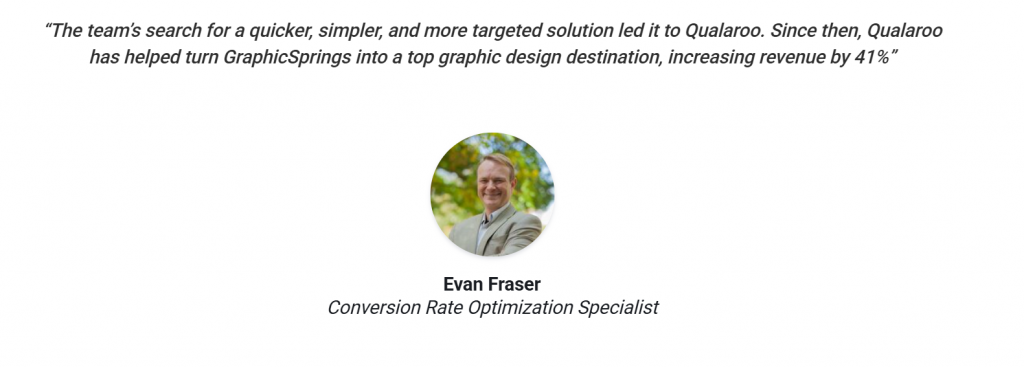
One real-world example is GraphicSprings, which increased revenue by 41% using Qualaroo’s targeted surveys:
2. ProProfs Survey Maker – Best for Easy AI Survey Creation and Multi-Purpose Survey Programs
What I appreciate about ProProfs Survey Maker is how much ground it covers without requiring any technical setup. I have used it to get surveys live in under 30 minutes, start to finish. The AI-assisted builder suggests question structure and phrasing based on my goal, which saves a surprising amount of time on first drafts.
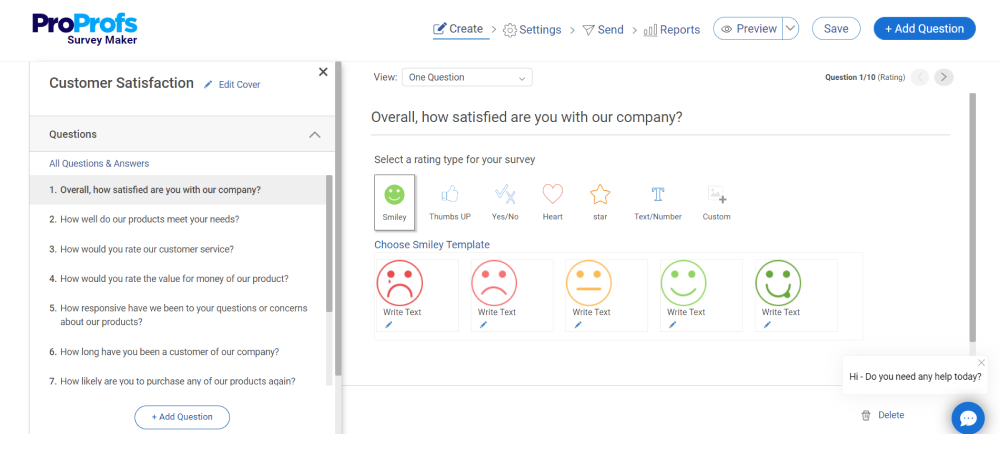
Where it really stands out is versatility. If I need surveys for multiple purposes, from customer research to lead qualification to training evaluation, I can run everything from one platform without jumping between tools.
Best For: SMBs, marketing teams, and educators running multi-purpose survey programs from a single platform.
Pros:
- AI-assisted survey creation with question structure and phrasing suggestions
- Non-intrusive sidebar feedback widget for an always-on website collection
- Skip logic and branching for adaptive survey paths
- Personality quiz and poll formats for buyer persona segmentation
- Deep CRM integration for connecting responses to customer records
- A vast pre-built question library across survey categories
Cons:
- Limited behavioral targeting compared to in-context tools
- Better suited for structured survey campaigns than real-time triggered collection
User Rating: 4.8/5 (Capterra)
Pricing: Forever free plan with all premium features. Paid from $19.99/month.
3. SurveyMonkey – Best for AI-Powered Survey Creation
I first used SurveyMonkey years ago and honestly underestimated how far it has come since. For a small business that needs to move fast without a dedicated researcher, the AI survey builder is a real time-saver. I can type in a prompt describing what I want to learn, and it drafts a full survey with question structure, answer options, and flow built in.
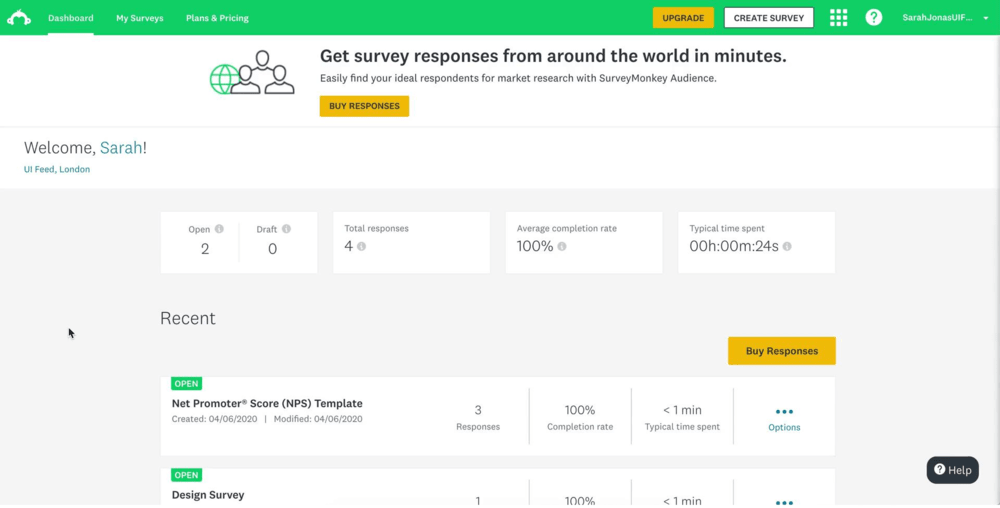
What keeps it in my rotation is the 250-plus expert-written templates and the depth of reporting. The response analysis dashboards are clean, and I can segment and filter data without needing to export to Excel first.
For a small team without a data analyst, that matters. I have also used SurveyMonkey’s global panel feature when I needed market research responses beyond my existing customer base, and that alone saved me weeks of outreach work.
Best For: Small businesses that want to move fast on survey creation without hiring a research specialist.
Pros:
- AI survey builder that generates complete surveys from a single text prompt
- 250-plus expert-written and customizable survey templates
- Response analysis using simple or advanced dashboards
- Global panel access to collect market insights beyond your existing audience
- Integrations with MailChimp, HubSpot, Zoom, and more
Cons:
- Free plan is limited to 10 questions per survey, which is too restrictive for most real use cases
- Survey logic can get complicated to implement for non-technical users
User Rating: 4.6/5 (G2)
Pricing: Free plan available. Paid plans start at $30/month.
4. Typeform – Best for High-Completion, Visually Engaging Surveys
If response rates are the problem, Typeform is usually the fix. I started recommending it to clients who were seeing under 20% completion on their customer surveys, and after switching to Typeform, most of them saw meaningful improvement.
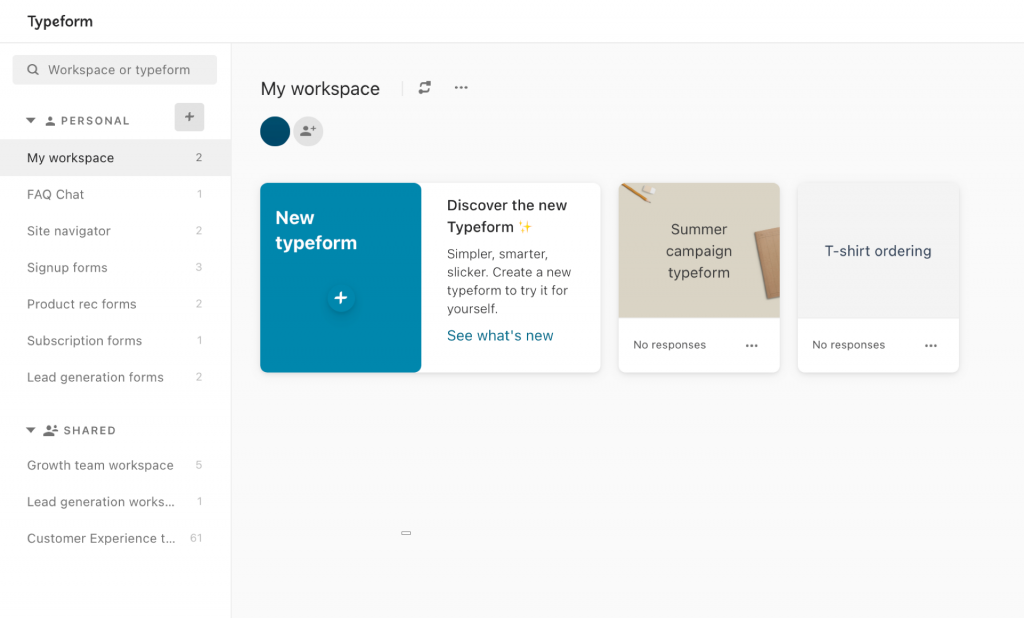
The reason is simple: it presents one question at a time, feels more like a conversation than a form, and looks polished enough that respondents take it seriously. The combination of visual design, tailored follow-up questions through branching, and built-in photo and video support makes it ideal for brand-conscious businesses where first impressions matter.
If you are sending a survey to a prospective client or a high-value customer segment, Typeform will not embarrass you. I have used it for post-project client feedback surveys and lead qualification forms, and the auto-generated shareable reports save me from building decks manually every time.
Best For: Brand-conscious small businesses where completion rates and aesthetic quality directly affect data quality.
Pros:
- One-question-at-a-time format designed to reduce survey fatigue and improve completion rates
- Templates with full customization for colors, question types, and branding
- Tailored follow-up questions through conditional logic
- Built-in photo and video library for visually rich surveys
- Auto-generated and shareable reports that look presentation-ready
Cons:
- Free plan is limited to 10 responses per month, which is not workable for active feedback programs
- Only supports Calendly for scheduling integrations, which limits flexibility
User Rating: 4.7/5 (G2)
Pricing: Free plan available. Paid plans start at $28/month.
5. SurveyKing – Best for Anonymous Surveys
I started using SurveyKing specifically because of a problem I kept running into: low response rates on employee satisfaction surveys. People were worried about being identified, so they either skipped the survey or answered safely instead of honestly. SurveyKing solved that cleanly.
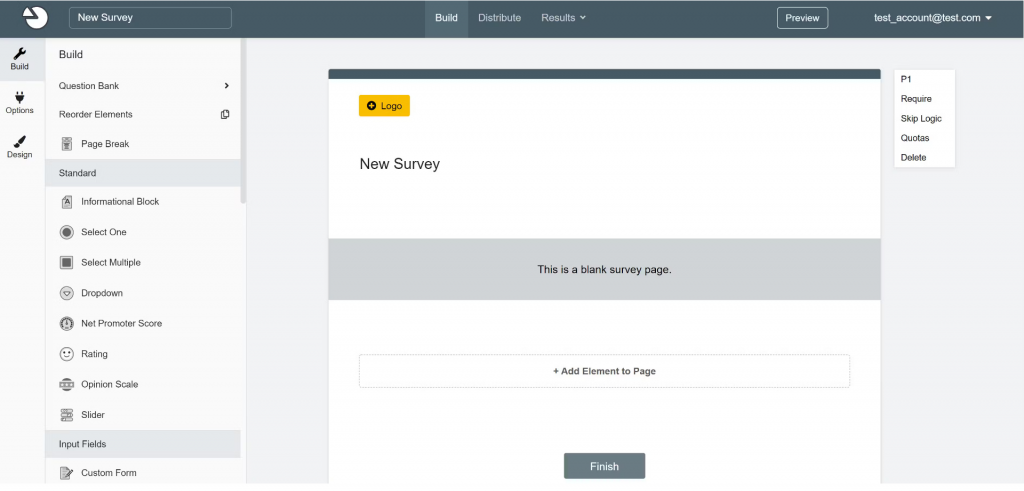
The anonymous survey setup is the real differentiator here. When I create an anonymous survey, the platform does not store IP addresses, device information, submission dates, or locations. Respondents know this upfront, and it changes how they answer.
I also used the anonymous email collector for a customer satisfaction run, and the feedback quality was noticeably different from previous surveys where respondents knew who was sending it. For any survey where you genuinely need people to tell you the truth rather than the safe answer, this is the tool I reach for first.
Best For: Small businesses running employee satisfaction, candid customer feedback, or any survey where identity protection drives honest responses.
Pros:
- Anonymous link and anonymous email collector options with zero identity data stored
- Advanced question types accessible on free plans, including branching and logic
- Google Reviews feature to capture verified customer reviews directly
- Cross-tabulation analysis for comparing multiple data sets without manual work
- One-click report sharing with stakeholders
Cons:
- Limited third-party integrations compared to more established platforms
- Customization options are more basic than design-forward tools
Pricing: Free plan available. Paid plans start at $19/month.
6. involve.me – Best for Drag-and-Drop Interactive Surveys
I came to involve.me looking for a faster survey builder, and what I found was actually a tool that made surveys feel more like branded content than a checklist of questions. The drag-and-drop interface is genuinely fast. I put together a multi-step customer onboarding survey in about 15 minutes, complete with branching paths and a thank-you email trigger at the end.
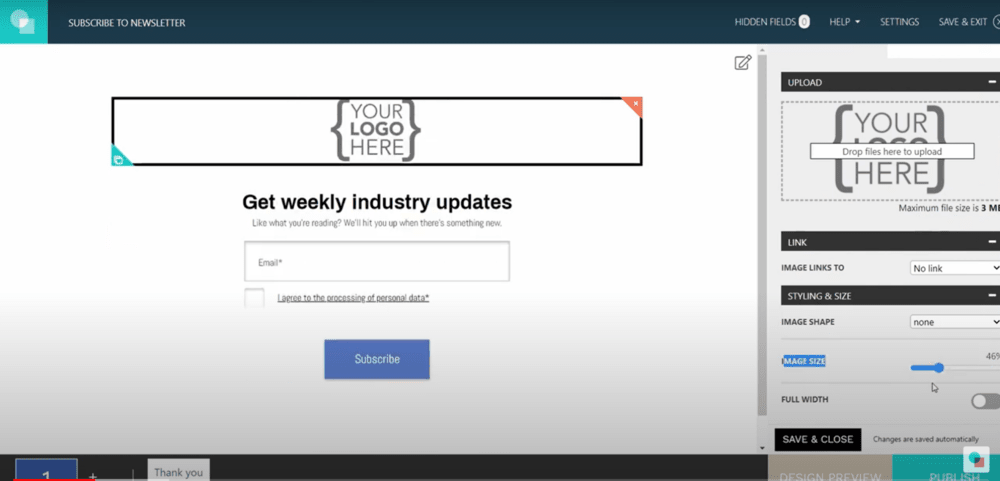
The AI report feature is what keeps me coming back. Open-ended responses are automatically summarized, so I am not reading through hundreds of individual text answers to find the pattern. For a small business owner wearing five hats, that kind of time compression is worth a lot.
And because involve.me lets you embed surveys directly into your website or share them via email and social without any code, getting the survey in front of the right people takes about five minutes from start to finish.
Best For: Small businesses that want professional-looking, multi-step surveys without a developer or designer involved.
Pros:
- Code-free drag-and-drop builder with professional results and fast setup
- Logic jumps that allow respondents to skip irrelevant questions
- AI-generated reports that summarize even open-ended feedback automatically
- Customer segmentation based on survey responses for follow-up targeting
- Integrations with Google Analytics, Mailchimp, Slack, and more
Cons:
- PDF format is not available when exporting response data
- Custom branding capabilities are more limited compared to design-first tools
User Rating: 4.4/5 (G2)
Pricing: Free plan available. Paid plans start at $19/month.
7. Formaloo – Best for Offline and Field Data Collection
I recommended Formaloo to a client running a retail business with locations in areas where internet connectivity was inconsistent. They needed to collect customer feedback at the point of purchase, and they were losing data every time the connection dropped. Formaloo’s offline mode fixed that immediately.
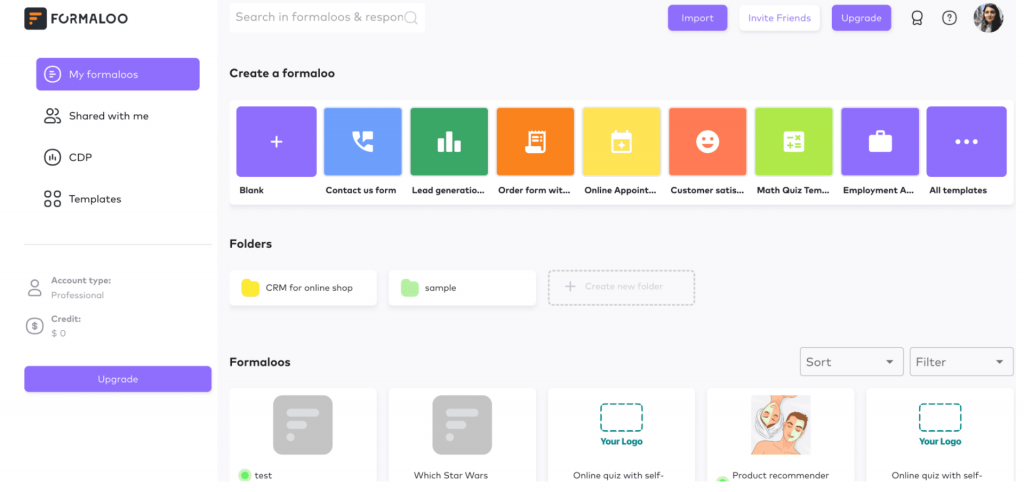
Respondents fill out the survey without an internet connection, and the data syncs automatically once connectivity is restored. Beyond the offline capability, the platform handles all the standard survey needs well: templates, logic, admin controls, and automatic data presentation in tables and charts once responses are in.
The 256-bit encryption and access management controls also made it a comfortable choice for a client in a compliance-heavy industry who needed to be confident their survey data was protected from the moment of collection.
Best For: Small businesses collecting data in the field, at events, in retail locations, or any environment where internet access is unreliable.
Pros:
- Full offline survey capability with automatic cloud sync when connection is restored
- 200-plus ready-to-use templates across industries and use cases
- 256-bit SSL/TLS encryption to protect sensitive survey data
- Powerful admin controls and access management for team environments
- Automatic presentation of data in tables, charts, and boards
Cons:
- Advanced features have a steeper learning curve than simpler tools
- Navigating to templates takes you away from the main dashboard, which disrupts the workflow
User Rating: 4.7/5 (G2)
Pricing: Free plan available. Paid plans start at $29/month.
8. SogoSurvey (by Sogolytics) – Best for End-to-End Multi-Channel Survey Programs
I use SogoSurvey when a client needs more than just a form builder. It covers the full lifecycle: building the survey, distributing it across email, links, and social media, analyzing responses with pre-built or custom reports, and doing all of it from a single platform. That last part is the real value. Small businesses often end up stitching together a survey tool, an email tool, and a reporting tool when one platform handles all three.
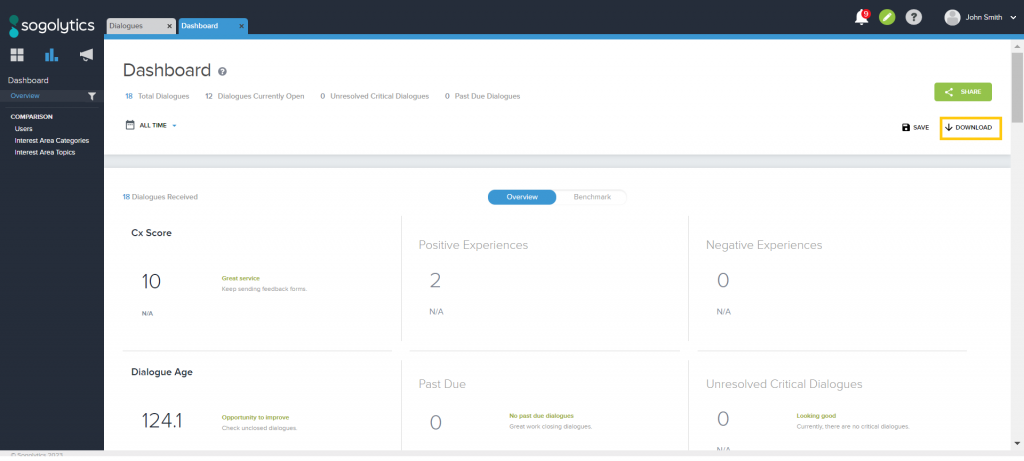
The mobile app is a practical bonus. I can check survey progress, review new responses, and pull reports without sitting at a desk, which matters when you are running a small team and things move fast. The question bank feature is also genuinely useful.
I have saved questions from previous surveys and reused them across new programs without having to rebuild from scratch, which keeps our survey language consistent and reduces setup time significantly.
Best For: Small businesses that want a complete survey program covering distribution, collection, and analysis without managing multiple tools.
Pros:
- Multi-channel distribution via email, links, social media, and embedded surveys
- Personalized survey experience with skip logic and advanced branching
- Expert-designed templates ready for immediate distribution
- Mobile app for accessing all survey data on the go
- Pre-built and customizable reports for fast analysis
Cons:
- Survey logic interface could be more intuitive for non-technical users
- Fewer question types compared to some competitors
User Rating: 4.7/5 (Capterra)
Pricing: Free plan available. Custom Quote
9. Survio – Best for Expert-Created Templates
I started recommending Survio to clients who needed surveys that looked credible and well-structured without spending hours on design. The library of over 100 expert-created templates is genuinely useful. Categories cover market research, customer feedback, HR, events, education, healthcare, and more, which means I am rarely starting from scratch.
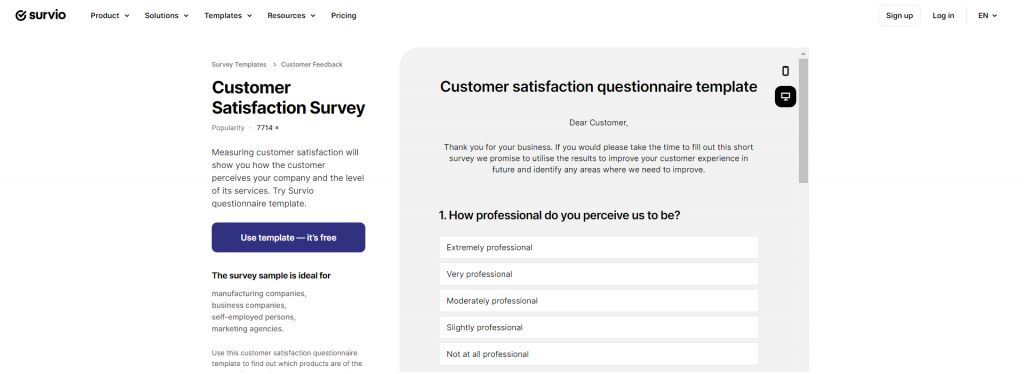
For a small business that does not have a researcher on staff, a well-structured template removes the guesswork around question phrasing, sequencing, and survey length. The automatic data backup to Google Drive, Dropbox, and OneDrive is a small thing but it matters when you are not managing your own data infrastructure.
I have also found the responsive design genuinely reliable. Surveys display cleanly on desktop and mobile without any extra configuration, which is one less thing to check before you hit send.
Best For: Small businesses that need credible, professional surveys quickly and do not have internal research expertise.
Pros:
- 100-plus expert-created templates across major business and research categories
- 70-plus design themes including custom backgrounds and question layouts
- Automatic data backup to Dropbox, Google Drive, and Microsoft OneDrive
- Responsive design that displays correctly across desktop, tablet, and mobile
- Automated response processing for fast analysis of incoming data
Cons:
- No live chat support directly on the platform
- No option to reset response counts on individual surveys
User Rating: 4.5/5 (Capterra)
Pricing: Free plan available. Paid plans start at €12/month.
10. LimeSurvey – Best for Open-Source Flexibility and Community Support
LimeSurvey is for a different kind of small business owner: one who wants control, customization, and is not afraid to engage with an active open-source community to get there. I have used it in research-heavy environments where the standard survey templates were not going to cut it, and the flexibility to customize question types, branching logic, and survey behavior is unmatched at this price point.
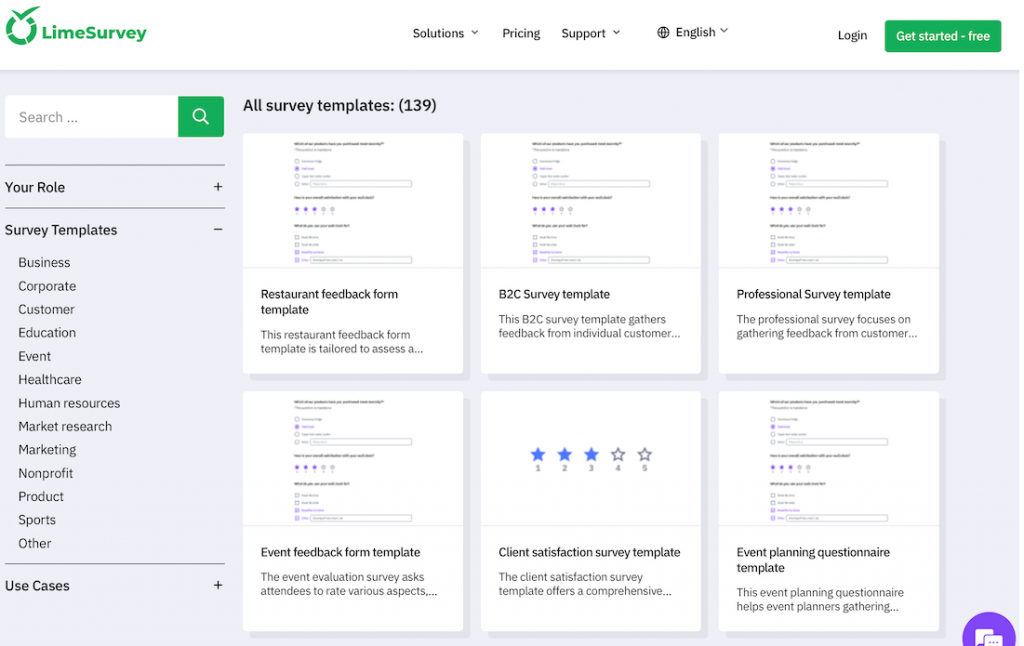
The community is genuinely useful. When I needed help building a custom question type, I found a solution in the forum within a day. For small businesses with specific survey needs that off-the-shelf tools cannot handle, the LimeSurvey community is a resource most comparable tools simply do not have.
The multilingual support and piping features also make it the strongest option on this list for businesses running surveys across different geographies or languages without paying enterprise pricing.
Best For: Small businesses and researchers who need deep customization and want the flexibility and support of an active open-source community.
Pros:
- Survey management tools including scheduling, access controls, and participant tracking
- Question library for saving and reusing frequently used question formats
- Multi-select response options where respondents can choose multiple answers
- Full multilingual support with base language and translation management
- Micro-tailoring and piping for highly personalized survey experiences
Cons:
- Admin interface accessibility could be improved for non-technical users
- Template editor is less intuitive than design-first tools
User Rating: 4.4/5 (Capterra)
Pricing: Free plan available. Paid plans start at $39/month.
How I Chose These Survey Tools
When I put together this list, I was not just looking at feature pages or pricing tables. I went deeper than that, and here is the actual framework I used:
- User Reviews and Ratings: I cross-referenced reviews from G2, Capterra, and Product Hunt. Any tool that was not actively used and reviewed by real small business owners in 2025 and 2026 did not make the cut. If people are not talking about it online, it is not on this list.
- Core Features and Functionality: I focused on what actually matters for small businesses: targeting options, branching logic, response limits on free plans, reporting depth, and integration ecosystem. A tool with 200 features but no CRM integration or mobile optimization is not useful.
- Ease of Use: I paid close attention to time-to-first-survey. If setup requires a dedicated onboarding session or technical documentation, it loses points. Small business owners need tools they can pick up and use the same week.
- Customer Support: I tested support response quality for each tool. Implementation is where most survey programs fail. Strong onboarding and responsive support make a material difference in whether the tool actually gets used.
- Value for Money: I compared what each paid plan delivers relative to its price. Some tools charge 40 dollars a month for features like skip logic that should be standard. I flagged those and deprioritized them.
- Personal Experience and Expert Inputs: Every tool I have listed here has either been used by me directly or by peers and clients I have worked with closely. I also drew on community research from Reddit’s r/smallbusiness and r/Entrepreneurs threads as well as Quora discussions on survey tools for startups.
My Top 3 Survey Software Picks
If I had to narrow this down to three tools for a small business owner who is starting from scratch or replacing a tool that is not working, these are my recommendations.
1. Qualaroo
Qualaroo is the one tool I keep coming back to when the goal is feedback quality over survey volume. The Nudge™ format means I am collecting responses from people who are actively engaged with a product or page, not people who clicked a survey link in an email three days after the moment that mattered. The AI sentiment analysis means I am not drowning in open text.
2. ProProfs Survey Maker
ProProfs Survey Maker earns its spot because it genuinely covers more ground than any other tool at this price point. I have used it for customer feedback, employee engagement surveys, lead qualification, and post-event research all within the same platform. The AI survey builder is fast enough that I am not spending my afternoon writing questions, and the CRM integrations mean response data actually flows somewhere useful.
3. SurveyMonkey
SurveyMonkey is the reliable workhorse. It is not the most exciting tool on this list, but the depth of its template library, the quality of its reporting dashboards, and the breadth of its integrations make it a strong fit for small businesses that are running ongoing survey programs across customer satisfaction, market research, and employee feedback.
FREE. All Features. FOREVER!
Try our Forever FREE account with all premium features!
5 Survey Templates You Can Use Right Now
I am not a fan of starting from a blank page, especially when I’m already juggling five other things. These are the exact survey templates I use and recommend most often for small businesses, written out so you can copy them directly into any online survey software for business on this list.
If you are using Qualaroo, these translate cleanly into Nudge™ surveys with behavioral triggers already mapped.
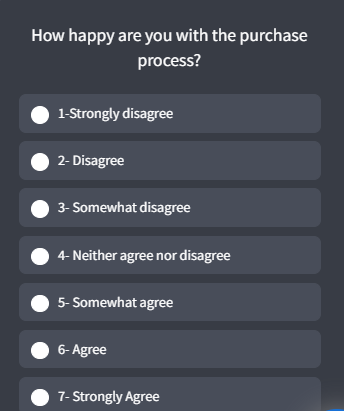
Template 1: Post-Purchase Customer Satisfaction (3 Questions)
Best triggered 24 to 48 hours after a purchase or service completion. Keep it to three questions so completion rates stay above 60%.
Q1: How satisfied are you with your recent experience? (Scale: 1 to 5)
Q2: What was the main reason you chose us over other options? (Open text)
Q3: How likely are you to recommend us to a friend or colleague? (Scale: 0 to 10, NPS format)
How to use this: Route anyone who scores 9 or 10 on Q3 to a review request. Route anyone who scores 6 or below to a follow-up email from your support team. You can set this logic up natively in Qualaroo or connect it to HubSpot via integration.
Here’s a pre-made/readymade post-purchase customer satisfaction template for your ease.
Template 2: Website Exit Intent Survey (2 Questions)
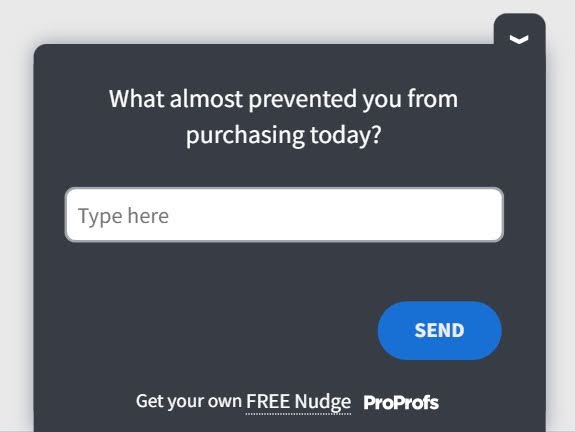
Best deployed as an exit intent Nudge™ on your pricing or checkout page. Two questions maximum. You will lose them if you go longer.
Q1: What stopped you from completing your purchase today? (Multiple choice: Price, Not sure it’s the right fit, Need more information, Just browsing, Other)
Q2: Is there anything we could have done better? (Open text, optional)
How to use this: The multiple-choice responses tell you your conversion blockers at scale. The open text gives you the language your customers use to describe the problem, which feeds directly into your copy and product decisions. Qualaroo’s exit intent targeting fires this survey the moment someone moves to leave the page, not after they are already gone.
Here’s a pre-made/readymade exit-intent survey template for your convenience.
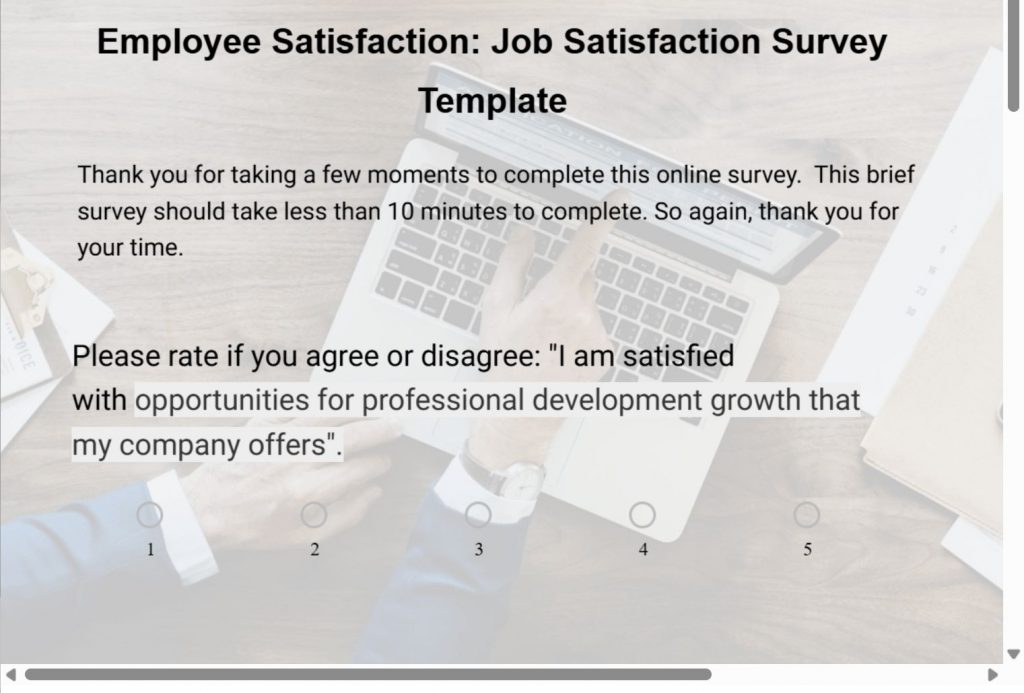
Template 3: Quarterly Employee Pulse (5 Questions)
Run this anonymously, every quarter. Five questions, fully anonymous, take under three minutes to complete.
Q1: On a scale of 1 to 10, how motivated do you feel about your work right now?
Q2: Do you have a clear understanding of your priorities for this quarter? (Yes / Mostly / No)
Q3: What is the biggest blocker preventing you from doing your best work? (Open text)
Q4: How supported do you feel by your manager? (Scale: 1 to 5)
Q5: Is there anything leadership should know that you have not had a chance to say? (Open text, optional)
How to use this: Anonymity is non-negotiable for Q3 and Q5 to produce honest answers. Use Qualaroo’s anonymous collection settings. Review results as patterns rather than individual responses, and share a summary with the team within 2 weeks of survey closure.
For easy creation, you can use this employee job satisfaction survey template.
Template 4: New Customer Onboarding Check-In (4 Questions)
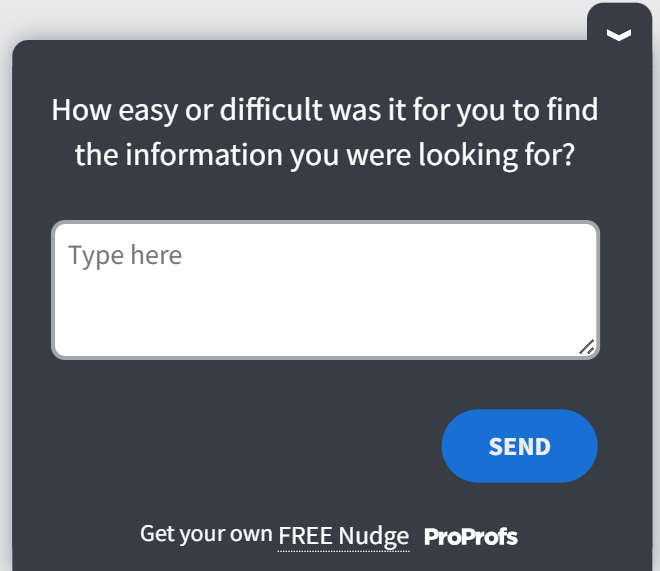
Trigger this at the 7-day or 14-day mark after a new customer signs up or starts using your product. The goal is to catch confusion before it becomes churn.
Q1: How easy was it to get started with us? (Scale: 1 to 5)
Q2: Have you been able to accomplish what you came here to do? (Yes / Not yet / Partially)
Q3: What, if anything, has been confusing or frustrating so far? (Open text)
Q4: What would make the biggest difference for you in the next 30 days? (Open text)
How to use this: Anyone who answers Q2 with “Not yet” or “Partially” should trigger an automatic follow-up from your customer success team. In Qualaroo, you can set this as a timed in-app Nudge™ so it fires automatically at day 7 without any manual work on your end.
For easy creation, use this new customer onboarding survey template.
Template 5: Market Research / Prospect Survey (5 Questions)
Use this before launching a new product, service, or pricing tier. Send it to your email list, warm leads, or past customers.
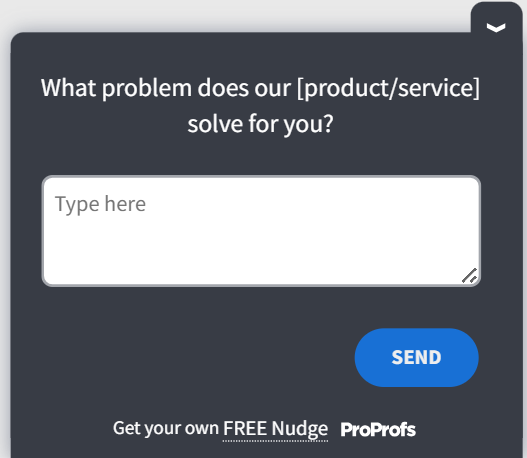
Q1: What is your biggest challenge when it comes to [topic your product solves]? (Open text)
Q2: How are you currently solving this problem? (Multiple choice: Spreadsheets, A different tool, Manually, Not solving it yet, Other)
Q3: What would a perfect solution look like for you? (Open text)
Q4: How much would you be willing to pay monthly for a tool that fully solved this? (Multiple choice price ranges)
Q5: Would you be open to a 15-minute conversation about this? (Yes / No)
How to use this: Q1 and Q3 responses are gold for product and marketing copy. Q5 identifies your most engaged prospects for customer development calls. Run this in ProProfs Survey Maker or SurveyMonkey if you are distributing via email. If you want to run it directly on a landing page, Qualaroo’s web survey targeting lets you show it to specific visitor segments without interrupting everyone.
For easy creation, you can use this market research survey template.
What Are Small Business Owners Actually Struggling With When It Comes to Survey Tools?
I spent time in Reddit threads and Quora discussions before writing this, and the same problems come up over and over. These are not theoretical pain points. They are the exact reasons small business owners switch tools or give up on surveys entirely.
1. The Free Tier Trap
The Problem
Many survey tools advertise generous free plans, but small businesses often discover important limitations only after collecting a handful of responses. Features such as advanced logic, branding removal, and higher response limits are frequently locked behind expensive upgrades.
The Solution
- Check response limits before choosing a free plan.
- Compare what features are included versus paywalled.
- Verify whether your collected data remains accessible if you downgrade.
- Estimate your monthly response volume to avoid unexpected upgrades.
- Look for tools that offer essential features like logic and reporting without forcing an immediate paid plan.
2. Survey Fatigue and Low Completion Rates
The Problem
Many small business owners send surveys but receive very few responses. In most cases, the issue isn’t the survey questions. It’s poor timing, excessive length, or asking customers long after the interaction has happened.
The Solution
- Keep surveys short and focused on one goal.
- Trigger surveys immediately after key customer actions.
- Use in-app, website, or post-purchase surveys instead of relying solely on email.
- Ask only the most important questions first.
- Personalize survey invitations whenever possible.
3. Data Living in a Silo
The Problem
Collecting feedback is easy. Acting on it is harder. When survey data sits in spreadsheets or disconnected reports, teams often stop reviewing it, and valuable customer insights go unused.
The Solution
- Choose tools that integrate with your CRM and marketing platforms.
- Automatically route feedback to the right team members.
- Connect survey responses to customer profiles.
- Use integrations with tools like HubSpot, Salesforce, Slack, or email platforms.
- Create workflows that trigger follow-up actions based on survey responses.
4. Logic Complexity Without Technical Help
The Problem
Conditional logic helps businesses ask better questions and gather more relevant insights. Unfortunately, many survey tools make branching and targeting difficult for non-technical users, leading to generic surveys and poor-quality data.
The Solution
- Look for drag-and-drop survey builders.
- Choose tools with visual branching and skip-logic editors.
- Test survey flows before launching them.
- Start with simple conditions and expand as needed.
- Prioritize ease of use over advanced features you’ll never use.
Build the Feedback System You Will Actually Use
Now you know what survey software do businesses use. But remember, the goal here is not to pick the survey tool with the most features. It is to build a feedback system you will actually run consistently, one that connects the voices of your customers and team to the decisions you make every week.
The best survey software for small businesses is the ones that meet respondents where they are, connects seamlessly to your existing workflow, and surface insights fast enough to be useful. Start with a clear use case. Pilot before you buy. And prioritize tools with real integrations over tools that require you to manually manage your data.
If you are building a feedback program from scratch and need one starting point, I would go with Qualaroo for in-context, real-time feedback from your website or product. The Nudge™ format, behavioral targeting, and IBM Watson sentiment analysis give you the kind of feedback quality that most tools at this price point simply cannot match.
Pair it with a simple NPS email survey from ProProfs Survey Maker for your broader customer base, and you have a system that covers both active users and the wider customer lifecycle.
Frequently Asked Questions
What is the best free survey tool for small businesses?
The best free survey tool depends on your primary use case. Qualaroo offers a free plan with all premium features for up to 50 responses, making it ideal for in-app and on-site feedback. ProProfs Survey Maker offers a forever free plan with AI-assisted creation. LimeSurvey has the most generous free tier for research-heavy needs at 25 responses per month with full open-source flexibility.
How many questions should a small business survey have?
For customer satisfaction and NPS surveys, aim for three to five questions. For market research or product feedback, seven to ten questions is a reasonable ceiling. Surveys over ten questions see significantly higher drop-off rates, especially on mobile devices. The rule I follow: if a question is not going to change a decision, cut it.
What is the difference between NPS, CSAT, and CES surveys?
NPS (Net Promoter Score) measures how likely a customer is to recommend you, typically on a 0 to 10 scale. CSAT (Customer Satisfaction Score) measures satisfaction with a specific interaction or experience. CES (Customer Effort Score) measures how easy it was for a customer to complete a task or resolve an issue. NPS is best for tracking long-term loyalty. CSAT and CES are best for evaluating specific touchpoints.
How do I improve survey response rates as a small business?
The most effective tactics are: triggering surveys in-context while the respondent is engaged rather than sending follow-up emails, keeping surveys under five minutes, making surveys mobile-optimized, and being transparent about how you will use the feedback. Personalized survey invitations also outperform generic blasts by a significant margin.
Can survey tools integrate with my CRM?
Yes. Most of the tools on this list integrate with major CRMs like HubSpot and Salesforce either natively or via Zapier. Qualaroo, ProProfs Survey Maker, SurveyMonkey, and involve.me all have direct HubSpot integrations. Native integrations are more reliable than Zapier-dependent connections for automated workflows.
Are anonymous surveys more accurate than identified surveys?
For sensitive topics like employee satisfaction, customer complaints, or product frustrations, anonymous surveys consistently produce higher response rates and more honest answers. Tools like SurveyKing are specifically built for this, storing no IP addresses, device data, or submission metadata. For general customer feedback, identified surveys are fine and allow follow-up.
What should I do with survey data after I collect it?
Collect, segment, and act. Segment responses by customer type, lifecycle stage, or NPS score. Route detractors to a follow-up workflow. Share patterns with your team monthly. And close the loop with respondents by communicating what changed as a result of their feedback. Data that does not drive decisions is not worth collecting.
FREE. All Features. FOREVER!
Try our Forever FREE account with all premium features!

 We'd love your feedback!
What did you like & how can we make it even better?
 Thanks for your feedback!
 Ask Your Question
Have a question? Get expert help to make your decision easier.