Every product team reaches that point eventually.
You’ve got plenty of customer data and segments that look sharp in presentations. But in reality, you’re often one step behind. Users switch devices, revisit ideas days later, or shift their intentions unexpectedly, and your segments don’t quite capture it.
The issue isn’t a lack of effort. It’s a lack of leverage.
Customer behavior has evolved beyond traditional segmentation. People aren’t static; they bounce around, hesitate, and change minds mid-journey. No matter how thoughtfully you build them, fixed segments can’t keep pace.
That’s where AI customer segmentation comes in. It turns segmentation from a periodic planning tool into a dynamic, real-time system, one that adapts as behaviors shift.
When you make this shift, segmentation stops feeling like a quarterly chore and starts acting like infrastructure.
This guide walks you through exactly how to get there. Let’s dive in.
What Is AI Customer Segmentation?
AI customer segmentation is how you group customers based on what they do and what they are likely to do next, not just who they are on paper.
Instead of locking people into fixed buckets, AI models continuously re-group customers as behavior changes. The output is not a static list. It is a live system that updates as intent evolves.
If you are making decisions weekly or daily, this matters more than you think.
Traditional Segmentation vs AI Customer Segmentation
| Traditional Customer Segmentation | AI Customer Segmentation |
|---|---|
| Describes what has already happened | Predicts what is likely to happen next |
| Built on demographics and firmographics | Built on real behavior and intent signals |
| Created manually and updated infrequently | Updated automatically as behavior changes |
| Uses fixed rules and static buckets | Uses probabilities and dynamic grouping |
| Optimized for reporting | Optimized for action |
If your segmentation cannot influence the next action you take, it is reporting, not segmentation.
Static Segments vs Dynamic, Intent-Driven Segmentation
Static segments assume customers stay consistent long enough for you to act. They rarely do.
Dynamic segmentation treats behavior as the source of truth. When intent changes, the segment changes. No manual refresh required.
For example:
- A user revisiting pricing repeatedly moves into a high-intent segment automatically.
- An admin who skips activation steps is flagged for intervention, not grouped as “active.”
- A returning user who abandons the same flow twice is treated differently from a first-time visitor.
This is not personalization for its own sake. It is decision accuracy. AI customer segmentation shortens the gap between customer behavior and your response.
How AI Customer Segmentation Works
At its core, AI customer segmentation is a data system, not a workflow.
What matters here is not what your team clicks or configures, but how signals move through the system, how patterns are learned, and how segments stay current without constant human intervention.
Once you understand this backend flow, the usage decisions become obvious.
1. Collecting Behavioral Signals at Scale
AI segmentation starts with behavioral exhaust. Every meaningful customer action becomes a signal, not in isolation, but as part of a sequence of events. Page views, feature usage, drop-offs, retries, pauses, and returns all matter because they reveal intent over time.
The system does not care whether a signal looks “important” in isolation. It cares about patterns across many users and many sessions.
This is why behavior consistently outperforms demographics. Behavior changes. Demographics do not.
2. Resolving Identity Across Touchpoints
Before any learning happens, the system has to answer one question reliably: who did this?
AI segmentation depends on stitching together activity from multiple surfaces, web, product, email, support, billing, and feedback, into a single customer profile.
Without identity resolution, the model sees fragments. With it, the model sees journeys. Here’s an example:
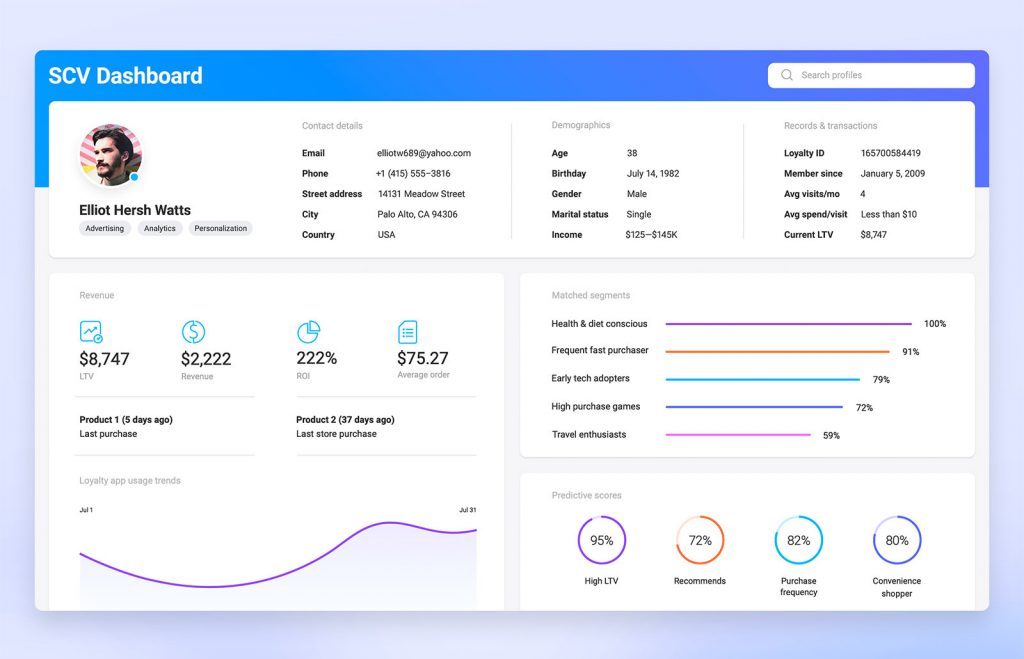
This layer is invisible when it works and catastrophic when it does not. No amount of modeling can recover from broken identity mapping.
3. Learning Patterns and Relationships
Once behavior and identity are stable, models begin learning relationships humans cannot spot manually.
They look for:
- Sequences that correlate with conversion or churn
- Combinations of actions that signal hesitation or readiness
- Timing patterns that affect outcomes
- Cross-channel interactions that influence decisions
This is where AI segmentation diverges from rules-based logic. The system is not told what matters. It learns what matters by observing outcomes repeatedly.
4. Updating Segments as Behavior Changes
The final piece is continuous adaptation.
Segments are not fixed outputs. They are recalculated as new data enters the system. A customer can move between segments multiple times as intent evolves.
This is the defining difference between AI segmentation and traditional approaches. The system does not wait for a human to refresh logic or rebuild cohorts. It adjusts automatically as behavior shifts.
That is why AI customer segmentation behaves less like analysis and more like infrastructure.
AI Models Used in Customer Segmentation
You do not need to understand machine learning to use AI customer segmentation well.
What matters is knowing what kind of questions the system can answer and what decisions it helps you make faster.
Different models exist for different jobs. Think in terms of capabilities, not algorithms.
1. Models That Group Similar Behaviors
Some systems are designed to answer a simple question: which customers behave in similar ways?
They look across many signals and cluster customers based on patterns that show up repeatedly. No rules, no assumptions upfront.
This is useful when:
- Your current segments feel arbitrary
- Manual rules keep breaking
- You want a baseline view of how users naturally group themselves
This type of modeling replaces guesswork with observed behavior. It gives you a starting point you can trust.
2. Models That Surface Hidden Patterns
As products grow, behavior gets messy. Two users can look “active” while using the product in completely different ways.
Some models specialize in cutting through that noise. They compress large volumes of behavioral data into clearer patterns, so subtle differences stand out.
This enables:
- Smaller, more precise segments
- Clearer separation between high-value and low-value usage
- Better targeting without adding more rules
You use this when everything looks average, and nothing feels actionable.
3. Models That Learn From Long-Term Behavior
Not all decisions happen in one session.
Some systems are built to understand how behavior evolves over time. They recognize slow drop-offs, delayed adoption, or gradual build-up toward a decision.
This is what makes it possible to:
- Predict churn before it happens
- Spot expansion potential early
- Understand lifecycle stages realistically
If your product’s value shows up over weeks or months, this capability matters more than any single click.
4. Models That Connect the Full Customer Journey
The most advanced systems look across the entire journey at once.
They do not treat web activity, product usage, emails, and support interactions as separate streams. They learn how these touchpoints interact with one another.
This helps teams:
- Make sense of complex, non-linear journeys
- Avoid oversimplified attribution
- Focus on the signals that actually move decisions
Most teams grow into this over time. It becomes important once segmentation is tied directly to revenue, retention, or the quality of the experience.
The takeaway is straightforward: the best model is the one that sharpens your next decision. Complexity only helps if it leads to clearer action.
From Segments to Action: Using AI Customer Segmentation
AI customer segmentation only matters if it changes what you do.
This section shows how teams actually turn segments into action, without overthinking it or adding process overhead.
Step 1: Decide What Each Segment Triggers
Start with a rule that keeps things simple.
Every segment must trigger one clear action: a message, prompt, question, or intervention.
If a segment exists only to be watched, it is not helping you. It is just a report.
This rule forces focus and prevents you from creating segments you never use.
Step 2: Make Segments Show Up Where Work Happens
Segments lose value when they live in dashboards that no one checks.
For segmentation to work, it needs to show up in the tools and workflows your teams already use. Marketing, product, support, and research should all be working from the same view of user behavior.
In practice, this looks like:
- High-intent users get different messaging
- At-risk users get help sooner
- Confused users get guidance
- Certain users get asked questions at the right moment
The idea is simple: segments should move toward action, not wait for review.
Step 3: Ask Questions When Context Is Fresh
This is where segmentation makes feedback useful.
Most feedback is collected on a schedule. But user behavior does not follow schedules. Timing alone isn’t enough. Precision comes from targeting by role, behavior, and context. In fact, here’s a detailed video to learn more about advanced targeting:
Segmentation lets you ask questions when something just happened:
- Right after hesitation
- Right after abandonment
- During repeated attempts
- After partial success
When you ask in the moment, users do not have to remember what went wrong. They just tell you.
Step 4: Use a Small Set of Repeatable Questions
You do not need new questions every time.
A few simple templates cover most situations and keep teams moving fast.
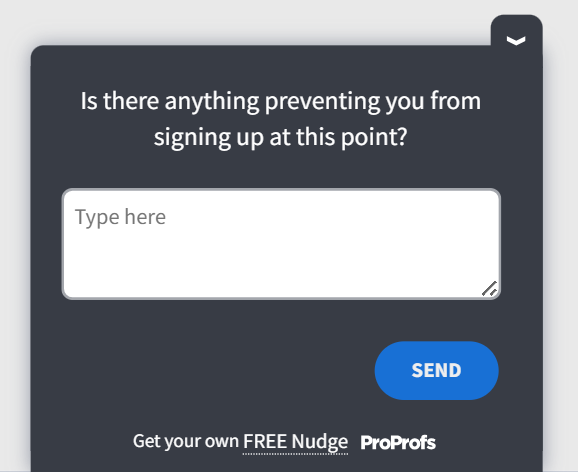
Template 1: Hesitation Check
- Trigger: Repeated pricing or plan views
- Question: “What’s stopping you from moving forward today?”
You can use and tweak this easy survey template for hesitation checks:
Template 2: Setup Friction
- Trigger: Abandoned setup step
- Question: “What made this step unclear or difficult?”
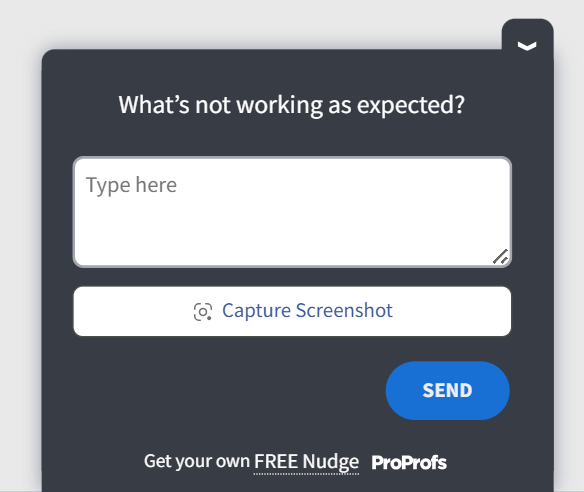
For friction, here is a quick template you can use:
Template 3: Role-Based Check
- Trigger: After the first week
- Question: “What part of your workflow still feels harder than it should?”
These work because they are short, clear, and asked at the right time.
Step 5: Look at Responses by Segment, Not in Bulk
Feedback only becomes useful when you know who it came from and why it was triggered.
Instead of looking at overall scores or raw comments, tie responses back to:
- The segment the user was in
- The behavior that triggered the question
- Where they were in the journey
This makes patterns obvious and keeps you from chasing one-off opinions.
Step 6: Feed What You Learn Back Into the System
The last step closes the loop.
What you learn from feedback should change:
- How you interpret segments
- Which actions trigger next
- What assumptions you need to fix
This is how segmentation improves over time. Segments drive action. Action produces feedback. Feedback sharpens segmentation.
That loop is what turns AI customer segmentation into something you actually rely on.
FREE. All Features. FOREVER!
Try our Forever FREE account with all premium features!
Where AI Customer Segmentation Fails in Practice
Most AI customer segmentation projects do not fail because the idea is flawed. They fail because teams underestimate what it takes to keep segmentation useful over time. These are the problems that show up after launch, not during evaluation.
| Where It Breaks | What Goes Wrong | What It Looks Like in Reality |
|---|---|---|
| Bad Inputs | Messy or incomplete data feeds the system | Segments look precise, but lead to bad decisions |
| Weak Tracking | Key actions are not captured consistently | Important behavior never shows up in segments |
| Broken Identity | Users appear as multiple people | Segments reflect fragments, not journeys |
| Built-in Bias | Historical decisions get repeated | Certain users or segments are favored by default |
| Low Trust | Segment changes feel unexplained | Teams override or ignore the output |
| No Ownership | No one is responsible long-term | Segments exist but are not used |
| Too Many Segments | Complexity grows without action | Teams stop knowing which segments matter |
| No Maintenance | Segments never get revisited | Once-useful segments quietly go stale |
Use this table as a checklist.
If you can clearly answer who owns segmentation, how inputs stay clean, and which segments drive action, you are ahead of most teams.
If not, fix that before adding more intelligence.
Do We Still Need Segmentation in an AI-Driven World?
Yes, segmentation still matters. What has changed is how it gets used.
AI does not remove the need for segmentation. It removes the manual work that made segmentation slow, brittle, and hard to maintain. Someone still has to decide which customers you want to serve, which behaviors matter, and what success looks like. That is a strategy, and AI cannot own it for you.
Where AI steps in is execution, handling the constant re-grouping that used to require rules, refreshes, and endless debate. As behavior changes, segments update automatically. This is where the idea of a “segment of one” actually becomes practical. Not because you stop thinking in segments, but because the system adapts faster than a human ever could.
The mistake teams make is blurring strategy and execution. When humans try to manage every segment by hand, things become rigid. When AI is left to decide everything, focus disappears. The balance is simple: humans set direction, AI handles timing and precision.
The real shift is not asking whether segmentation is still needed. It is deciding what role segmentation should play now. Used correctly, segmentation provides clarity, AI provides speed, and feedback keeps the system honest.
That combination is what allows segmentation to scale without losing intent.
AI Makes Customer Segmentation Finally Useful
AI customer segmentation is not about being more clever with data. It is about being faster and more accurate with decisions.
Segmentation still performs the same job it has always done. It creates focus. What has changed is execution. AI removes the lag between behavior and response, which is where most teams used to lose momentum.
This only works when teams preserve context at the point of interaction. Whether that is through targeted messaging, in-app prompts, or contextual feedback collection using tools like Qualaroo, the goal is the same: act while the signal is still clean.
Do that well, and segmentation stops being an analytics exercise. It becomes a quiet system your team relies on every day.
Frequently Asked Questions

What are the different types of segmentation in AI?
AI segmentation commonly includes behavioral segmentation based on actions, predictive segmentation based on likely outcomes, role-based segmentation tied to responsibilities, and journey-based segmentation aligned to lifecycle stages. These types often work together to keep segments current as behavior and intent change.
How does AI customer segmentation improve customer feedback?
AI segmentation adds context to feedback by linking responses to behavior, role, and timing. Instead of collecting generic opinions, teams capture feedback when something meaningful happens, which improves signal quality and helps identify repeatable problems rather than isolated comments.
What data matters most for AI customer segmentation?
Behavioral data matters most. Actions taken, actions skipped, frequency of use, drop-offs, retries, and timing between events reveal intent far better than demographics. Contextual feedback strengthens this data by explaining why certain behaviors occur.
Is AI customer segmentation useful outside marketing?
Yes. Product, CX, and support teams often benefit first. Segmentation helps them spot friction early, prioritize fixes, understand role-specific issues, and intervene before churn. The biggest impact usually comes when segmentation is shared across teams, not isolated to marketing.
FREE. All Features. FOREVER!
Try our Forever FREE account with all premium features!

 We'd love your feedback!
What did you like & how can we make it even better?
 Thanks for your feedback!
 Ask Your Question
Have a question? Get expert help to make your decision easier.