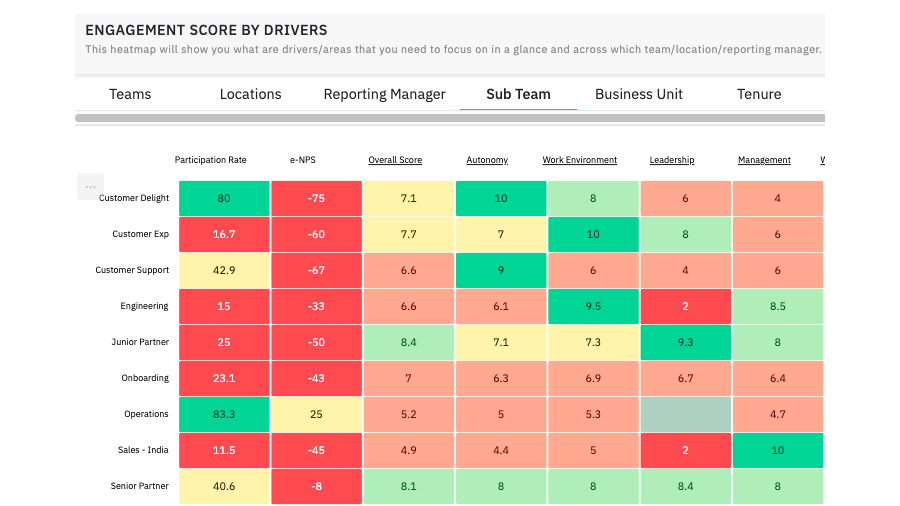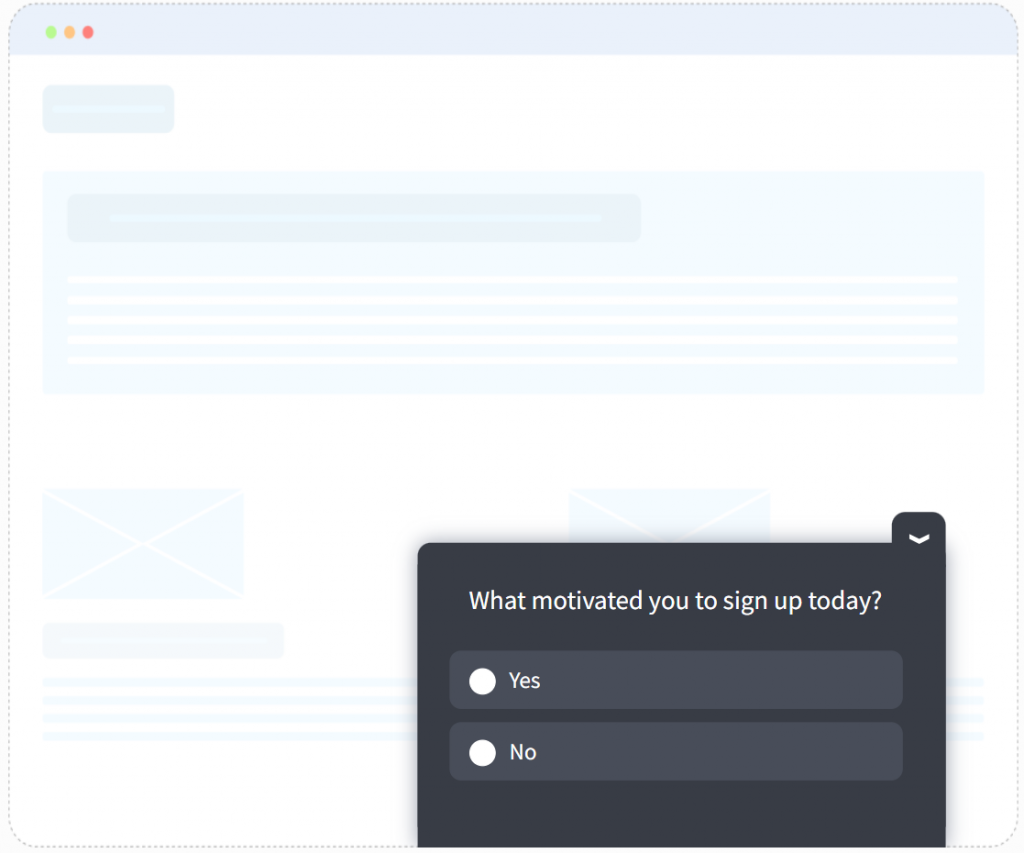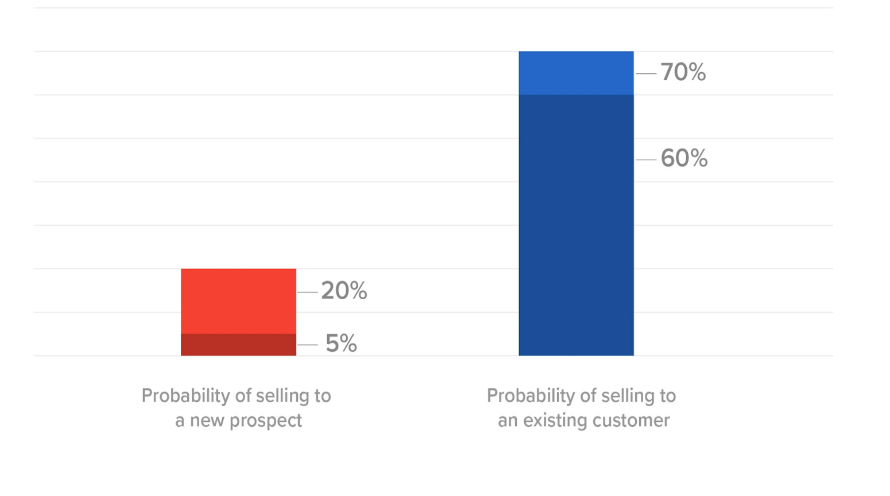

Employee experience management sounds like one of those “of course we do that” things, right up until you look at the evidence: the same policy, the same perks, the same values poster, and wildly different day-to-day reality depending on which manager someone rolls up to.
I’ve seen the pattern on repeat. You launch a survey, people give you the truth, the dashboard fills up, and then the organization moves on like it just “checked the EX box.”
Employees are not voiceless. The fastest way to kill trust is to ask for feedback and then go quiet. That silence is louder than a bad score. Hybrid work adds a new flavor of chaos. Burnout hides behind “active” dots, and the worst teams respond by measuring presence instead of outcomes.
That is how you end up with productivity theater: mouse jigglers, fake meetings, and a workforce that looks busy while morale quietly slips.
Done right, employee experience management is an operating system. You listen at the right moments, turn feedback into decisions, and assign fixes to a named owner with a deadline.
This guide shows what actually works, what to fix first, and how to make progress in 30 days.
What Is Employee Experience Management?
Employee experience management is how you run the full employee journey with intent instead of hope.
At a practical level, it means three things:
- You listen to employees at moments that actually matter.
- You turn that feedback into signals you can act on.
- And you make sure someone owns the fix, with a clear timeline.
This is where most teams get tripped up. They confuse employee experience with workplace experience. Nice tools, better benefits, and a refreshed handbook are helpful, but they are not management. They are inputs. Experience is what happens when those inputs collide with real managers, real workloads, and real trade-offs.
Employee experience management focuses on how work feels over time. Onboarding momentum. Growth clarity. Day-to-day friction. Burnout signals. Exit patterns. It connects those moments instead of treating them as one-off initiatives.
The key difference is accountability.
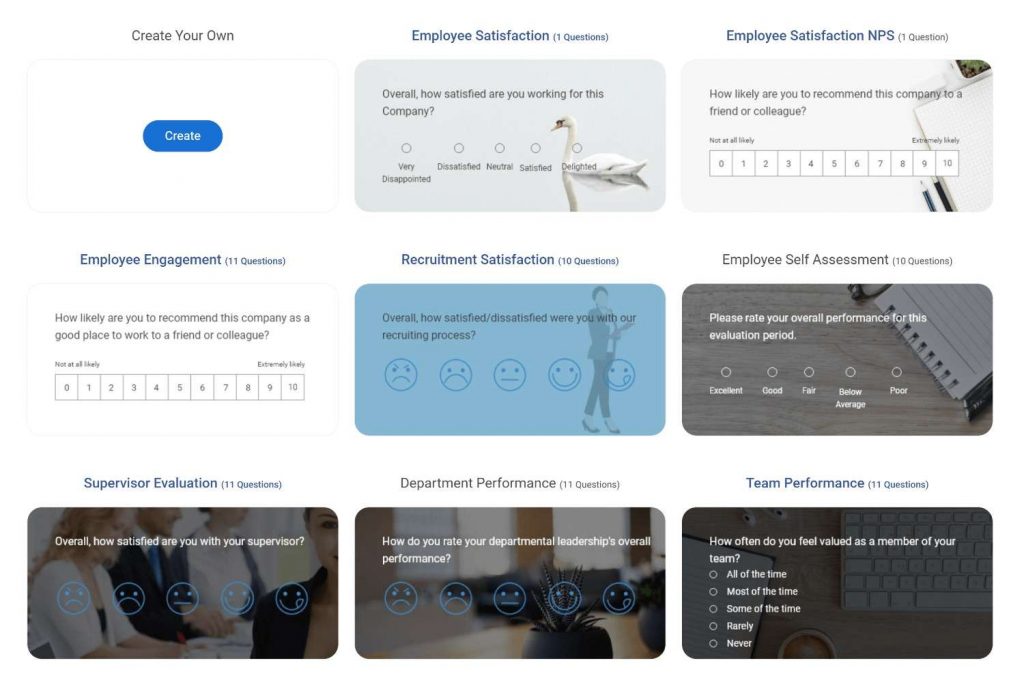
Fewer surveys, cleaner signals, faster fixes, and a workforce that believes speaking up is worth the effort. Here are a few employee survey templates you can tweak and use for regular pulses:
The Employee Journey: 4 Phases Every EX Program Must Support
If employee experience feels hard to manage, it is usually because it is not mapped. You cannot fix what you cannot see, and most teams are trying to improve experience without agreeing on where it actually breaks.
Think of the employee journey as four distinct phases. Each phase creates a different kind of trust or friction. When you manage them deliberately, experience becomes predictable instead of reactive.
Phase 1: Onboarding & First 90 Days
This phase sets the emotional baseline. Employees decide very early whether joining was a smart move or a mistake.
What matters here is not culture decks or welcome emails. It is access on day one, clarity in week one, and support in month one. When any of those slip, confidence drops fast.
A strong start means employees know what success looks like, who to go to for help, and how work actually gets done. A weak start creates anxiety that lingers long after onboarding technically ends.
Phase 2: Growth & Contribution
Once the basics are covered, employees shift focus from settling in to moving forward.
This phase is about progress. People want to understand how they grow, how decisions are made, and whether effort leads to meaningful outcomes. When growth feels slow or arbitrary, motivation quietly fades.
Healthy experiences here feel fair and transparent. Unhealthy ones feel political and closed. Over time, that difference decides whether people invest deeper or start disengaging while still delivering the minimum.
Phase 3: Sustain & Well-Being
This is where good teams quietly win.
Sustainment is not about perks or time off policies. It is about whether work is mentally sustainable day after day. When pressure, ambiguity, or constant interruption pile up, performance eventually drops, even if hours stay the same.
A healthy experience here feels focused and manageable. An unhealthy one feels endless and noisy. The danger is that burnout rarely announces itself until it is too late.
Phase 4: Exit, Advocacy & Alumni
Every journey ends, but it does not have to end badly.
Exits are your truth serum. Handle them well, and you get a clean signal + future advocates. Handle them poorly, and you lose both.
When exits are handled thoughtfully, you get clarity instead of defensiveness. When they are rushed or ignored, you lose the last honest signal an employee will give you.
Managing all four phases together is what turns employee experience from a series of disconnected initiatives into something you can actually run with confidence.
Employee Experience Maturity Checklist: Where do You Stand?
Before you add more programs or tools, you need to know what stage you are actually operating at.
Most teams think they have an employee experience strategy. In reality, they have a collection of good intentions and disconnected efforts. This quick checklist helps you spot the gap without overthinking it.
| If This Sounds Like You | Your Employee Experience Is Likely Stuck Here | What That Means in Practice |
|---|---|---|
| Surveys run once or twice a year | Reactive | You learn about problems after people are already disengaged |
| Feedback lives in dashboards | Observational | You can see issues, but rarely fix them |
| HR owns all follow-ups | Centralized | Managers stay passive, change moves slowly |
| Participation keeps dropping | Eroding trust | Employees do not believe feedback leads to action |
| Actions are vague or invisible | Performative | Experience feels talked about, not improved |
Now compare that with a more mature setup:
| If This Is True | Your Employee Experience Is Operating Here | What That Looks Like Day to Day |
|---|---|---|
| Listening happens at key moments | Intentional | You catch issues early instead of reacting late |
| Feedback is tagged and routed | Actionable | The right people see the right signal |
| Managers own fixes | Distributed | Change happens closer to the problem |
| Employees see follow-through | Credible | Participation stays high without chasing |
| Progress is reviewed regularly | Operational | Experience improves in visible increments |
You do not need to be perfect to move forward. You just need to be honest. Once you know where you stand, it becomes much easier to decide what to fix first and what to ignore for now.
The Biggest Employee Experience Challenges (And What Actually Breaks)
Most employee experience problems are predictable. They show up in different forms, but they fail for the same underlying reasons. Here are the issues that quietly derail EX when they go unaddressed.
- Inconsistent Manager Experience: Managers have outsized influence, and when expectations, feedback, and decision-making vary by team, employees stop trusting the system and start disengaging.
- Hybrid Blind Spots: Without hallway signals, frustration and burnout stay hidden. Many teams overcorrect by tracking activity instead of outcomes, which increases pressure and encourages productivity theater rather than real work.
- Experience That Feels Fair in Theory, Not in Practice: Career paths look clear on paper, but feel political in reality. When effort does not reliably translate into growth, even strong performers disengage.
These challenges persist because experience is treated as a feeling rather than a system. Naming them clearly is the first step toward fixing the right problems rather than adding more surface-level initiatives.
FREE. All Features. FOREVER!
Try our Forever FREE account with all premium features!
Best Practices for Employee Experience Management (Grouped By Theme)
You do not need 50 “best practices.” You need a few that actually stick.
Culture & Trust
- Standardize Manager Basics: 1:1s, goal clarity, feedback cadence. Consistency beats charisma.
- Make Change Visible: Employees trust what they can see, not what you promise.
Growth & Fairness
- Make Progress Predictable: Clear criteria for growth, promotions, and raises.
- Unblock Internal Mobility: Stop talent hoarding and make moves easier, not political.
- Give Feedback Year-Round: No one should wait 12 months to learn they are off-track.
Well-Being & Sustainability
- Protect Focus Time: Fewer meetings, fewer pings, more deep work.
- Measure Load, Not Hours: Burnout is cognitive overload, not just long days.
- Normalize Recovery: Time off only works if people feel safe taking it.
Tools & Systems
- Ask Less, Learn More: Fewer surveys, better timing, sharper questions.
- Route Feedback to Owners: HR enables, managers fix, leadership removes blockers.
- Review Progress Regularly: Treat EX like a weekly operating rhythm, not a yearly project.
Employee Experience Management Software & Platforms: Turning Feedback Into Action
When EX runs on spreadsheets, two things happen: feedback gets stale, and ownership gets fuzzy. A platform earns its keep when it helps you collect clean signals, spot patterns fast, and route issues to someone who can actually fix them.
1. Qualaroo
Qualaroo is built for targeted, lightweight feedback that does not annoy people. You can run in-app nudges and link surveys, then use AI-powered sentiment analysis to turn open-text feedback into a usable signal faster. It’s a strong fit when you want quick answers tied to real context, not another bloated annual survey.
2. ProProfs Survey Maker
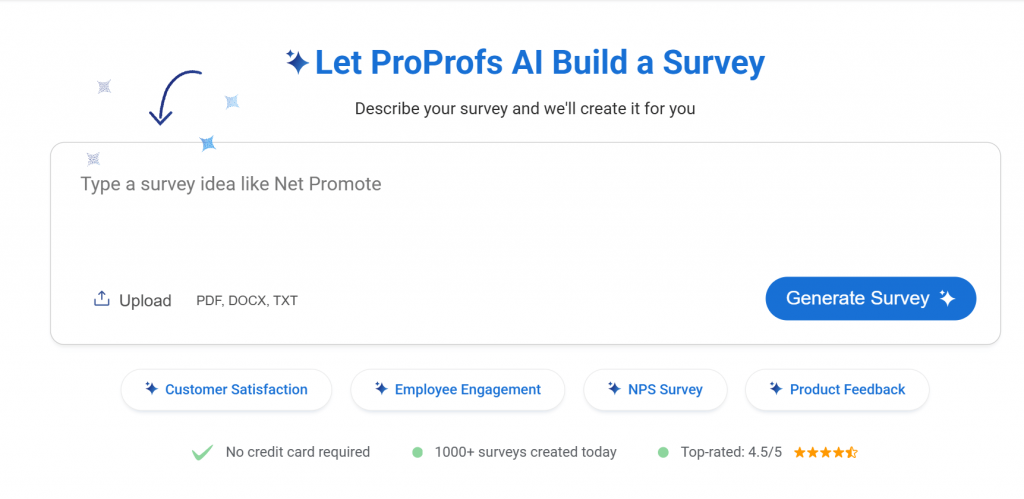
ProProfs Survey Maker is a straightforward way to run structured employee surveys and standardize your listening without a long setup cycle. It offers an AI survey builder, ready-made templates like Employee NPS, plus common formats such as rating scales and NPS-style questions, which help you achieve consistent measurement and clean reporting with minimal fuss.
3. Culture Amp
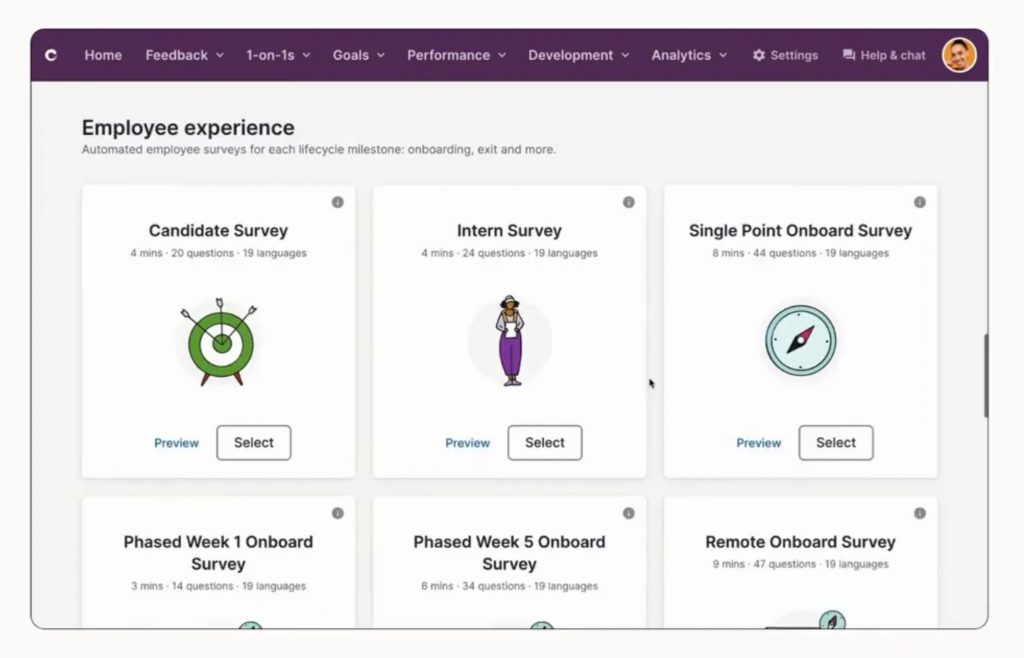
Culture Amp positions itself as an employee engagement platform that supports pulse surveys and helps put results into context with reporting and benchmarks. It’s a good option when you want a more packaged engagement motion that leaders and managers can use to understand engagement drivers and track shifts over time.
4. Qualtrics EmployeeXM
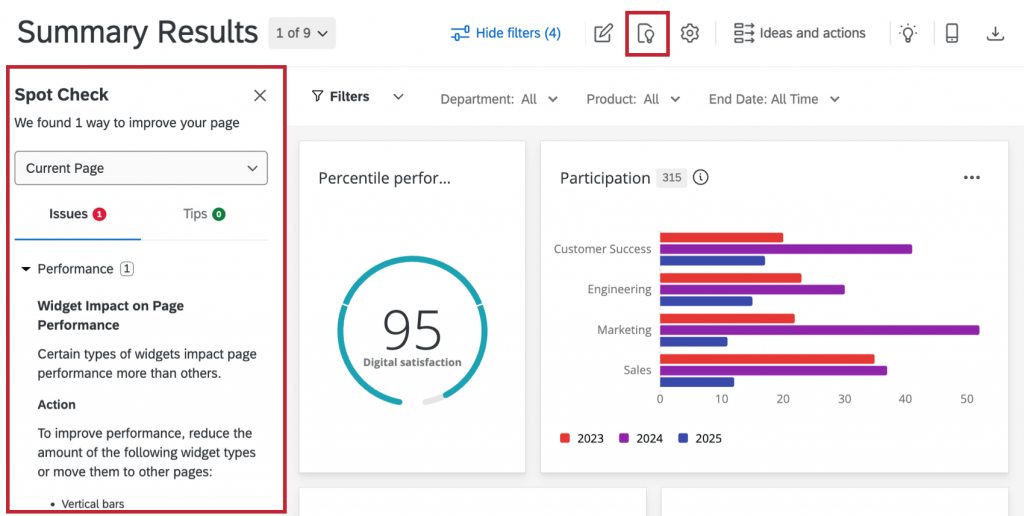
Qualtrics EmployeeXM is a heavyweight EX management option focused on measuring and improving employee experience through structured survey programs and analytics across the employee lifecycle. If you run a complex program and need depth in methodology, dashboards, and program design, this is typically where teams land.
5. Workday Peakon Employee Voice
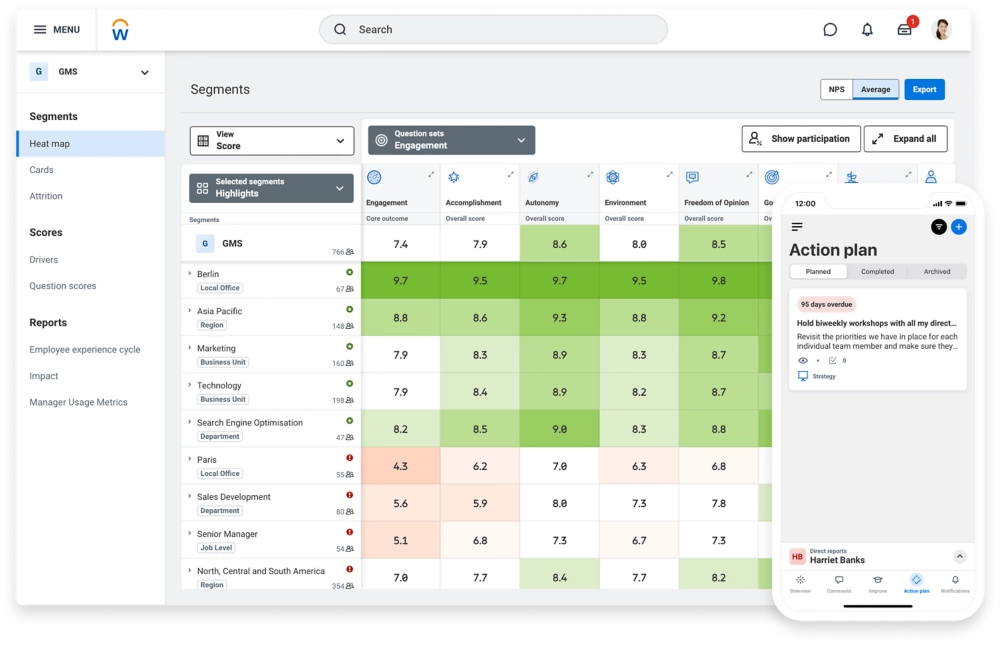
Workday Peakon is positioned as a continuous listening platform that helps you gather employee feedback on an ongoing basis and turn it into real-time insights for action. It’s best when you want always-on listening and are operating at a scale where you need the system to keep the pulse without manual effort.
For a complete package and better employee experience, you can opt for a smarter Employee Learning Suite.
Employee Experience Management Market Trends to Watch
The employee experience (EX) management market is maturing rapidly, shifting from mere sentiment tracking to systems that drive real improvements in work.
The global EX management market was valued at USD 6.7–7.5 billion in 2025 and is expected to grow at a CAGR of 6.8% by 2035, driven by hybrid workforce needs and engagement tools.
Engagement scores are losing their standalone dominance as leaders demand proof of change, such as reduced friction or post-feedback gains. Gallup’s State of the Global Workplace: 2025 report shows global engagement dropped to 21% in 2024 (trends continuing into 2025), costing $438 billion in lost productivity. U.S. engagement held at 31%, near decade lows, fueling skepticism toward static metrics.
Manufactured culture faces rejection, with employees cynical about perks that ignore core needs like fair pay, growth, and psychological safety. Reports highlight priorities such as job security, work-life balance, and relationships over superficial boosts, heightening risks like quiet quitting without authentic conditions.
Hybrid work demands better listening to catch invisible issues early. Gallup data indicate 52% of U.S. remote-capable employees were hybrid in 2025, with engagement higher for fully remote (31%) than hybrid/on-site (~23%). Forrester’s Q2 2025 Wave on EX Platforms stresses combining surveys with action nudges, recognition, and AI “deep listening” to surface burnout and sentiment shifts in distributed teams.
Ownership shifts to managers, with HR enabling systems while managers resolve issues. Platforms route feedback for accountability, backed by guidance. Gallup notes global manager engagement fell to 27% (from 30%), with steeper drops among younger and female managers—rippling to teams and underscoring targeted support.
Simplicity wins over bloated tools. Teams prefer streamlined, high-signal listening with fast action and visible change. Forrester highlights that annual surveys often lead to inaction and declining participation, while top platforms drive impact through nudges, rewards, and quicker results, proving input matters.
The insights from Gallup, Forrester, and market reports make the direction clear: less frequent asking, more precise listening, and faster, demonstrable change to rebuild trust and improve outcomes in hybrid realities.
Run Employee Experience Like a System, Not a Program
Employee experience management does not break because you lack intent. It breaks because no one owns it end-to-end.
When listening is disconnected, feedback becomes noise. When ownership is unclear, nothing changes. And when employees do not see action, trust quietly drains out of the system.
The teams that get this right do a few things well. They map the employee journey. They listen at moments that matter. They route feedback to real owners. And they ship visible fixes on a tight loop.
You do not need more surveys or bigger programs. You need clarity, accountability, and follow-through.
FREE. All Features. FOREVER!
Try our Forever FREE account with all premium features!

 We'd love your feedback!
What did you like & how can we make it even better?
 Thanks for your feedback!
 Ask Your Question
Have a question? Get expert help to make your decision easier.