When I look at customer experience (CX) today, I see a pattern. Customers move quickly, teams move carefully, and the gap between the two creates most of the friction we deal with. AI is supposed to help, and in some places it does, but it also adds new points of uncertainty. None of this is dramatic. It is just the day-to-day reality of building and running products.
You have probably seen the same thing. A small hesitation in a flow. A support ticket that hints at a bigger issue. A customer who leaves without telling you why. These moments add up, and they tell a clearer story than any trend report.
That is why I pulled these statistics together. They give a grounded view of what customers are actually doing and what teams are quietly struggling with behind the scenes. Use it to make one change today. A clearer prompt. A better handoff. A quick question at the right moment.
Let us walk through the numbers. They make the picture sharper.
What Customer Experience Is and Why It Matters
Customer experience is the sum of how people feel when they try to use what you built. It covers every moment, planned or unplanned. Most teams think about CX as a set of touchpoints. Customers experience it as a single story. A smooth moment strengthens it. A rough moment weakens it.
What Customer Experience Actually Covers
CX includes four simple areas:
- How easily someone can understand what to do.
- How quickly they can get what they came for.
- How supported they feel when something breaks.
- How much trust they keep as they move through each step.
You can measure these with direct behavior, not theory. Watch for confusion, hesitation, drop-offs, and repeated support issues. These signals show you where the experience bends.
Why CX Matters More Than Most Teams Admit
People decide quietly. They rarely give long feedback. They just stop using the product or reduce their engagement. This means small issues matter. A slow page is not a minor flaw. It is an early warning. A vague confirmation message works the same way.
Strong CX reduces this silent drift. It keeps customers moving without extra explanation. It lowers support load. It builds trust without grand gestures. Loyalty programs help, but they cannot compensate for friction in the core experience.
General Customer Experience Statistics
These numbers give a quick read on how customers are evaluating the experience around them. They show the pressure on companies to adapt faster, the weight customers place on everyday interactions, and the slow but steady shifts in overall experience quality. Use these to ground your understanding before you dig into specific areas like loyalty, channels, or AI.
- 70% of executives say customer expectations are evolving faster than their companies can adapt (PwC).
- 48% of organizations say lack of collaboration across teams is their biggest CX challenge (HBR).
- Customer satisfaction reached 79%, a +3 point gain from 2025 (Qualtrics).
- 92% of respondents say each customer interaction directly affects overall customer experience (HBR).
- 53% of consumers say the experience a company offers matters as much as its products or services (Forbes).
- Customers across global markets reported a 1 to 2% improvement in overall customer experience year-over-year (KPMG).
Customer Loyalty and Retention
Loyalty is becoming more fragile. Customers move quickly when something feels off, and the gap between what companies expect and what customers actually do keeps widening. These numbers show how easily retention breaks and why loyalty programs alone cannot fix the underlying experience.
- 52% of consumers stopped buying from a brand after a bad product or service experience (PwC).
- 70% of consumers say they would leave their current brand if they found a higher quality alternative (Forbes).
- 61% of consumers say their loyalty is affected when a company’s actions and ethics align with their values (Forbes).
- 19% of consumers say loyalty programs influence their decision-making, indicating low impact relative to other factors (Forbes).
- 46% of executives say their existing loyalty program will be irrelevant within three years (PwC).
- 84% of executives say they have increased spending on customer loyalty efforts (PwC).
Consumer Behavior and Expectation Shifts
Customer behavior is changing in small but predictable ways. People compare more, expect clearer communication, and move across channels based on comfort, not novelty. These stats show what shapes their decisions in real moments.
- 52% of customer service contacts happen when customers need to report an issue, making it the most common support behavior (Deloitte).
- One-third of consumers prefer offline brand experiences over online ones when given the choice (Forrester).
- 64% of consumers prefer companies that tailor experiences to their individual needs (KPMG).
- 32% of consumers are uncomfortable with their information being used for personalization in most forms (KPMG).
- 52% of US online adults actively seek in-person, tactile brand experiences even when digital options are widely available (Forrester).
- Customer ability to resolve issues without an agent increased from 24% to 30%, showing rising comfort with independent problem solving (Deloitte).
FREE. All Features. FOREVER!
Try our Forever FREE account with all premium features!
Security, Privacy, and Data Trust
Customers judge brands by how safely and clearly they handle personal information. Trust grows when data use feels transparent and respectful, and it drops quickly when people sense exposure or uncertainty. These numbers show how privacy expectations shape the experience.
- 93% of consumers say a brand loses their trust if data is mishandled (PwC).
- By 2030, preemptive security solutions are forecast to account for half of all security spending (Gartner).
- 39% of consumers believe the benefits of personalization justify the privacy tradeoff (KPMG).
- AI-driven privacy breaches are predicted to cause a 20% rise in class action lawsuits (Forrester).
- 62% of consumers require clear information on how their data will be used before engaging further (Forbes).
AI in Customer Experience
AI is changing how customers move through an experience, but the shift is uneven. These numbers show where people trust it, where they avoid it, and where companies are pushing ahead faster than customers are ready.
- 58% of consumers say they are only somewhat or not at all comfortable using AI tools to engage with brands (PwC).
- 49% of consumers say they are likely to use AI to track order or delivery status (PwC).
- AI adoption in customer service increased from 46% in 2023 to 61% in 2025 (Deloitte).
- The top AI capabilities companies plan to invest in include suggesting the best answer (59%) and summarizing customer requests (51%) (Deloitte).
- By 2028, over 50% of enterprises are expected to use AI security platforms to protect their AI investments (Gartner).
- Only 30% of CX decision makers say their teams have the skills to create high-quality journey maps, contributing to the predicted decline in journey mapping usage (Forrester).
Channel Preferences and Interaction Trends
Customers move across channels based on effort, clarity, and how quickly they can get what they need. These numbers show which paths they trust, which they avoid, and how companies respond to the shifting load.
- 40% of consumers prefer human support over automated systems when resolving issues, keeping live assistance central to service channels (Forbes Advisor).
- 52% of consumers expect shipping tracking as part of the service experience, making it a required channel touchpoint (Forbes Advisor).
- 41% of consumers want their social browsing experience to transition smoothly into a purchase flow, merging social and commerce channels (Forbes Advisor).
- 50% of companies say delivering a consistent experience across communication touchpoints is a priority, indicating ongoing omnichannel challenges (HBR Analytic Services).
- Websites remain the most widely offered self-service channel, provided by 69% of organizations (Deloitte).
Customer Service Performance and Operational Insights
A lot of CX quality is decided inside the service org, in how cases are handled, how tools work, and how easy it is for teams to do the right thing. These numbers show where service performance is constrained and where it is improving.
- 38% of companies say cross-selling and upselling through existing digital channels is challenging or somewhat challenging, showing missed revenue inside service workflows (Deloitte).
- 69% of customer service managers say service quality is the top metric when evaluating team performance (Deloitte).
- Only 15% of respondents say information is easily accessible for employees, while 54% report moderate access, which slows resolution and creates avoidable friction for customers (Deloitte).
- Analysis of executive calendars shows 90% of executive time is spent on operations and talent management, leaving about 10% for customers, strategy, and growth, which limits attention on CX improvements (Bain & Company).
FREE. All Features. FOREVER!
Try our Forever FREE account with all premium features!
Why Small CX Decisions Matter More Than Big Initiatives
Customers feel the experience in the smallest moments. A clear prompt. A confusing link. A checkout that loads one second slower than it should. These steps do more to shape trust than a roadmap full of large projects.
Big CX programs often miss this. They aim for transformation, but customers react to details. When a flow is slightly off, they hesitate. When a message is vague, they stop. When a path is unclear, they switch channels or leave entirely.
Fixing these moments gives you more leverage than any large initiative. Small improvements compound. They keep your team focused on the real problems instead of the abstract ones.
How To Use This Report in Your Workflow
Use this report as a set of prompts. Pick one section and look at your experience through that lens for a day. The goal is not to rethink everything. The goal is to notice where customers slow down.
If a stat hints at trust friction, read your data permissions screen like a new customer would.
If a stat points to channel confusion, watch where people switch paths or hesitate.
If a stat shows an expectation gap, read your first-touch message out loud and trim whatever feels heavy.
Start with one question: Where does the customer hesitate?
Once you spot the hesitation, you can use a small prompt to confirm your hunch. These short questions work because they meet the customer in the moment, not after the fact.
Prompt for trust friction:
- “Was this clear enough for you to continue?”
Responses: yes, unsure, need more information.
Prompt for channel confusion:
- “Did you find the option you expected?”
Responses: yes, close, not really.
You can use and tweak this quick UX template to save your time:

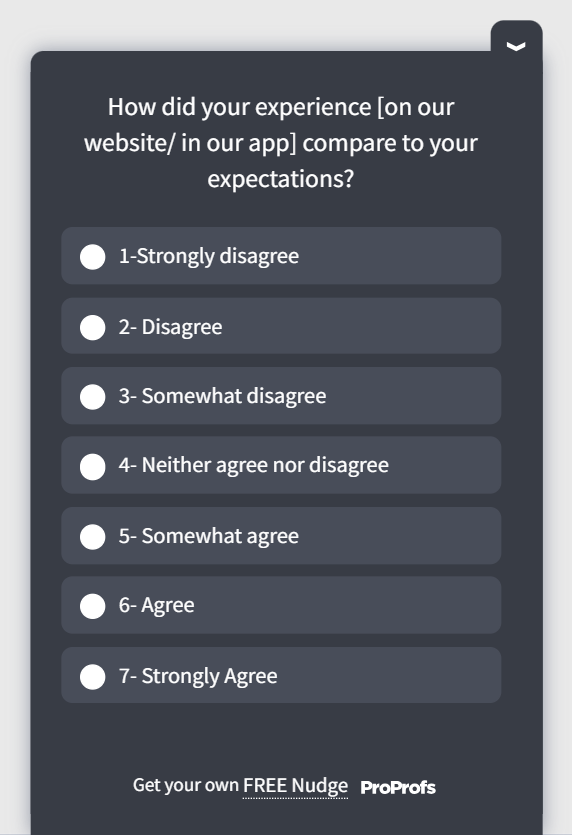
Prompt for expectation gaps:
- “Did this work the way you expected?”
Responses: matched, close, no.
You can use and tweak this easy expectation template:
Prompt for micro-friction:
- “Was anything unclear in this step?”
Responses: all clear, a little unclear, very unclear.
These questions are meant to be simple. One tap. One line. No cognitive load. They give you just enough signal to adjust the step without running a full survey.
Then apply the one-change loop:
- Identify the hesitation.
- Ask one question.
- Make one small fix.
- Check if the hesitation disappears.
You do not need a large process to improve CX. You need a steady habit of noticing the places where people stop, asking a quick question, and tightening the step that caused it. Small adjustments compound faster than big plans.
Bringing the Work Back to the Small Moments
Most of CX comes down to the moments customers never mention. A pause before a button. A message that lands slightly off. A step that takes a little more effort than it should. These shifts do not show up in strategy documents. They show up in behavior.
The data in this report gives you the outline of what is changing. The real work happens when you take one piece of it and look at your own experience through that lens. Find the hesitation. Reduce it. Watch what changes. Then repeat.
You do not need a heavy system for this. A small question placed at the right moment can show you where people get stuck. Tools built for quick, in-flow prompts, like Qualaroo, make that kind of listening easier, but the real leverage comes from how you use the signal. One friction point at a time. One fix at a time.
FREE. All Features. FOREVER!
Try our Forever FREE account with all premium features!

 We'd love your feedback!
What did you like & how can we make it even better?
 Thanks for your feedback!
 Ask Your Question
Have a question? Get expert help to make your decision easier.